
Matthew 1:17-25 is about the fulfillment of the prophecy of the virgin birth of Jesus Christ, emphasizing the divine plan of salvation through the incarnation of God’s son.
17 So all the generations from Abraham to David were fourteen generations, and from David to the deportation to Babylon fourteen generations, and from the deportation to Babylon to the Christ fourteen generations.
18 Now the birth of Jesus Christ took place in this way. When his mother Mary had been betrothed to Joseph, before they came together she was found to be with child from the Holy Spirit.
19 And her husband Joseph, being a just man and unwilling to put her to shame, resolved to divorce her quietly.
20 But as he considered these things, behold, an angel of the Lord appeared to him in a dream, saying, “Joseph, son of David, do not fear to take Mary as your wife, for that which is conceived in her is from the Holy Spirit.
21 She will bear a son, and you shall call his name Jesus, for he will save his people from their sins.
22 All this took place to fulfill what the Lord had spoken by the prophet:
23 “Behold, the virgin shall conceive and bear a son, and they shall call his name Immanuel” (which means, God with us).
24 When Joseph woke from sleep, he did as the angel of the Lord commanded him: he took his wife,
25 but knew her not until she had given birth to a son. And he called his name Jesus.
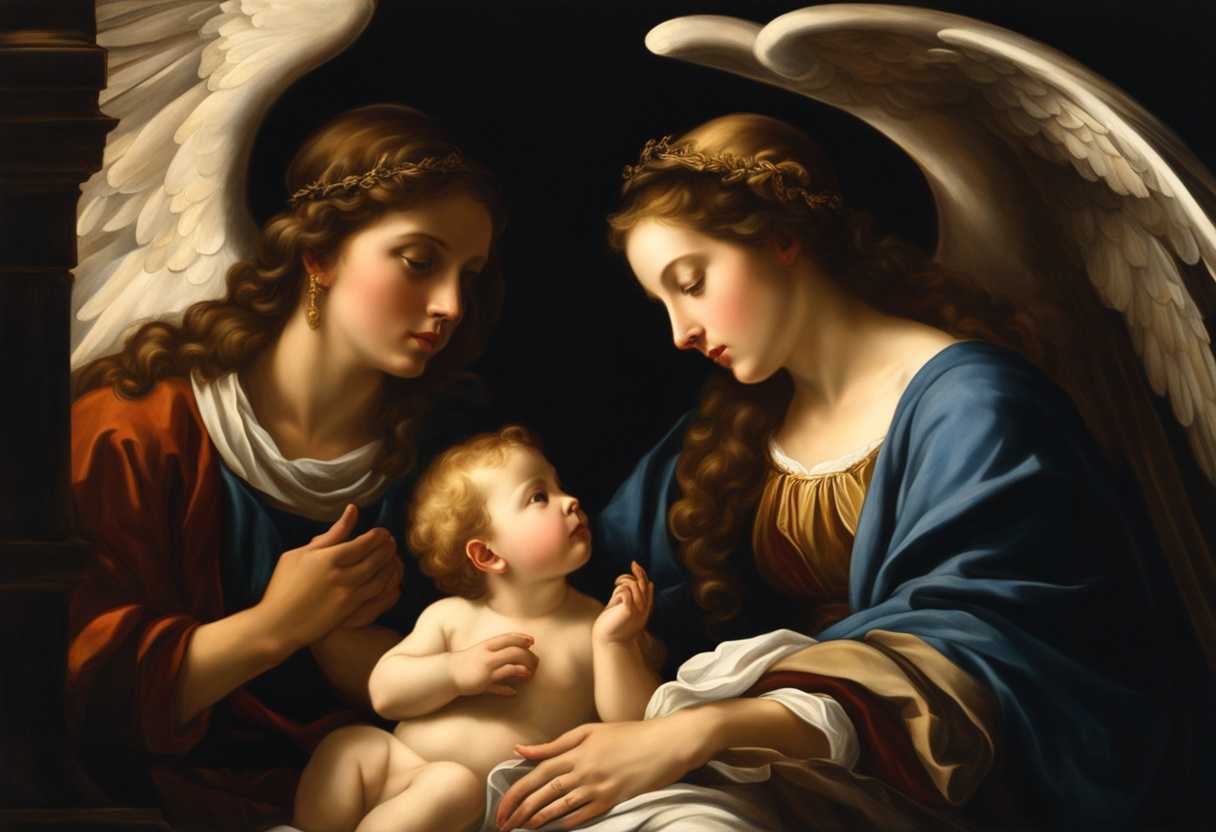
Setting the Scene for Matthew 1:17-25
In Matthew chapter 1, we find Joseph, a righteous man and descendant of King David, engaged to Mary. The scene is set in the town of Nazareth, a small village in Galilee. Joseph and Mary are preparing for their upcoming wedding when Mary receives a visit from the angel Gabriel. The angel delivers the incredible news that Mary will conceive a child by the Holy Spirit and that the child will be the long-awaited Messiah.
Joseph, initially troubled by Mary’s pregnancy, is visited by an angel in a dream who reassures him of the divine nature of Mary’s conception. Joseph, obedient to the angel’s message, takes Mary as his wife and names the child Jesus, as instructed by the angel. The couple’s faith and obedience to God’s plan are evident in this scene, as they trust in the miraculous circumstances surrounding the birth of Jesus. The setting is humble and simple, yet filled with the presence of God’s divine intervention and the promise of salvation for all mankind.
What is Matthew 1:17-25 about?
Isn’t it incredible to think about how Jesus’ very birth was foretold hundreds of years before he was even born? The prophecy of Immanuel, which means “God with us,” came to fruition with the arrival of Jesus. This verse highlights the miraculous circumstances of his birth, emphasizing that he was born of a virgin, underscoring his divine origins and the uniqueness of his mission as the Savior of the world. It speaks to the magnitude of Jesus’ arrival on Earth, not just as an ordinary baby, but as the long-awaited Messiah who would bring salvation and reconciliation between humanity and God.
Reflecting on this verse reminds us of the profound significance of Christmas and the gift of Jesus’ birth. It serves as a powerful reminder of God’s faithfulness in fulfilling his promises and the depths of his love for us. Jesus’ birth wasn’t just a random event – it was a pivotal moment in history that changed the course of humanity, offering hope, redemption, and the promise of eternal life. We marvel at the wonder of Immanuel, God with us, and the incredible grace and mercy that came into the world through the birth of Jesus Christ as we celebrate Christmas.
Understanding what Matthew 1:17-25 really means
In the Gospel of Matthew, we encounter a pivotal passage that delves into the genealogy of Jesus Christ and the events surrounding His miraculous birth. This section serves as a crucial link between the Old Testament prophecies and the fulfillment of God’s promises through the birth of Jesus. The genealogy meticulously traces Jesus’ lineage through significant figures such as Abraham, David, and the generations leading up to Christ, highlighting God’s faithfulness across generations. This structured genealogy not only establishes Jesus’ royal lineage but also underscores the divine orchestration of history to bring forth the Savior of the world.
Joseph, a central figure in the nativity story, faces a profound dilemma upon discovering Mary’s pregnancy. However, divine intervention through an angelic visitation reassures Joseph, emphasizing the importance of trusting in God’s plan even amidst confusion and fear. The reference to Isaiah’s prophecy of the virgin birth further solidifies the miraculous nature of Jesus’ conception, pointing to His divine origins and unique role in salvation history. Joseph’s obedience to the angel’s instructions showcases a profound example of faith and submission to God’s will, setting a precedent for believers to trust in God’s guidance even when faced with uncertainty.
The significance of Jesus’ name, meaning “The Lord saves,” directly ties His identity to His mission of bringing salvation to humanity. This connection is further emphasized through John the Baptist’s proclamation of Jesus as the “Lamb of God,” highlighting His sacrificial role in atoning for the sins of the world. The fulfillment of Old Testament prophecies, particularly the reference to Immanuel meaning “God with us,” underscores the profound truth of God’s presence among His people through the birth of Jesus. These prophecies not only validate Jesus’ messianic identity but also affirm God’s enduring promise to be with His people.
As we reflect on this passage, we are reminded of the timeless truths it holds for us today. Just as Joseph trusted in God’s plan despite uncertainty, we are called to have faith in God’s guidance in our own lives, even when circumstances seem unclear. The narrative of Joseph’s obedience serves as a poignant example of submitting to God’s will, even when it goes against societal norms or personal desires. Through this passage, we are encouraged to consider how we can trust and obey God in our daily lives, drawing inspiration from Joseph’s unwavering faith and obedience. Ultimately, the genealogy, divine intervention, fulfillment of prophecy, and Joseph’s obedience all converge to illuminate the miraculous and purposeful birth of Jesus, inviting us to ponder the profound implications of God’s redemptive plan for humanity.
How can we trust God’s plan for our lives?
We can trust God’s plan for our lives by following the example of Joseph in this passage. Joseph listened to the angel’s message and obeyed God’s instructions, even when it seemed difficult or confusing. He trusted that God’s plan was greater than his own understanding and willingly surrendered his own desires and plans to follow God’s will.
Just like Joseph, we can trust God’s plan by surrendering our own desires and plans to Him. This requires faith, patience, and a willingness to let go of our own understanding in order to trust in God’s perfect timing and purpose for our lives. We can have confidence that God’s plan for us is good and trustworthy as we seek His guidance through prayer, stay rooted in His Word, and align our hearts with His will. Trusting God’s plan for our lives ultimately requires a deep faith in His goodness, sovereignty, and love for us. Even when we may not fully understand or see the outcome, we can have assurance that God’s plan is always for our ultimate good and His glory. We can trust that God is in control and working all things together for our benefit by following Joseph’s example of faith and obedience.
Application
Embrace the inspiring tale of Joseph’s unwavering faith and obedience in the face of uncertainty. Just like him, trust in God’s plan for your journey. Take a leap of faith in your life’s challenges, for God walks beside you. Will you too answer the call with unshakable faith and obedience?

Reverend Michael Johnson is an experienced Church Minister with a profound expertise in spirituality and guidance. With a serene presence and a compassionate heart, he has faithfully served his congregation for over 20 years, leading them on a spiritual journey towards inner peace and enlightenment. Reverend Johnson’s extensive knowledge of religious philosophies and profound understanding of human nature have made him a trusted confidant and mentor to many, as he seamlessly weaves his profound wisdom into life teachings. Reverend Johnson’s calming demeanor and empathetic nature continue to uplift and heal souls, nurturing a sense of unity and tranquility within his community.