
Matthew 1:3-16 is about showcasing the genealogy of Jesus Christ, tracing His lineage from Abraham to King David and through various generations until His birth, highlighting His royal and messianic heritage as the Son of God.
3 and Judah the father of Perez and Zerah by Tamar, and Perez the father of Hezron, and Hezron the father of Ram,
4 and Ram the father of Amminadab, and Amminadab the father of Nahshon, and Nahshon the father of Salmon,
5 and Salmon the father of Boaz by Rahab, and Boaz the father of Obed by Ruth, and Obed the father of Jesse,
6 and Jesse the father of David the king.
7 and Solomon the father of Rehoboam, and Rehoboam the father of Abijah, and Abijah the father of Asaph,
8 and Asa the father of Jehoshaphat, and Jehoshaphat the father of Joram, and Joram the father of Uzziah,
9 and Azor the father of Zadok, and Zadok the father of Achim, and Achim the father of Eliud,
10 and Hezekiah the father of Manasseh, and Manasseh the father of Amos, and Amos the father of Josiah,
11 and Josiah the father of Jechoniah and his brothers, at the time of the deportation to Babylon.
12 And after the deportation to Babylon: Jechoniah was the father of Shealtiel, and Shealtiel the father of Zerubbabel.
13 and Zerubbabel the father of Abiud, and Abiud the father of Eliakim, and Eliakim the father of Azor,
14 and Azor the father of Zadok, and Zadok the father of Achim, and Achim the father of Eliud,
15 and Eliud the father of Eleazar, and Eleazar the father of Matthan, and Matthan the father of Jacob,
16 and Jacob the father of Joseph the husband of Mary, of whom Jesus was born, who is called Christ.
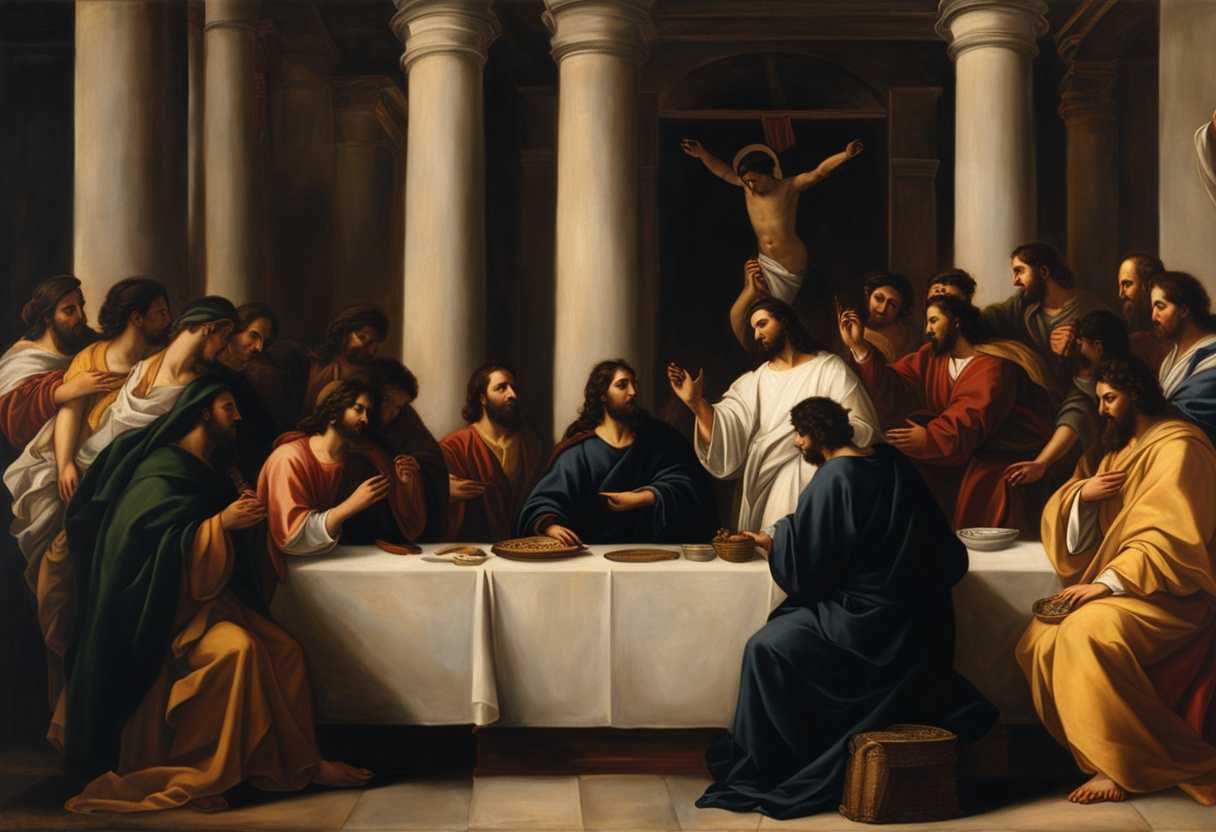
Setting the Scene for Matthew 1:3-16
In the bustling marketplace of Jerusalem, a group of merchants and traders gathered to exchange goods and stories. Among them was Jacob, a wealthy merchant known for his fine linens and spices. Jacob’s son, Judah, stood by his side, learning the ways of the trade from his father. As they haggled with customers and bartered for the best prices, a stranger approached them. It was Tamar, a beautiful young woman with a mysterious air about her.
Tamar had come to the marketplace seeking Jacob’s assistance in selling her handmade garments. Impressed by her craftsmanship and determination, Jacob agreed to help her. As they worked together, Judah found himself drawn to Tamar’s quiet strength and gentle spirit. Over time, their interactions deepened, and a bond began to form between them. Little did they know that their union would play a significant role in the lineage of Jesus Christ, as detailed in the genealogy found in Matthew 1:3-16. Surrounded by the sights and sounds of the bustling marketplace, Jacob, Judah, and Tamar’s lives became intertwined in ways they could never have imagined. Their story would become a testament to the unexpected ways in which God works through the lives of ordinary people to fulfill His divine plan.
What is Matthew 1:3-16 about?
This verse is a powerful reminder of Jesus’ earthly lineage, tracing back through generations to Abraham and David. It serves to show the fulfillment of God’s promises and the importance of Jesus’ ancestry in establishing His rightful place as the long-awaited Messiah. Can you imagine the significance of being able to trace Jesus’ roots back to key figures like Abraham, the father of many nations, and David, the great king of Israel? It showcases how God’s plan was set in motion long before Jesus was born, connecting the Old Testament prophecies to the arrival of Christ. This verse emphasizes the continuity of God’s plan throughout history by highlighting key figures in Jesus’ genealogy, such as Abraham and David. It shows us that Jesus was not just a random figure who appeared out of nowhere, but rather He was woven into the fabric of God’s redemptive plan from the very beginning. How amazing is it to see how God worked through generations to bring about the birth of Jesus, the Savior of the world? This lineage reminds us of the faithfulness of God and His sovereignty over all of history, leading up to the ultimate fulfillment of His promise in the birth of Jesus.
Understanding what Matthew 1:3-16 really means
In Matthew 1:3-16, we encounter the genealogy of Jesus Christ, a lineage meticulously traced through generations. Genealogies held immense significance in biblical times, serving to establish one’s lineage, inheritance, and place in society. In the case of Jesus, this genealogy not only connects Him to historical figures but also underscores His fulfillment of Old Testament prophecies regarding the Messiah.
As we delve into the key phrases within this genealogy, we uncover profound meanings that resonate with themes of grace, redemption, and God’s sovereignty. For instance, the mention of Tamar, a woman who faced hardship and deception, reminds us of God’s ability to bring forth redemption even in the most challenging circumstances. Similarly, Rahab’s inclusion, a former prostitute turned faithful follower of God, showcases His transformative power and willingness to use unlikely individuals for His divine purposes. Moreover, the reference to David and Bathsheba’s story highlights the complexities of sin, repentance, and the overarching theme of God’s forgiveness and sovereignty in the face of human failings.
Drawing parallels to related biblical passages such as Genesis 38, Joshua 2, and 2 Samuel 11-12, we see a tapestry of narratives that weave together themes of justice, faith, sin, repentance, and mercy. These stories not only provide context for the individuals mentioned in Jesus’ genealogy but also offer profound insights into the multifaceted nature of God’s plan and His redemptive work throughout history.
The relevance of this genealogy extends beyond its historical significance, speaking directly to individuals today. It serves as a powerful reminder that God can use imperfect people to accomplish His perfect will, regardless of their past mistakes or shortcomings. By showcasing the diverse backgrounds and experiences of those in Jesus’ lineage, this passage encourages readers to embrace their own heritage and see themselves as integral parts of God’s overarching narrative of redemption and restoration.
Consider the anecdote of someone who, despite a troubled past, overcame obstacles to achieve remarkable feats. This narrative mirrors the overarching message of Jesus’ genealogy – that God’s grace and redemption are available to all, regardless of their history or circumstances. It serves as a tangible example of how God can transform lives and use them for His glory, illustrating the timeless truth embedded within the genealogy of Jesus Christ.
In conclusion, understanding Jesus’ genealogy not only connects us to the rich tapestry of biblical history but also invites us to see our lives as part of God’s larger story of redemption and purpose. As we reflect on the lives of those mentioned in this lineage, we are reminded of the hope, redemption, and divine providence that underpin our faith. May this passage inspire us to embrace our heritage, seek God’s transformative power in our lives, and live out our purpose within the grand narrative of God’s redemptive plan.
How can we choose to remain faithful to God?
We can choose to remain faithful to God by recognizing and honoring our heritage and ancestry. We can learn from the faithfulness of our ancestors to inspire us to remain steadfast in our relationship with God, just as Jesus had a lineage that traced back through generations of faithful individuals. We can be encouraged to continue the legacy of faith in our own lives by acknowledging the faithfulness of those who came before us.
Additionally, we can choose to remain faithful to God by understanding the significance of family and community in our spiritual journey. Through the genealogy of Jesus, we see the interconnectedness of individuals and the importance of community in upholding faith. Surrounding ourselves with fellow believers and engaging in a supportive community helps us stay grounded in our faith and committed to following God’s will.
Lastly, we can choose to remain faithful to God by being intentional in our actions and decisions. We too have a part to play in God’s greater purpose, just as each name in the genealogy of Jesus played a role in the unfolding of God’s plan. We can demonstrate our commitment to remaining faithful even in the face of challenges and temptations by seeking God’s guidance in all that we do and making choices that align with His will.
Application
Unravel the sacred lineage of Jesus in Matthew 1:3-16 and witness the unyielding faithfulness of God across generations. Your personal journey intertwines with this divine tapestry of redemption and salvation. Let this revelation kindle a fire within you to champion the legacy of faith and illuminate the path of hope for those around you. Will you heed the beckoning to carry forth the epic saga of God’s grace in your own life?

Reverend Michael Johnson is an experienced Church Minister with a profound expertise in spirituality and guidance. With a serene presence and a compassionate heart, he has faithfully served his congregation for over 20 years, leading them on a spiritual journey towards inner peace and enlightenment. Reverend Johnson’s extensive knowledge of religious philosophies and profound understanding of human nature have made him a trusted confidant and mentor to many, as he seamlessly weaves his profound wisdom into life teachings. Reverend Johnson’s calming demeanor and empathetic nature continue to uplift and heal souls, nurturing a sense of unity and tranquility within his community.