
Matthew 21:1-3 is about Jesus instructing his disciples to go and bring him a donkey and a colt, symbolizing the fulfillment of Old Testament prophecy and the humility and peaceful nature of Jesus’ entry into Jerusalem as the promised Messiah.
1 Now when they drew near to Jerusalem and came to Bethphage, to the Mount of Olives, then Jesus sent two disciples,
2 saying to them, “Go into the village in front of you, and immediately you will find a donkey tied, and a colt with her. Untie them and bring them to me.
3 If anyone says anything to you, you shall say, ‘The Lord needs them,’ and he will send them at once.”
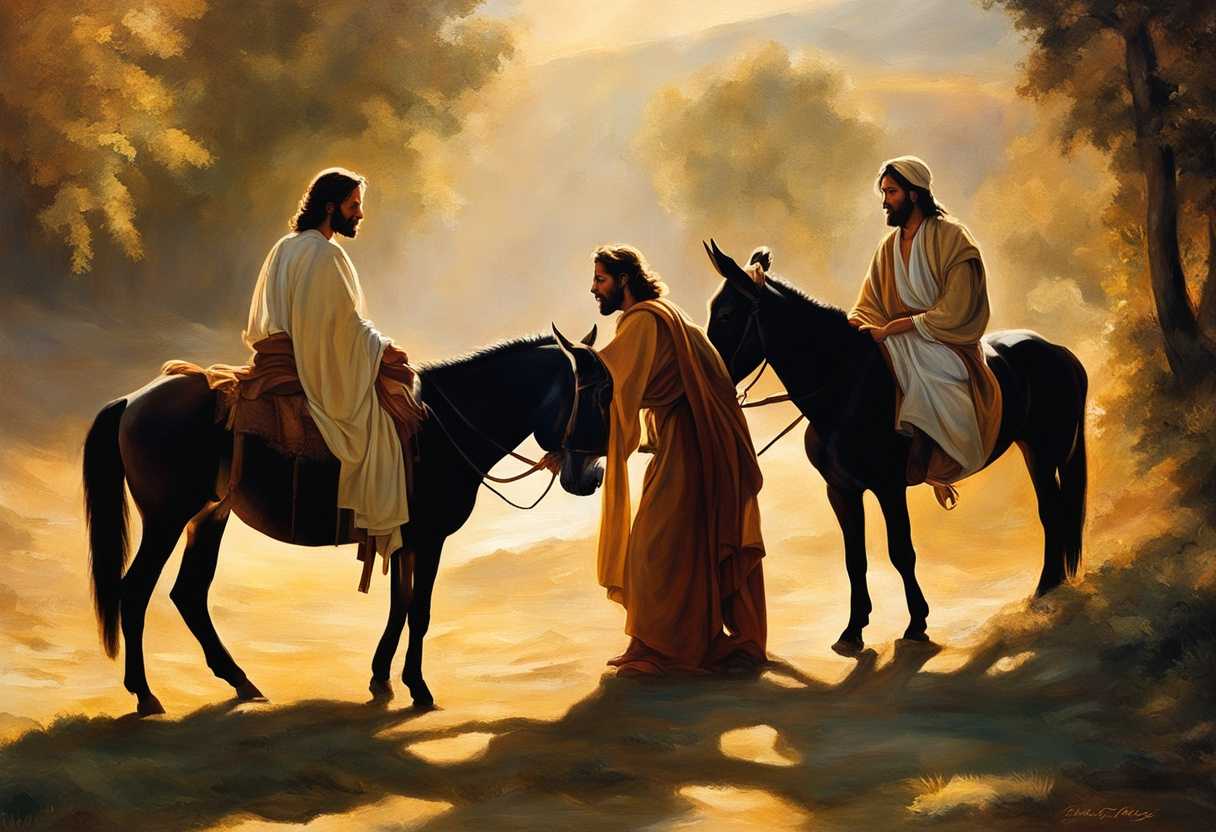
Setting the Scene for Matthew 21:1-3
In Matthew chapter 21, we find Jesus and his disciples approaching Jerusalem. They have come from Bethphage, a village near the Mount of Olives. As they near the city, Jesus instructs two of his disciples to go ahead and find a donkey and her colt tied up, telling them that if anyone questions them, they are to say that the Lord needs them. The disciples follow Jesus’ instructions and bring the animals to him.
The scene is bustling with excitement as crowds gather to see Jesus, many of them laying their cloaks on the road while others cut branches from the trees to spread on the path. The atmosphere is charged with anticipation as the people recognize Jesus as the long-awaited Messiah, shouting “Hosanna to the Son of David! Blessed is he who comes in the name of the Lord!” The city is abuzz with talk of this miracle worker who has raised the dead and healed the sick, and now enters Jerusalem in a humble yet triumphant procession. The tension between the religious leaders and Jesus is palpable, setting the stage for the events that will unfold in the days to come.
What is Matthew 21:1-3 about?
Jesus is displaying his divine knowledge and authority in this verse by instructing his disciples to fetch a donkey and colt for his triumphant entry into Jerusalem. This act symbolizes the fulfillment of the prophecy in Zechariah 9:9, where the King of Zion would come riding on a donkey, signifying humility and peace. Jesus is emphasizing his role as the Prince of Peace who brings salvation and reconciliation to humanity by riding on a donkey instead of a horse.
Have you ever marveled at how Jesus’s actions are not only intentional but also deeply meaningful? He is teaching us about the importance of humility and service in the kingdom of God by choosing a humble mode of transportation for his entry. This moment serves as a reminder that true leadership is rooted in humility and selflessness, traits that Jesus embodied throughout his earthly ministry. Let us reflect on this verse and consider how we can emulate Jesus’s example by serving others with humility and grace in our daily lives.
Understanding what Matthew 21:1-3 really means
In Matthew 21:1-3, we witness a pivotal moment in Jesus’ ministry as He prepares for His triumphal entry into Jerusalem. This event, known as Palm Sunday, holds great significance in the Christian narrative. Jesus, displaying foreknowledge and divine planning, instructs His disciples to fetch a donkey and a colt, fulfilling the prophecy from Zechariah 9:9. The imagery of Jesus riding on a donkey symbolizes humility and peace, contrasting with the typical war horses kings rode, emphasizing His role as a peaceful Messiah.
The phrase “Go into the village ahead of you” not only showcases Jesus’ omniscience but also highlights the intentionality behind His actions. It serves as a reminder of His divine purpose and the meticulous planning that underpins His ministry. When Jesus instructs His disciples, “You will find a donkey tied there, with her colt by her,” it underscores the symbolism of humility and peace associated with His entry. This act challenges conventional notions of kingship, portraying Jesus as a different kind of leader—one who embodies humility and gentleness.
“The Lord needs them” encapsulates Jesus’ authority and the willingness of individuals to serve Him. This statement conveys the idea that God can use ordinary things for extraordinary purposes, emphasizing the transformative power of divine intervention. Through this passage, we are reminded of the interconnectedness of God’s plan and our roles within it. Just as the donkey and colt were essential for Jesus’ entry into Jerusalem, each person has a unique part to play in God’s overarching plan.
Reflecting on this passage, we are encouraged to embrace humility and obedience, mirroring Jesus’ example. The fulfillment of Old Testament prophecies, such as Zechariah 9:9, reinforces Jesus’ identity as the promised Messiah and underscores the reliability of God’s promises. Similarly, passages like Philippians 2:6-8 highlight the importance of humility and selflessness in our walk with Christ, echoing the themes present in Jesus’ choice to enter Jerusalem on a donkey.
In our contemporary context, the message of Matthew 21:1-3 remains relevant. It challenges us to trust in God’s foreknowledge and provision, recognizing that He can use even the simplest acts for His divine purposes. Just as the donkey and colt played crucial roles in Jesus’ entry, we are reminded that no act of service is insignificant in God’s eyes. This passage serves as a powerful reminder of our call to humility, obedience, and faithful service in God’s kingdom.
Consider the anecdote of a humble mechanic whose seemingly mundane act of service leads to a profound impact, much like the donkey and colt in the biblical narrative. This illustration underscores the idea that God can use ordinary individuals to accomplish extraordinary feats, highlighting the importance of faithfulness and obedience in fulfilling His purposes. As we ponder the lessons from Matthew 21:1-3, may we be inspired to embrace humility, trust in God’s plan, and recognize the significance of our roles in advancing His kingdom.
What does it mean to submit to God’s will?
Submitting to God’s will means humbling oneself before Him and acknowledging His sovereignty over our lives. It involves surrendering our own desires, plans, and ambitions to align with God’s purposes and guidance. Jesus instructed His disciples to fetch the donkey for His triumphal entry, requiring obedience and trust in God’s will, even when His directions may not align with our own understanding or preferences. We demonstrate our faith and dependence on God by submitting to His will, recognizing that He knows what is best for us and has a plan that far exceeds our own limited perspective. This submission involves a willingness to set aside our own agenda and allow God to work in and through our lives according to His perfect wisdom and timing. Submitting to God’s will ultimately demonstrates our love for Him and responds to His grace and mercy towards us.
Application
Just as we see Jesus’ clear instructions to His disciples, we too must be ready to follow His guidance without delay. Let’s seize the opportunities presented by the Lord with determination and swiftness. Are you ready to tune in to His voice and act decisively in your journey of faith?

Reverend Michael Johnson is an experienced Church Minister with a profound expertise in spirituality and guidance. With a serene presence and a compassionate heart, he has faithfully served his congregation for over 20 years, leading them on a spiritual journey towards inner peace and enlightenment. Reverend Johnson’s extensive knowledge of religious philosophies and profound understanding of human nature have made him a trusted confidant and mentor to many, as he seamlessly weaves his profound wisdom into life teachings. Reverend Johnson’s calming demeanor and empathetic nature continue to uplift and heal souls, nurturing a sense of unity and tranquility within his community.