
Matthew 21:1 is about Jesus instructing his disciples to bring him a donkey and a colt for his triumphant entry into Jerusalem, symbolizing the fulfillment of Old Testament prophecies about the arrival of the long-awaited Messiah as a humble and peace-bringing king.
1 Now when they drew near to Jerusalem and came to Bethphage, to the Mount of Olives, then Jesus sent two disciples,
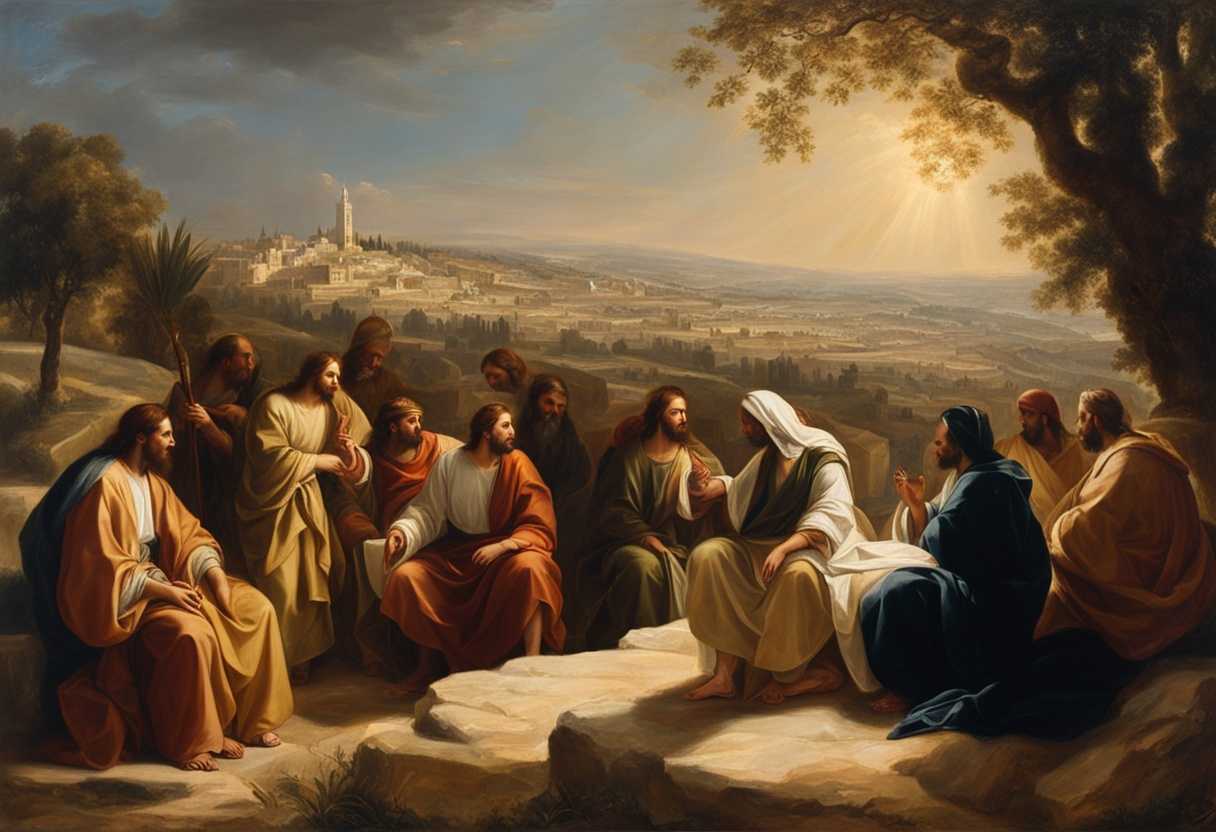
Setting the Scene for Matthew 21:1
In Matthew chapter 21, we find Jesus and his disciples approaching Jerusalem. They have come from Bethphage, a village near the Mount of Olives. As they near the city, Jesus instructs two of his disciples to go ahead and find a donkey and its colt tied up, telling them that if anyone questions them, they are to say that the Lord needs them. The disciples follow Jesus’ instructions and bring the animals to him.
The scene is set on a dusty road leading into Jerusalem, with the city bustling in preparation for the upcoming Passover festival. Jesus sits on the colt, fulfilling the prophecy in Zechariah 9:9, which foretold the Messiah’s humble entrance into Jerusalem on a donkey. The disciples walk alongside Jesus, while a crowd begins to gather, spreading their cloaks on the road and waving palm branches, shouting, “Hosanna to the Son of David! Blessed is he who comes in the name of the Lord!” The atmosphere is charged with excitement and anticipation as Jesus enters the city, welcomed as a king by the adoring crowd.
What is Matthew 21:1 about?
Jesus deliberately chooses to enter Jerusalem on a humble donkey in this powerful moment, fulfilling a prophecy from the Old Testament (Zechariah 9:9). He could have ridden in on a majestic stallion, a symbol of power and conquest, but instead, he shows humility and simplicity. Jesus conveys a message of peace, hope, and servant leadership by riding on a donkey.
This scene highlights the dual nature of Jesus as both the humble servant and the King of Kings. Jesus illustrates that true greatness comes from serving others and living in accordance with God’s will by choosing this humble mode of transportation. It challenges us to reflect on our own understanding of power and leadership – do we seek power for its own sake, or do we use our influence to serve others and bring about God’s kingdom on earth? Jesus’ entry into Jerusalem on a donkey is a poignant reminder of the upside-down nature of God’s kingdom, where the last shall be first and the meek shall inherit the earth.
Understanding what Matthew 21:1 really means
The verse Matthew 21:1 sets the stage for a pivotal moment in Jesus’ ministry – His triumphal entry into Jerusalem, which Christians commemorate as Palm Sunday. As Jesus and His disciples approach Jerusalem from the Mount of Olives, we are reminded of the historical and prophetic significance of this event. The choice of location is not arbitrary; it carries layers of meaning that enrich our understanding of Jesus’ mission and identity.
“Approached Jerusalem” signifies the beginning of the end of Jesus’ earthly ministry and the start of the Passion Week, where He would fulfill His ultimate mission of salvation. This journey towards Jerusalem is not merely a physical one but a symbolic representation of the path to redemption that Jesus is about to undertake. The mention of Bethphage on the Mount of Olives adds depth to the narrative, as this small village and its location hold symbolic significance in Jewish tradition, hinting at the fulfillment of ancient prophecies.
The prophecy in Zechariah 9:9, which foretells the coming of a humble king riding on a donkey, finds its fulfillment in Jesus’ entry into Jerusalem. This alignment between prophecy and reality underscores the divine orchestration of events in Jesus’ life. In Luke 19:41-44, we witness Jesus’ poignant moment of weeping over Jerusalem, revealing His deep compassion and foreknowledge of the city’s impending suffering. This emotional display humanizes Jesus and underscores His empathy for humanity’s plight.
The relevance of this passage extends beyond its historical context to resonate with believers today. Just as Jesus embarked on a journey towards Jerusalem that culminated in His sacrificial death and resurrection, we are called to navigate our own spiritual journeys with faith and perseverance. The Mount of Olives serves as a reminder of the importance of prayer and reflection in seeking God’s presence amidst life’s challenges and uncertainties.
In contemplating this verse, we are prompted to approach our own metaphorical “Jerusalems” – our goals, trials, and spiritual milestones – with unwavering faith and trust in God’s plan. Like Jesus, we are encouraged to press on even when the path ahead seems daunting, knowing that God walks alongside us every step of the way. By internalizing the deeper meanings and connections within this verse, we can draw strength and inspiration for our personal journeys, recognizing that we are part of a larger narrative of redemption and hope.
Consider the imagery of a modern-day pilgrimage to a sacred site, mirroring Jesus’ purposeful approach to Jerusalem. Just as pilgrims anticipate their destination with reverence and expectation, we too can approach our spiritual endeavors with a sense of purpose and destiny. Let us heed the lessons embedded in this verse, embracing the challenges and joys of our journeys with the same determination and faith that characterized Jesus’ triumphant entry into Jerusalem.
Question: Are we willing to obey God’s specific instructions?
Jesus gives his disciples specific instructions on what to do to fulfill a prophecy in Matthew 21:1. This verse serves as a reminder to us about the importance of obeying God’s specific instructions. We show our commitment to God and trust in His plans for us by following His guidance and commands. It is a demonstration of our faith and obedience to His will, even if we may not always understand the reasons behind His instructions. We are challenged to examine our own willingness to obey God’s specific instructions in our lives as we reflect on the message of Matthew 21:1. Are we open and receptive to following His guidance, even when it may seem difficult or unclear to us? Are we willing to trust in His wisdom and direction, knowing that His ways are higher than our own? Cultivating a heart that is ready to submit to God’s will and purpose is essential in our journey of faith, even if it requires us to step out in faith and obedience.
Application
In the hustle of our busy lives, let’s take a lesson from Jesus riding into Jerusalem on a donkey. He showed humility and obedience even when the stakes were high. What if we approached our work, our family, and our dreams with the same mindset? Think about how different things could be if we chose humility and followed our higher purpose every day. How will you answer the call to live with humble obedience in your life?

Reverend Michael Johnson is an experienced Church Minister with a profound expertise in spirituality and guidance. With a serene presence and a compassionate heart, he has faithfully served his congregation for over 20 years, leading them on a spiritual journey towards inner peace and enlightenment. Reverend Johnson’s extensive knowledge of religious philosophies and profound understanding of human nature have made him a trusted confidant and mentor to many, as he seamlessly weaves his profound wisdom into life teachings. Reverend Johnson’s calming demeanor and empathetic nature continue to uplift and heal souls, nurturing a sense of unity and tranquility within his community.