
Matthew 21:12-14 is about Jesus cleansing the temple, symbolizing the authority of God’s kingdom over worldly corruption and the restoration of true worship.
12 And Jesus entered the temple and drove out all who sold and bought in the temple, and he overturned the tables of the money-changers and the seats of those who sold pigeons.
13 He said to them, “It is written, ‘My house shall be called a house of prayer,’ but you make it a den of robbers.”
14 And the blind and the lame came to him in the temple, and he healed them.
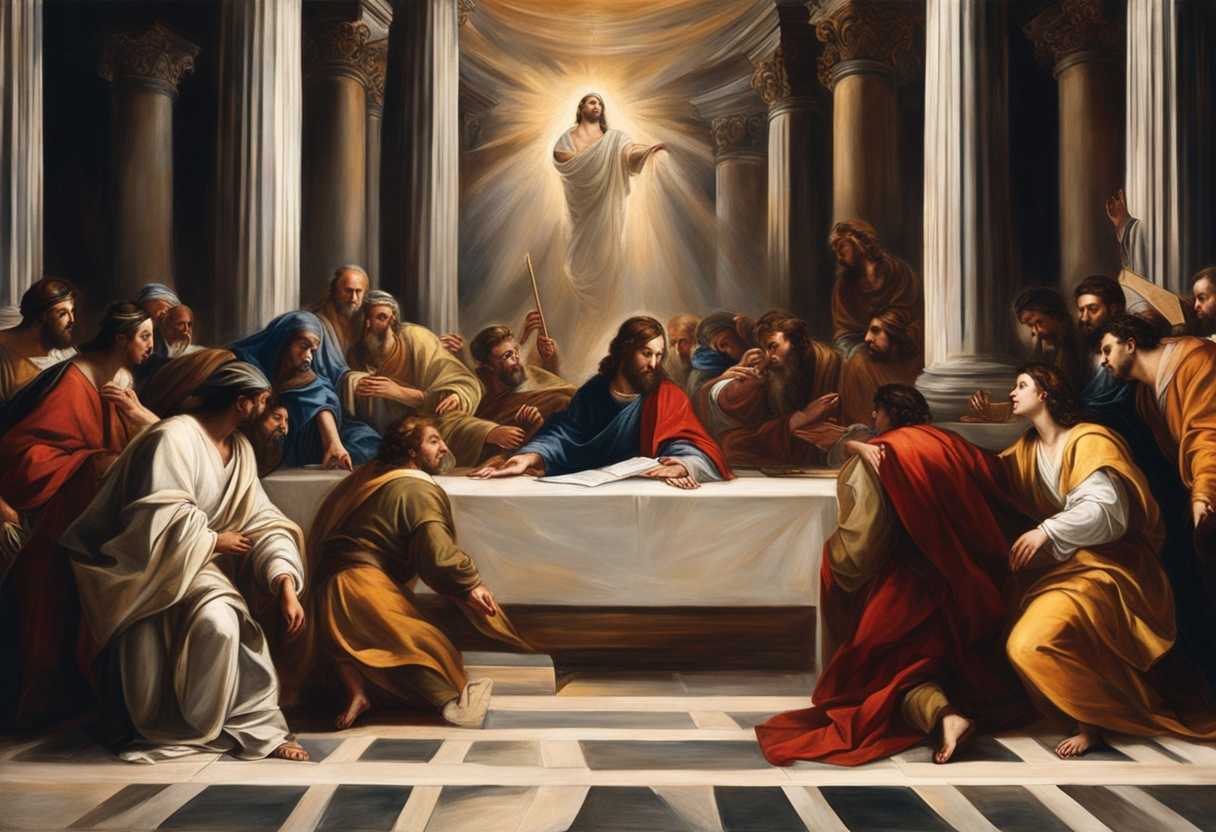
Setting the Scene for Matthew 21:12-14
In Matthew chapter 21, we find Jesus entering the temple in Jerusalem. The scene is bustling with activity as merchants and money changers have set up shop within the temple courts, turning a place of worship into a marketplace. The air is filled with the sounds of bargaining and the smell of animals being sold for sacrifices. The temple, a sacred space for prayer and reflection, is now filled with the noise and chaos of commerce.
Jesus, accompanied by his disciples, enters the temple and is immediately struck by the sight before him. With righteous anger, he begins to overturn the tables of the money changers and the benches of those selling doves. His actions are bold and deliberate, a powerful statement against the desecration of the temple. The merchants and money changers are taken aback by this unexpected display of authority and reverence for the sacred space.
As Jesus clears the temple, he declares, “My house will be called a house of prayer, but you are making it a den of robbers.” The onlookers are stunned by his words and actions, witnessing a side of Jesus that reveals his passion for true worship and devotion to God. The scene is a powerful reminder of the importance of honoring and respecting sacred spaces, and the need to prioritize spiritual matters over material gain.
What is Matthew 21:12-14 about?
Jesus drives out the buyers and sellers from the temple in this verse, displaying an act of righteous anger and protest. The temple was meant to be a place of worship, prayer, and reflection, but it had been commercialized and turned into a marketplace. Jesus was making a powerful statement against the exploitation of religion and the corruption of sacred spaces for personal gain. Jesus was restoring the temple’s sanctity and reminding people of its true purpose by cleansing it.
Imagine walking into a place of worship and instead of finding peace and devotion, you see people haggling and trading goods. How would you feel? Jesus’ actions serve as a reminder to us all to treat places of worship with reverence and respect, and to prioritize spiritual growth over material gain. It challenges us to reflect on our own intentions and actions when it comes to matters of faith and to ensure that we are living in alignment with our values. Let this verse be a call to introspection and a motivation to seek the true essence of spirituality in our lives.
Understanding what Matthew 21:12-14 really means
In Matthew 21:12-14, we witness a powerful moment where Jesus enters the temple in Jerusalem during the final week of His life. Instead of finding a place of reverence and prayer, He encounters a scene of chaos and exploitation. The temple, meant to be a sacred space, had been turned into a marketplace by merchants and money changers. Jesus, in a display of righteous anger, drives out those who were buying and selling, overturning tables to symbolize the rejection of corruption within the house of God.
Through His actions, Jesus emphasizes the sanctity of the temple as a house of prayer. He quotes scriptures from Isaiah and Jeremiah, underscoring the intended purpose of the temple and condemning its misuse as a den of robbers. This cleansing of the temple serves as a powerful reminder of the need to uphold the true essence of places of worship and to reject any form of exploitation or corruption within them.
The passage challenges us to reflect on the sanctity of our own sacred spaces and the importance of maintaining their intended purpose. Just as Jesus cleansed the temple, we are called to examine our practices and ensure they align with the values of prayer, worship, and communion with God. It prompts us to consider how we can uphold integrity and reject exploitation in all aspects of our lives.
Imagine a community center that strays from its original purpose, much like the temple in Jesus’ time. When a leader steps in to restore its intended use, it not only renews the physical space but also revitalizes the community’s commitment to its values. Similarly, Jesus’ actions in the temple urge us to realign our lives and spaces with the ideals of prayer, compassion, and integrity.
As we reflect on being a “house of prayer,” we are encouraged to evaluate areas in our lives where distractions or misuses have taken hold. Just as Jesus showed compassion by healing the blind and the lame, we are prompted to extend that same compassion to those around us. Let us strive to cleanse and restore our lives and spaces, ensuring they reflect the values of prayer, compassion, and integrity that Jesus exemplified in the temple.
How can we align our actions with our beliefs?
To align our actions with our beliefs, we can look at the example set in the verse you mentioned. Jesus enters the temple and overturns the tables of the money changers and the benches of those selling doves in the passage. This action symbolizes the importance of removing obstacles or practices that go against our beliefs. We can show a commitment to living out our beliefs in a tangible way by taking a decisive stance like Jesus did.
Furthermore, the cleansing of the temple in the verse signifies the need for inner purity and integrity in our actions. We can align our actions with our beliefs by examining our intentions and ensuring they are in line with what we profess to believe. It’s important to act in a way that reflects our core values and principles, just as Jesus demonstrated in cleansing the temple. A commitment to living with authenticity and integrity ultimately requires aligning our actions with our beliefs. We can strive to be true to ourselves and our faith by being mindful of our actions and ensuring they are in harmony with our beliefs. We too can take deliberate steps to live out our beliefs in a way that is visible and impactful, just as Jesus upheld the sanctity of the temple.
Application
Just as Jesus cleansed the temple, let us cleanse our hearts and dedicate ourselves to the Lord. Our bodies are sacred dwellings for the Holy Spirit, deserving of respect and purity. Let’s rid ourselves of any impurities and commit to living a life pleasing to God. Will you take up this challenge and honor your body as a temple of God?

Reverend Michael Johnson is an experienced Church Minister with a profound expertise in spirituality and guidance. With a serene presence and a compassionate heart, he has faithfully served his congregation for over 20 years, leading them on a spiritual journey towards inner peace and enlightenment. Reverend Johnson’s extensive knowledge of religious philosophies and profound understanding of human nature have made him a trusted confidant and mentor to many, as he seamlessly weaves his profound wisdom into life teachings. Reverend Johnson’s calming demeanor and empathetic nature continue to uplift and heal souls, nurturing a sense of unity and tranquility within his community.