
Matthew 21:12-19 is about Jesus cleansing the temple in Jerusalem, demonstrating his authority and righteousness amidst the corruption of religious practices, and revealing his power to heal and bring life to those who seek him.
12 And Jesus entered the temple and drove out all who sold and bought in the temple, and he overturned the tables of the money-changers and the seats of those who sold pigeons.
13 He said to them, “It is written, ‘My house shall be called a house of prayer,’ but you make it a den of robbers.”
14 And the blind and the lame came to him in the temple, and he healed them.
15 But when the chief priests and the scribes saw the wonderful things that he did, and the children crying out in the temple, “Hosanna to the Son of David!” they were indignant,
16 and they said to him, “Do you hear what these are saying?” And Jesus said to them, “Yes; have you never read, “‘Out of the mouth of infants and nursing babies you have prepared praise’?”
17 And leaving them, he went out of the city to Bethany and lodged there.
18 In the morning, as he was returning to the city, he became hungry.
19 And seeing a fig tree by the wayside, he went to it and found nothing on it but only leaves. And he said to it, “May no fruit ever come from you again!” And the fig tree withered at once.
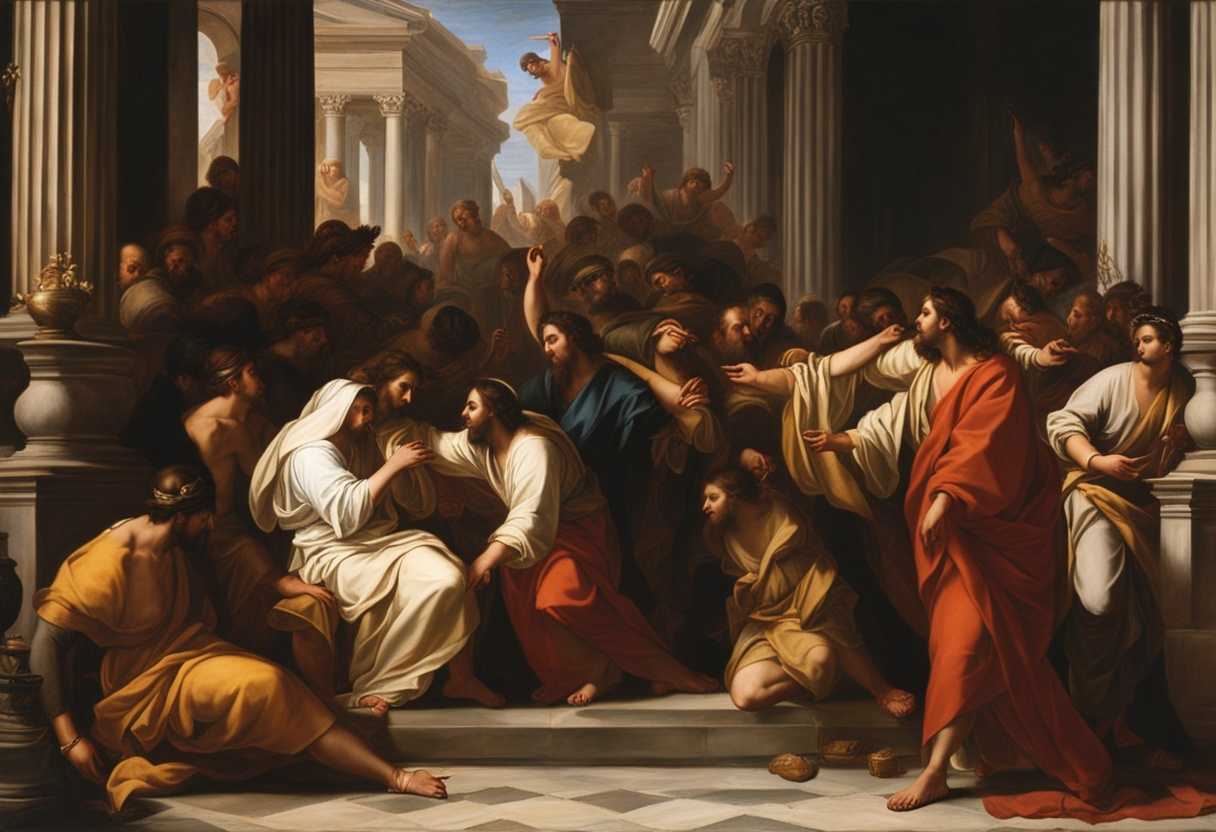
Setting the Scene for Matthew 21:12-19
In Matthew chapter 21, we find Jesus entering the temple in Jerusalem. The scene is bustling with activity as merchants are selling animals for sacrifice and money changers are exchanging currency. The air is filled with the sounds of bargaining and animals bleating. The temple grounds are crowded with people from all walks of life, coming to worship and offer sacrifices.
Jesus, accompanied by his disciples, enters the temple and is immediately struck by the commercialization and exploitation happening within its walls. He sees the merchants taking advantage of the people’s need to offer sacrifices and the money changers charging exorbitant rates. Filled with righteous anger, Jesus overturns the tables of the money changers and drives out those who were buying and selling, declaring, “My house will be called a house of prayer, but you are making it a den of robbers.”
The religious leaders present are taken aback by Jesus’ actions and teachings, but the common people are drawn to him, witnessing his authority and compassion. This pivotal moment in the temple sets the stage for further conflict between Jesus and the religious authorities, as well as for the continued ministry and teachings of Jesus during his time in Jerusalem.
What is Matthew 21:12-19 about?
Jesus demonstrates his authority and teaches an important lesson in this verse. He is showing his followers the importance of respecting and honoring sacred spaces by cleansing the temple. This action also symbolizes the need for purity and reverence in our hearts and actions. We must also rid ourselves of anything that distracts us from true worship and devotion to God, just as Jesus removed the money changers from the temple.
The cursing of the fig tree for lacking fruit serves as a powerful metaphor for the importance of bearing good fruit in our lives. Jesus often used nature to convey spiritual truths, and in this instance, the fig tree represents us as individuals. Are we bearing fruit in the form of kindness, love, and good deeds? Are we living in a way that reflects our faith and glorifies God? This verse challenges us to examine our own lives and strive to be fruitful followers of Christ. Let us consider how we can cleanse our own hearts and lives to make room for God’s presence as we reflect on this verse. Let us also remember to bear good fruit and live out our faith in tangible ways. We should allow Jesus’ teachings to transform us and guide our daily lives, just as he demonstrated his authority and taught important lessons through these actions.
Understanding what Matthew 21:12-19 really means
In the Gospel of Matthew, we witness a pivotal moment in Jesus’ ministry as he enters the temple in Jerusalem during the final week of his life. Instead of encountering a place of reverence and prayer, Jesus finds the temple overrun with money changers and merchants, turning it into a bustling marketplace. This stark contrast sets the stage for Jesus’ actions that follow, where he overturns the tables of the money changers, symbolizing his authority and commitment to purifying the sacred space meant for worship.
Through his words and actions, Jesus conveys a powerful message about the true purpose of the temple. He declares, “My house shall be called a house of prayer,” emphasizing the importance of the temple as a place for communion with God. Simultaneously, Jesus condemns the corruption and exploitation occurring within the temple, denouncing it as a “den of robbers,” drawing parallels to the prophetic words of Jeremiah.
The significance of this event extends beyond the physical temple in Jerusalem. It serves as a timeless lesson for believers today. Just as Jesus cleansed the temple, we are called to uphold the integrity of our worship spaces and practices, ensuring they remain sanctuaries for spiritual growth and connection with God. Moreover, Jesus’ actions challenge us to confront corruption and exploitation in all areas of our lives, standing against dishonest gain and injustice.
As we reflect on Jesus’ cleansing of the temple, we are prompted to examine our hearts and lives. The temple can symbolize our inner being, urging us to rid ourselves of distractions and sins that hinder our relationship with God. By aligning our lives with God’s purposes and values, we emulate Jesus’ zeal for righteousness and purity.
Consider a modern-day scenario where a community center meant to serve the marginalized loses its original mission to cater only to the wealthy. A leader steps in, reminding everyone of the center’s true purpose and enacts changes to restore its mission. This narrative mirrors Jesus’ actions in the temple, prompting us to realign our lives and communities with their intended purposes, ensuring they reflect God’s intentions.
In conclusion, Jesus’ cleansing of the temple serves as a poignant reminder of the importance of maintaining the sanctity of our worship spaces and the integrity of our actions. It challenges us to evaluate our lives and communities, ensuring they align with God’s values and purposes. May we heed this call to purity, integrity, and devotion in all aspects of our lives, following the example set by Jesus in his righteous indignation at the desecration of the temple.
How do our actions align with our beliefs?
Our actions align with our beliefs when we truly live out the teachings and principles we claim to uphold. Jesus enters the temple in this verse and overturns the tables of the moneychangers, driving out those who were buying and selling. This action reflects his belief in the sanctity of the temple as a house of prayer, not a marketplace. It is a powerful demonstration of his commitment to upholding God’s values and standing against practices that go against them.
Similarly, our actions should reflect our beliefs and values. We should strive to ensure that our words and actions are in harmony with what we profess to believe. We must be willing to take a stand for what we believe in, just as Jesus did, even if it means going against the status quo or facing opposition. Our actions should be a reflection of our faith and a testimony to the convictions that guide our lives.
Application
Reflect on how Jesus fearlessly cleansed the temple, and reflect on the courage it takes to confront injustices in our modern-day workplaces and homes. Just as Jesus sought to restore the temple, let us also strive to renew our hearts as a sanctuary for God’s presence. Do not ignore wrongdoing or neglect your spiritual well-being; take a stand for what is right and nurture a deep connection with the divine. How will you embody Jesus’ boldness and dedication in your own life starting now?

Reverend Michael Johnson is an experienced Church Minister with a profound expertise in spirituality and guidance. With a serene presence and a compassionate heart, he has faithfully served his congregation for over 20 years, leading them on a spiritual journey towards inner peace and enlightenment. Reverend Johnson’s extensive knowledge of religious philosophies and profound understanding of human nature have made him a trusted confidant and mentor to many, as he seamlessly weaves his profound wisdom into life teachings. Reverend Johnson’s calming demeanor and empathetic nature continue to uplift and heal souls, nurturing a sense of unity and tranquility within his community.