
Matthew 21:28-31 is about the parable of the two sons, highlighting the importance of actions over empty words in doing the will of the Father.
28 “What do you think? A man had two sons. And he went to the first and said, ‘Son, go and work in the vineyard today.’
29 And he answered, ‘I will not,’ but afterward he changed his mind and went.
30 And he went to the other son and said the same. And he answered, ‘I go, sir,’ but did not go.
31 Which of the two did the will of his father?” They said, “The first.” Jesus said to them, “Truly, I say to you, the tax collectors and the prostitutes go into the kingdom of God before you.
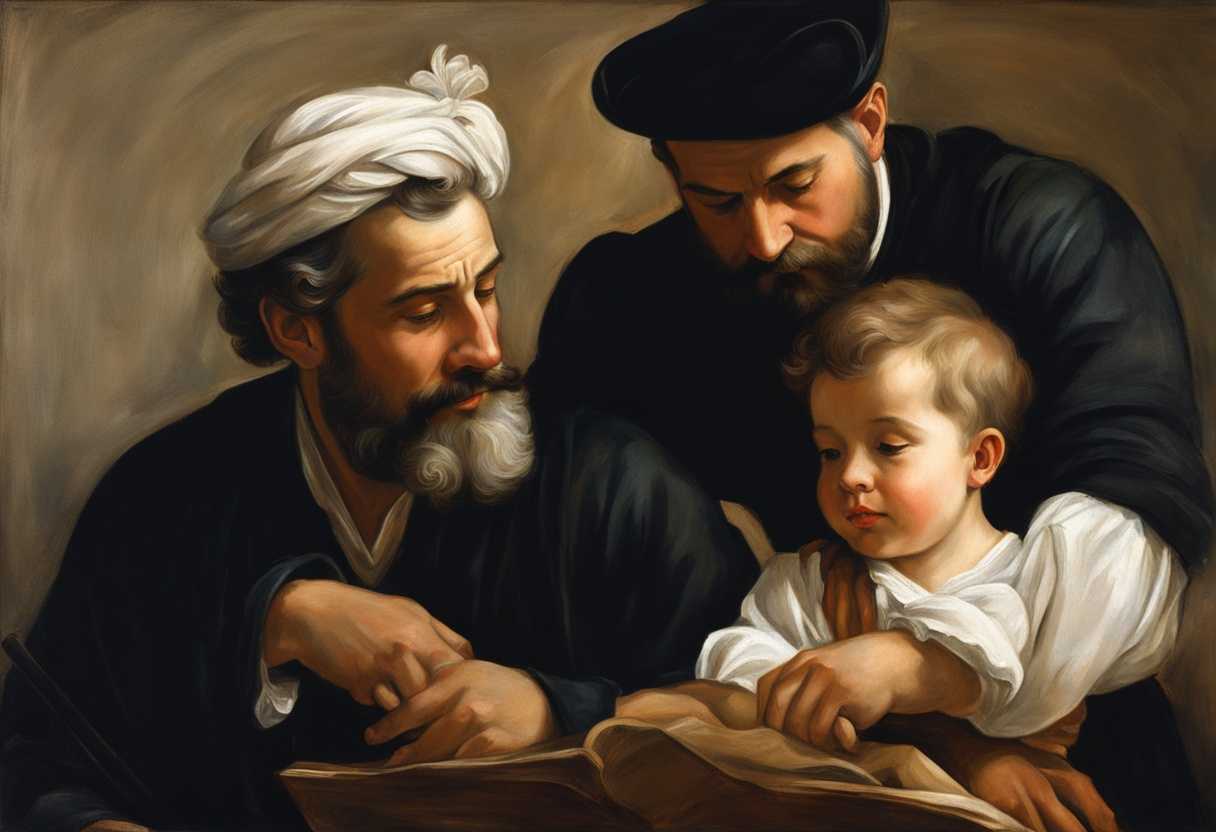
Setting the Scene for Matthew 21:28-31
In Matthew chapter 21, Jesus tells a parable to the chief priests and elders in the temple courts. The scene is set in Jerusalem during the time of Passover, a bustling and crowded time in the city. The chief priests and elders are gathered together, adorned in their traditional garments, discussing matters of religious importance.
Jesus, surrounded by his disciples, enters the temple courts and begins to teach. The atmosphere is tense as the religious leaders are wary of Jesus and his growing influence among the people. Jesus, knowing their thoughts, tells them the parable of the two sons, one who initially refuses to work in the vineyard but later changes his mind, and the other who agrees to work but does not follow through. Through this parable, Jesus challenges the religious leaders to reflect on their own actions and attitudes towards God’s kingdom.
The sun is shining brightly, casting a warm glow over the temple grounds, as Jesus delivers his message with authority and wisdom. The crowd listens intently, some nodding in agreement while others murmur amongst themselves. The scene is charged with tension and anticipation as Jesus confronts the religious leaders with the truth of their hearts.
What is Matthew 21:28-31 about?
Jesus tells the story of a father who asked his two sons to go work in the vineyard in this parable. One son initially refused but later ended up going, while the other son agreed to go but did not follow through. Through this simple story, Jesus conveys a powerful message about the importance of obedience over mere words or empty promises. He is highlighting the essence of integrity and trustworthiness in one’s actions.
Think about it this way: it’s one thing to say you’ll do something, but it’s a whole different story to actually follow through with your commitments. It’s about the integrity of our actions and the authenticity of our character. Jesus is reminding us that it’s not enough to just make promises or say the right things; we must also demonstrate our obedience through our actions. This parable challenges us to reflect on our own actions and whether we are truly living out our beliefs and values through our deeds.
So, the next time you find yourself in a situation where you have to choose between empty promises and tangible actions, remember the lesson from the Parable of the Two Sons. Let your actions speak louder than your words and strive to embody obedience and integrity in all that you do.
Understanding what Matthew 21:28-31 really means
The Parable of the Two Sons, found in Matthew 21:28-31, serves as a poignant reminder of the significance of actions over mere words in showcasing obedience and faithfulness to God. In this narrative, Jesus addresses the chief priests and elders in the temple, using the story to challenge their understanding and self-righteousness. The parable begins with the phrase “A man had two sons,” symbolizing God’s relationship with humanity and His call for us to serve and obey His will. One son initially refuses to work in the vineyard but later repents and goes, underscoring the importance of genuine repentance and the value of actions over initial responses. Conversely, the other son agrees to go but fails to follow through, representing empty promises and the failure to fulfill commitments.
This parable resonates with various biblical teachings that emphasize the inseparable link between faith and works. James 2:17 stresses that faith without corresponding actions is lifeless, highlighting the necessity of demonstrating our faith through deeds. Similarly, the Parable of the Prodigal Son in Luke 15:11-32 echoes themes of repentance and God’s boundless forgiveness. Matthew 7:21 further reinforces the idea that verbal professions of faith must be accompanied by obedience to God’s will, emphasizing the primacy of actions over mere declarations.
In today’s society, where empty promises abound, the Parable of the Two Sons remains profoundly relevant. It prompts us to reflect on whether our actions align with our professed beliefs and commitments. Are we merely paying lip service to our faith, or are we actively living it out through tangible deeds? Consider a scenario where a parent asks two children to clean their room: one initially refuses but later complies, while the other agrees but fails to act. The parent, like God, values the genuine repentance and subsequent actions of the first child over the hollow promises of the second.
Ultimately, this parable challenges us to examine the congruence between our words and deeds. It calls us to authentic repentance and urges us to manifest our faith through tangible actions. Take a moment to introspect on your own life: Are there areas where your actions do not align with your commitments to God? How can you better demonstrate your faith through practical deeds? Let the Parable of the Two Sons serve as a catalyst for genuine reflection and a renewed dedication to living out your faith in a tangible and impactful manner.
Are we truly obeying God’s will in our actions?
Jesus conveys the importance of obedience to God’s will in the parable of the two sons in Matthew 21:28-31. One son initially refused his father’s request to work in the vineyard but later repented and obeyed, while the other son immediately agreed but did not follow through. This parable teaches us that true obedience is not just about words or appearances but is demonstrated through our actions and a genuine heart to follow God’s will.
Reflecting on this passage prompts us to evaluate whether our actions align with God’s will or if we are merely paying lip service. It challenges us to examine our motives and sincerity in obeying God rather than just going through the motions. It reminds us that obedience involves both our words and deeds, and that God values a repentant heart and willingness to follow His commands over empty promises or superficial compliance.
Therefore, to answer whether we are truly obeying God’s will in our actions, we must assess if our obedience is genuine and rooted in love for Him. It goes beyond outward expressions of faith and requires a deep commitment to following God faithfully in all aspects of our lives. This parable urges us to undergo self-examination and ensure that our deeds reflect a true desire to live in accordance with God’s will rather than just doing what may be expected of us.
Application
Think about the father asking his two sons in Matthew 21:28-31 to work in the vineyard. One son said no but later did the work, while the other said yes but didn’t follow through. Where are you in your life? Have you made promises without acting on them, or hesitated but later did what was asked of you? Take this story as a wake-up call to not just talk the talk, but to walk the walk. Are you ready to match your actions with your intentions?

Reverend Michael Johnson is an experienced Church Minister with a profound expertise in spirituality and guidance. With a serene presence and a compassionate heart, he has faithfully served his congregation for over 20 years, leading them on a spiritual journey towards inner peace and enlightenment. Reverend Johnson’s extensive knowledge of religious philosophies and profound understanding of human nature have made him a trusted confidant and mentor to many, as he seamlessly weaves his profound wisdom into life teachings. Reverend Johnson’s calming demeanor and empathetic nature continue to uplift and heal souls, nurturing a sense of unity and tranquility within his community.