
Matthew 21:33-34 is about the parable of the wicked tenants, conveying the message of God’s desire for humanity to bear good fruit and the consequences for those who reject His messengers.
33 “Hear another parable. There was a master of a house who planted a vineyard and put a fence around it and dug a winepress in it and built a tower and leased it to tenants, and went into another country.
34 When the season for fruit drew near, he sent his servants to the tenants to get his fruit.
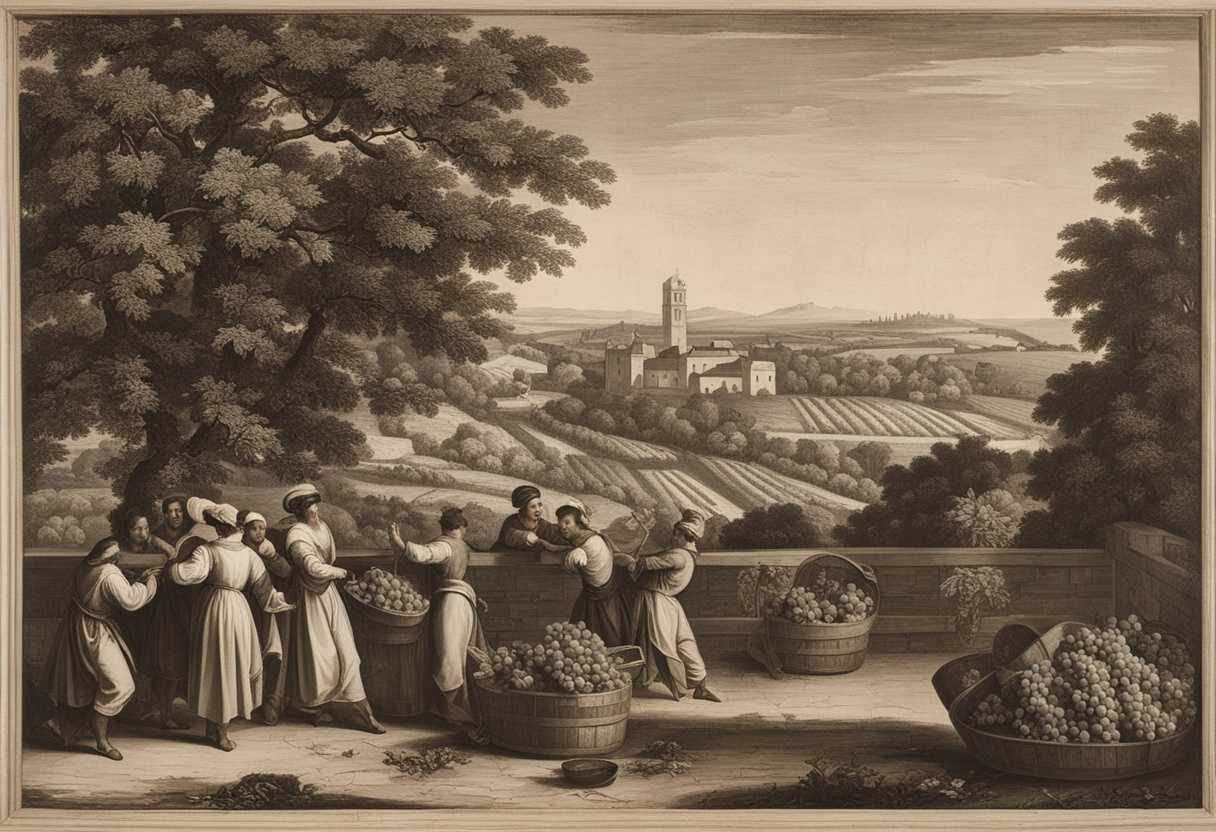
Setting the Scene for Matthew 21:33-34
In Matthew chapter 21, Jesus tells a parable to the chief priests and elders. The scene is set in a vineyard, a common setting in biblical times. The vineyard is lush and well-tended, with rows of grapevines stretching out in all directions. The sun is shining brightly overhead, casting a warm glow over the scene.
In this parable, a landowner planted a vineyard, put a fence around it, dug a winepress in it, and built a watchtower. The landowner represents God, the vineyard symbolizes Israel, the fence signifies God’s protection, the winepress represents the work of the prophets, and the watchtower symbolizes God’s constant watch over His people.
The chief priests and elders are gathered around Jesus as He tells this parable, their faces reflecting a mix of curiosity and skepticism. They are there to challenge Jesus and test His authority, but little do they know that His words will ultimately convict them of their own wrongdoing. The stage is set for a powerful lesson on faith, obedience, and the consequences of rejecting God’s messengers.
What is Matthew 21:33-34 about?
This parable of the vineyard owner and tenants is a powerful teaching about God’s patience and judgment. Just like the owner who sends servants to collect what is rightfully his, God sends messengers and prophets to guide us in living according to His will. However, just as the tenants mistreated and killed the owner’s servants in the parable, humanity often rejects God’s guidance and teachings.
Despite this rejection, the vineyard owner shows incredible patience, sending his son as a final attempt to reach the tenants. Similarly, God shows immense patience and mercy towards us, constantly giving us opportunities to repent and turn back to Him. However, there comes a point when the owner’s patience runs out, leading to his judgment on the unfaithful tenants. This serves as a reminder that while God is patient and forgiving, there will come a day of judgment when we will be held accountable for our actions.
Reflecting on this parable, we are called to examine our own lives and acknowledge if we have been faithful tenants of God’s vineyard. Have we accepted His messengers and teachings, or have we rejected them? Let us remember God’s patience and mercy, but let us also not take His grace for granted. May we strive to be faithful stewards of the gifts and opportunities He has given us, and always seek His guidance and forgiveness in our journey towards Him.
Understanding what Matthew 21:33-34 really means
In the Parable of the Tenants, Jesus addresses the chief priests and Pharisees in the temple courts, using a story to convey profound truths. The narrative unfolds with a landowner who plants a vineyard, symbolizing God’s creation of the world and His establishment of His people. The landowner then leases the vineyard to tenants, representing the leaders of Israel entrusted with the care of God’s people. When the landowner sends servants to collect the fruit, it mirrors the prophets sent by God to call His people to righteousness.
This parable echoes themes found in other biblical passages, such as Isaiah 5:1-7, known as the Song of the Vineyard, which also uses the vineyard metaphor to depict Israel and God’s expectations. Hebrews 1:1-2 emphasizes God’s communication through prophets and ultimately through His Son, Jesus. Additionally, in John 15:1-8, Jesus identifies Himself as the true vine, underscoring the importance of abiding in Him to bear fruit.
The relevance of this parable extends to people today in various ways. It prompts us to consider our accountability to God, akin to the tenants’ responsibility to the landowner. We are called to be good stewards of God’s creation and His message, recognizing that all we have is entrusted to us by Him. Furthermore, the parable challenges us to reflect on how we respond to God’s messengers and His call to live righteously.
To illustrate the parable’s message, envision a community garden project where volunteers are entrusted with its care. Despite being provided with tools and resources, they refuse to share the produce when asked, mistreating the messenger sent to collect it. This scenario underscores the importance of recognizing our responsibilities and being willing to share the fruits of our labor, mirroring the tenants’ actions in the parable.
In conclusion, the Parable of the Tenants serves as a poignant reminder of our role as stewards of God’s blessings. It urges us to contemplate our responses to God’s guidance and the messengers He sends our way. By internalizing and applying the lessons from this parable, we can lead lives that are faithful and fruitful, aligning our actions with God’s will in our daily walk with Him.
How do we respond to God’s call on us?
We respond to God’s call on us by acknowledging His authority and sovereignty in our lives. God expects us to honor Him with the offerings of our lives, just as the landowner in the parable of the vineyard expected the tenants to give him the fruit at harvest time. This involves recognizing His rightful place as our Creator and Lord, and yielding to His will and guidance.
Furthermore, responding to God’s call also entails a posture of stewardship and obedience. We are entrusted with God-given gifts, talents, and resources, and it is our responsibility to use them wisely and for His glory. It requires faithfulness in carrying out His purposes, even when it may seem challenging or goes against our own desires. We demonstrate our love for Him and our willingness to follow His lead in all aspects of our lives by heeding His call in this way. Responding to God’s call involves submission, obedience, and faithful stewardship of the blessings He has given us. It is a recognition of His authority and a willingness to serve Him wholeheartedly, knowing that He is the ultimate source of everything we have and that our lives are ultimately meant to bring Him honor and glory.
Application
Dear fellow traveler in this journey of faith, let us heed Christ’s call to bear fruit for His Kingdom with unwavering commitment. Take a moment to introspect – are you nurturing the seeds of love, joy, and kindness within your heart? Just as you tend to your work and family, tend to your spiritual growth with the same dedication. Embrace this task with a fervor that mirrors your devotion to your loved ones. Will you rise to the challenge and yield abundant fruit for the glory of God?

Reverend Michael Johnson is an experienced Church Minister with a profound expertise in spirituality and guidance. With a serene presence and a compassionate heart, he has faithfully served his congregation for over 20 years, leading them on a spiritual journey towards inner peace and enlightenment. Reverend Johnson’s extensive knowledge of religious philosophies and profound understanding of human nature have made him a trusted confidant and mentor to many, as he seamlessly weaves his profound wisdom into life teachings. Reverend Johnson’s calming demeanor and empathetic nature continue to uplift and heal souls, nurturing a sense of unity and tranquility within his community.