
Matthew 21:4 is about the fulfillment of prophecies in the Old Testament, specifically a reference to Zechariah 9:9, highlighting Jesus’ humble entry into Jerusalem as the prophesied King bringing salvation and peace.
4 This took place to fulfill what was spoken by the prophet, saying,
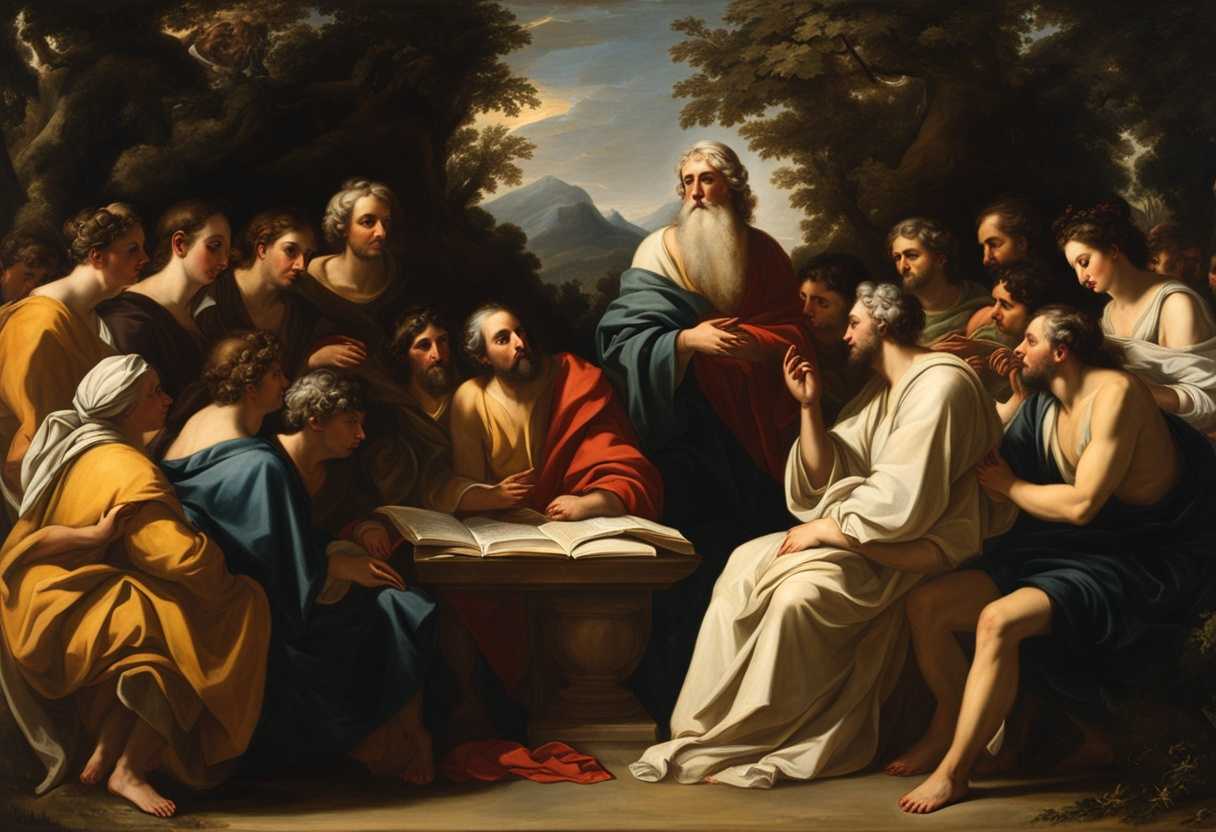
Setting the Scene for Matthew 21:4
In Matthew chapter 21, we find Jesus and his disciples approaching the city of Jerusalem. As they draw near, Jesus instructs two of his disciples to go into the village ahead of them, where they will find a donkey tied with her colt. He tells them to bring the animals to him, explaining that this is to fulfill the prophecy in Zechariah 9:9, which foretold the Messiah’s humble entrance into Jerusalem on a donkey.
The disciples follow Jesus’ instructions and find the donkey and her colt just as he said. They untie the animals and bring them to Jesus, who then mounts the colt. The disciples lay their cloaks on the donkey’s back, and Jesus sits on it, preparing to enter Jerusalem in a symbolic and prophetic manner. The scene is filled with anticipation and excitement as Jesus, the long-awaited Messiah, makes his way towards the city, surrounded by his devoted followers who are witnessing this significant moment in awe and wonder. The atmosphere is charged with a sense of divine purpose and fulfillment as Jesus fulfills ancient prophecies and prepares to carry out his mission in Jerusalem.
What is Matthew 21:4 about?
Imagine the scene: Jesus, the humble and compassionate teacher, riding into Jerusalem on a simple donkey. This image is rich with symbolism and significance. Prophecies in the Bible foretell the coming of a savior who will enter Jerusalem on a donkey, symbolizing peace and humility. Jesus fulfilling this prophecy demonstrates his role as the long-awaited messiah, the one who brings salvation and delivers people from their sins. Reflect on this verse as you consider the choice of a donkey for Jesus’ entry into Jerusalem. A donkey was a symbol of peace and humility in ancient times, quite different from the majestic horses typically ridden by conquerors and kings. Jesus shows that his kingdom is one of humility, love, and peace, not of power and domination by riding on a donkey. This act challenges societal norms and expectations, inviting us to rethink our understanding of true greatness and leadership. It teaches us that true fulfillment of prophecy lies not in grand displays of power, but in acts of love, compassion, and humility.
Understanding what Matthew 21:4 really means
In the context of Matthew 21:4, we witness a pivotal moment in Jesus’ ministry as he enters Jerusalem amidst the cheers of the crowd, fulfilling the prophecy of Zechariah 9:9. This event marks the beginning of the culmination of God’s redemptive plan, underscoring the meticulous fulfillment of ancient prophecies in the life of Jesus.
The reference to Zechariah 9:9 not only validates Jesus’ messianic identity but also emphasizes the humility and peaceful nature of the awaited King. By choosing to ride on a donkey, Jesus subverts the expectations of a conquering hero on a warhorse, embodying a different kind of kingship based on servanthood and compassion. This challenges our modern notions of leadership, urging us to embrace humility and gentleness in our interactions with others.
The parallel accounts in John 12:14-15 and the prophecy in Isaiah 62:11 further reinforce the theme of salvation and deliverance associated with Jesus’ entry into Jerusalem. These passages serve as a tapestry of interconnected prophecies and events, weaving together the threads of God’s redemptive narrative throughout history.
For contemporary believers, Matthew 21:4 offers a profound message of hope and expectation. Just as the people of Jerusalem anticipated the arrival of their King, we too await the fulfillment of God’s promises in our lives. This verse serves as a beacon of assurance, reminding us that God’s faithfulness endures despite the uncertainties of our world.
Consider a scenario where a town eagerly anticipates the arrival of a new leader. Instead of a grand procession, the leader chooses a humble mode of transportation, engaging with the community on a personal level. This anecdote mirrors Jesus’ entry into Jerusalem, illustrating the transformative power of humility and approachability in leadership.
Key phrases like “This took place to fulfill” emphasize the divine orchestration of events, highlighting the intentional fulfillment of prophecy in Jesus’ ministry. The continuity between Old Testament prophecies and their New Testament fulfillment underscores the unity and coherence of God’s redemptive plan, spanning across generations.
In the address to “Daughter Zion,” we witness God’s intimate communication with His people, offering guidance and reassurance in times of waiting and expectation. This direct engagement underscores the personal nature of God’s relationship with us, inviting us to lean into His promises with faith and anticipation. Reflecting on these insights deepens our appreciation for the profound significance of Matthew 21:4 in our spiritual journey today.
What obstacles in our lives need to be removed?
The obstacles in our lives that need to be removed are like the assistance provided to the donkey in the verse. We must identify and eliminate anything hindering our connection with God, just as the disciples took off their cloaks and put them on the donkey to create a path for Jesus. These hindrances could be anything that distracts us from a meaningful relationship with Him, such as negative habits, toxic relationships, or worldly temptations. We can clear a path for God to work in our lives and for us to walk closer with Him by removing these obstacles.
Additionally, like the crowds in the verse who laid their cloaks on the road, we must be willing to humble ourselves and make sacrifices in order to remove these obstacles. This may require us to let go of our pride, comfort, or worldly desires in order to follow God’s path for us. We can open ourselves up to His guidance and blessings in our lives by surrendering these hindrances and submitting to His will. We can create a clear path for His presence and purpose to flow freely in our lives by recognizing and removing the obstacles that stand in the way of our relationship with God. We can pave the way for God to work powerfully in and through us when we remove anything that hinders our walk with Him, just as the disciples made way for Jesus to enter Jerusalem.
Application
Let’s be like Jesus in our daily lives, humble and kind, just as he rode into Jerusalem on a donkey, showing love and compassion. Embrace the power of humility and service to make the world brighter and better for all. Will you join in spreading light and hope with humble actions today?

Reverend Michael Johnson is an experienced Church Minister with a profound expertise in spirituality and guidance. With a serene presence and a compassionate heart, he has faithfully served his congregation for over 20 years, leading them on a spiritual journey towards inner peace and enlightenment. Reverend Johnson’s extensive knowledge of religious philosophies and profound understanding of human nature have made him a trusted confidant and mentor to many, as he seamlessly weaves his profound wisdom into life teachings. Reverend Johnson’s calming demeanor and empathetic nature continue to uplift and heal souls, nurturing a sense of unity and tranquility within his community.