
Matthew 21:6 is about Jesus instructing his disciples to fetch a donkey and its colt for him to ride into Jerusalem, fulfilling the prophecy of Zechariah 9:9 and symbolizing the humility and peace of his kingdom.
6 The disciples went and did as Jesus had directed them.
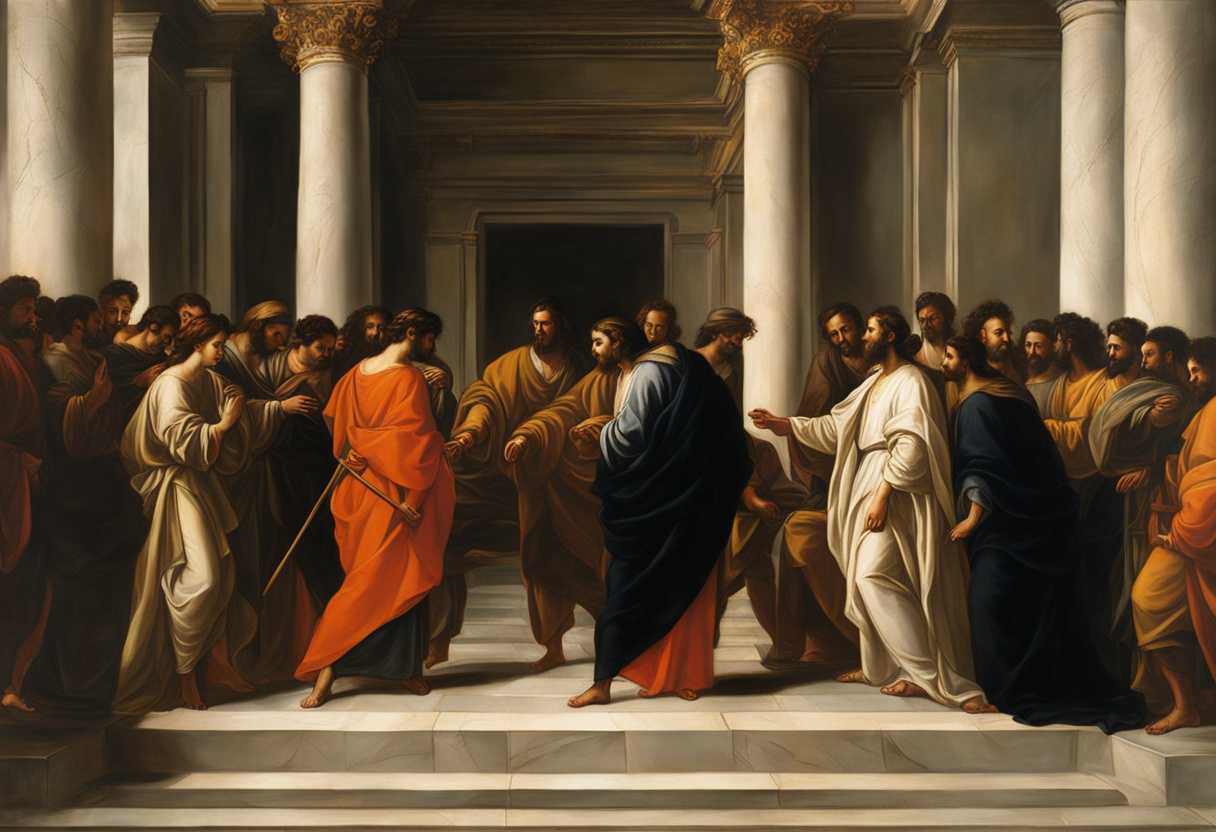
Setting the Scene for Matthew 21:6
In Matthew chapter 21, we find Jesus and his disciples approaching Jerusalem during the time of the Passover festival. As they near the city, Jesus instructs two of his disciples to go into the village ahead of them, where they will find a donkey tied with her colt. He tells them to bring the animals to him, saying, “If anyone says anything to you, you shall say, ‘The Lord needs them,’ and he will send them at once.”
The disciples follow Jesus’ instructions and find the donkey and her colt just as he had said. They untie the animals and bring them to Jesus, laying their cloaks on the donkey’s back for him to sit on. The scene is one of anticipation and excitement as Jesus prepares to enter Jerusalem, fulfilling the prophecy of Zechariah 9:9. The disciples and the crowd that had gathered around Jesus are filled with wonder and awe at the events unfolding before them, as they witness the fulfillment of ancient prophecies and the arrival of their long-awaited Messiah.
What is Matthew 21:6 about?
We witness a significant moment in the biblical account of Jesus’ entry into Jerusalem in this verse. The disciples bring a donkey and a colt to Jesus, and they place their clothing on the animals before Jesus sits on them. This event fulfills an Old Testament prophecy in Zechariah 9:9, which foretold that the Messiah would enter Jerusalem riding on a donkey.
Reflect on the symbolism and significance of this act. Why did Jesus choose to enter Jerusalem in this manner, on a humble donkey instead of a grand stallion or chariot? This act of humility and simplicity conveys a message of peace, meekness, and humility rather than power and dominance. It is a visual representation of Jesus’ mission on Earth – to bring salvation, not through force or conquest, but through love and sacrifice. Let us consider the message that this verse holds for us as we contemplate it. Are we willing to humble ourselves, like Jesus did, and serve others with love and compassion? Are we willing to set aside our pride and ego, and instead embrace humility and meekness in our interactions with others? We should strive to follow Jesus’ example and embody his teachings of humility and service in our daily lives.
Understanding what Matthew 21:6 really means
In the Gospel of Matthew, we encounter a pivotal moment in Jesus’ ministry as he makes his triumphal entry into Jerusalem. This event holds profound significance in Christian tradition, often commemorated on Palm Sunday. The disciples, obedient to Jesus’ instructions, procure a donkey and a colt, fulfilling the prophecy of Zechariah 9:9, which foretold a king’s humble arrival on a donkey. This act of obedience underscores the disciples’ trust in Jesus, even when the purpose may not have been entirely clear to them.
The interconnectedness of biblical passages enriches our understanding of this event. Zechariah’s prophecy, echoed in Matthew 21:6, emphasizes the symbolism of humility and peace associated with Jesus’ choice of transportation. John 12:14-15 further reinforces the fulfillment of prophecy, highlighting the divine orchestration of Jesus’ actions. These passages weave together to paint a vivid picture of God’s sovereign plan unfolding through Jesus’ ministry.
The relevance of this narrative extends beyond its historical context, offering timeless lessons for contemporary believers. The disciples’ obedience and trust serve as a model for us, prompting reflection on our willingness to follow God’s guidance, even when it challenges our understanding. The fulfillment of God’s promises, exemplified in Jesus’ entry into Jerusalem, reminds us of the unwavering reliability of God’s word and the assurance it provides in uncertain times.
Consider a modern parallel to the disciples’ obedience. Picture a scenario where a leader directs their team in an unconventional manner, prompting initial confusion among the members. Yet, as events unfold, the wisdom behind the leader’s instructions becomes evident, mirroring the disciples’ eventual realization of the deeper significance of Jesus’ commands. This anecdote illustrates the importance of trust and obedience, even when the rationale may not be immediately apparent.
The phrase “The disciples went and did as Jesus had instructed them” encapsulates the essence of obedience and faith displayed by the disciples. Their immediate action without hesitation serves as a poignant example of unwavering trust in Jesus’ authority. Similarly, the emphasis on following divine instructions underscores the broader theme of heeding God’s guidance throughout the Bible, highlighting the blessings that flow from obedience.
As we contemplate Matthew 21:6, we are invited to trust in God’s plan, embrace humility in our actions, and find solace in the fulfillment of God’s promises. Just as the disciples followed Jesus’ instructions with unwavering faith, may we too walk in obedience, knowing that God’s word never returns void and that His promises are steadfast and true.
Are we truly ready to receive Jesus?
The verse in Matthew 21:6 describes how the people prepared to receive Jesus when he entered Jerusalem. They spread their cloaks on the road and cut branches from the trees to lay down before him. This act symbolized a display of honor and recognition of Jesus as a King. It shows a physical demonstration of readiness and willingness to receive him with reverence and praise. We need to ask ourselves in a similar way if we are truly prepared to receive Jesus into our lives. Are we willing to lay down our own ambitions, desires, and comforts before him? Are we ready to acknowledge him as our Lord and Savior, and to give him the rightful place of honor and authority in our lives? Like the people in the verse, we must be willing to make tangible gestures that demonstrate our readiness and eagerness to receive Jesus into our hearts. Let us reflect on the meaning of the verse in Matthew 21:6 and examine our hearts and actions to ensure that we are truly ready to receive Jesus. May we prepare ourselves with humility, reverence, and a wholehearted commitment to follow him. We should make room for Jesus in our lives by laying down our own agendas and submitting to his will, so that we may truly receive him as our King and Savior.
Application
Reflect on the urgency and faithfulness shown in Matthew 21:6. Let it spark a fire within you to act promptly on God’s calling. Just as the disciples heeded Jesus’ instructions swiftly to find the donkey, will you also answer God’s call with the same determination and readiness? Don’t hesitate; the time is now. Will you respond with faith and obedience in the face of challenges and uncertainties, just like the disciples did?

Reverend Michael Johnson is an experienced Church Minister with a profound expertise in spirituality and guidance. With a serene presence and a compassionate heart, he has faithfully served his congregation for over 20 years, leading them on a spiritual journey towards inner peace and enlightenment. Reverend Johnson’s extensive knowledge of religious philosophies and profound understanding of human nature have made him a trusted confidant and mentor to many, as he seamlessly weaves his profound wisdom into life teachings. Reverend Johnson’s calming demeanor and empathetic nature continue to uplift and heal souls, nurturing a sense of unity and tranquility within his community.