
Matthew 22:15-21 is about navigating the tension between religious and secular authorities by emphasizing the importance of fulfilling one’s duties to both God and the state.
15 Then the Pharisees went and plotted how to entangle him in his words.
16 And they sent their disciples to him, along with the Herodians, saying, “Teacher, we know that you are true and teach the way of God truthfully, and you do not care about anyone’s opinion, for you are not swayed by appearances.
17 Tell us, then, what you think. Is it lawful to pay taxes to Caesar, or not?”
18 But Jesus, aware of their malice, said, “Why put me to the test, you hypocrites?
19 Show me the coin for the tax.” And they brought him a denarius.
20 And he said to them, “Whose likeness and inscription is this?”
21 They said to him, “Caesar’s.” Then he said to them, “Therefore render to Caesar the things that are Caesar’s, and to God the things that are God’s.”
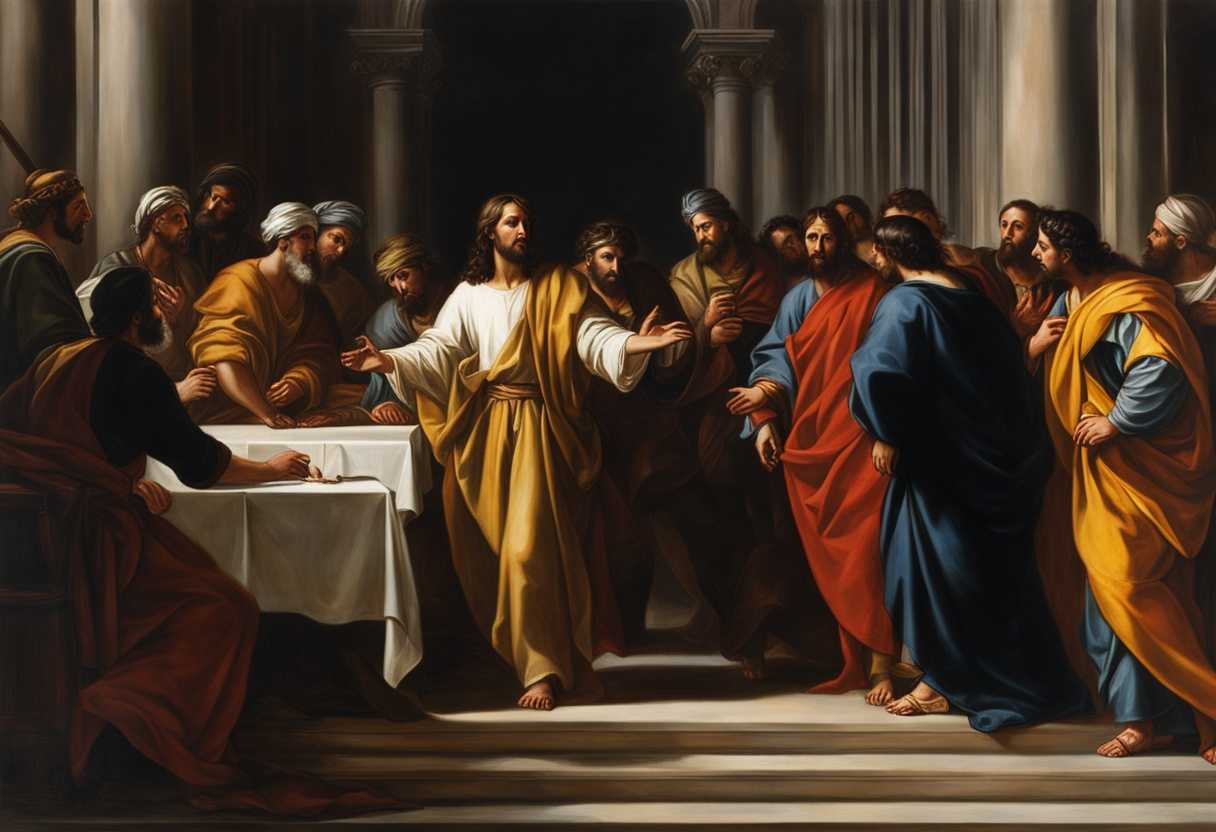
Setting the Scene for Matthew 22:15-21
In Matthew chapter 22, we find Jesus teaching in the temple in Jerusalem during the final week of his earthly ministry. The Pharisees and Herodians, who were typically at odds with each other, come together with a common goal to trap Jesus in his words. They approach him with a question about paying taxes to Caesar, hoping to force him into a controversial statement that would either alienate the Jewish people or provoke the Roman authorities.
The scene is tense as the Pharisees and Herodians, known for their strict adherence to Jewish law and their support of Roman rule, respectively, stand before Jesus. The temple courtyard is bustling with activity as people come and go, offering sacrifices and engaging in prayer. Jesus, with his disciples by his side, stands calmly in the midst of the commotion, his wisdom and authority evident to all who are present. The Pharisees and Herodians watch intently, waiting for his response, while the crowd gathers around, curious to see how he will navigate this tricky situation. It is a moment of high stakes and deep theological significance, as Jesus uses their question to teach a profound lesson about the relationship between earthly authorities and the kingdom of God.
What is Matthew 22:15-21 about?
This verse spoken by Jesus serves as a guiding principle on the balance between worldly responsibilities and spiritual duties. Jesus is highlighting the importance of fulfilling one’s obligations to both earthly authorities and divine beings by saying “Render to Caesar what is Caesar’s, and to God what is God’s.” He is emphasizing the distinction between the material realm and the spiritual realm, suggesting that we must honor both.
When reflecting on this verse, we can ask ourselves: What are our duties as citizens or members of a society? How do we navigate the demands of the physical world while staying true to our spiritual beliefs? Jesus’s words remind us to find a harmonious balance between our secular responsibilities and our spiritual values. It’s a call to be mindful of our actions in all aspects of life, whether in our interactions with authorities or in our devotion to higher principles. This verse ultimately invites us to live with integrity and discernment, acknowledging the different spheres of influence in our lives. It prompts us to consider how we can honor both our earthly obligations and our spiritual truths, striving to be conscientious and authentic in all our endeavors.
Understanding what Matthew 22:15-21 really means
In the midst of the confrontations between Jesus and the religious leaders of His time, a pivotal moment unfolds in Matthew 22:15-21. The Pharisees and Herodians, typically at odds with each other, unite in an attempt to ensnare Jesus with a question about paying taxes to Caesar. This strategic move aimed to corner Jesus into a controversial stance, revealing the political and social tension of the era. Understanding this backdrop is crucial in grasping the weightiness of the question posed to Jesus and the intricate dynamics at play.
Jesus’ response, “Render to Caesar the things that are Caesar’s, and to God the things that are God’s,” encapsulates a profound truth. It delineates the boundaries between civic duty and spiritual allegiance, acknowledging the authority of earthly governance while underscoring the ultimate sovereignty of God. This statement not only addresses the immediate question but also delves into the broader theme of balancing secular obligations with divine mandates, a timeless dilemma faced by believers across generations.
Moreover, Jesus’ pointed remark, “Why put me to the test, you hypocrites?” exposes the insidious motives behind the Pharisees and Herodians’ inquiry. It unveils their duplicity and serves as a caution against approaching matters of faith with deceitful intentions. This rebuke serves as a poignant reminder of the importance of sincerity and authenticity in our interactions, especially when engaging in matters of faith and ethics.
Drawing parallels from related biblical passages such as Romans 13:1-7 and 1 Peter 2:13-17, we glean insights into the Christian’s relationship with governmental authorities. These texts echo the call to respect human institutions while upholding our identity as servants of God. Genesis 1:27 further reinforces the concept of human beings created in the image of God, emphasizing our inherent allegiance to Him above all earthly powers.
In contemporary contexts, the passage resonates with individuals navigating the complexities of dual citizenship in the kingdom of God and their earthly nation. It prompts believers to approach their civic responsibilities and spiritual commitments with discernment and integrity. Consider a scenario where a Christian business owner grapples with adhering to regulations conflicting with their faith principles. This passage would guide them to honor both legal obligations and God, perhaps through advocacy or seeking legal exemptions, illustrating the practical relevance of Jesus’ teachings today.
In conclusion, Jesus’ response to the Pharisees and Herodians serves as a poignant lesson on balancing earthly duties with spiritual devotion. It challenges us to live with integrity, fulfilling our civic responsibilities while unwaveringly upholding our spiritual commitments. Ultimately, this passage stands as a timeless reminder of the paramount importance of prioritizing our relationship with God in all facets of life, guiding us to navigate the complexities of our world with wisdom and faithfulness.
How can we honor both God and civil authority?
We can honor both God and civil authority by recognizing the distinction between the two while also respecting their roles in our lives. God calls us to obey Him and to give Him the highest reverence in our hearts, while civil authority is established by God for the order and well-being of society. Christians are called to submit to the governing authorities and follow the laws of the land as long as they do not contradict God’s commands.
When faced with conflicts between our faith and civil laws, we should prayerfully seek wisdom and discernment to navigate such situations with grace and truth. We demonstrate our faithfulness and trust in God by honoring Him with our obedience and respect, even as we fulfill our civic duties as responsible citizens. We reflect the love and righteousness of God in the world around us by upholding both God’s authority and civil authority with integrity.
Application
Life throws us countless challenges, just like a busy workday or caring for our family. In Matthew 22:15-21, Jesus navigates a tricky question wisely. We, too, need to apply that wisdom in our daily lives. How will you face today’s tests and decisions in a way that honors your faith? Don’t let these moments slip by. They are your chance to shine. Are you ready to make your next move inspired by His teachings?

Reverend Michael Johnson is an experienced Church Minister with a profound expertise in spirituality and guidance. With a serene presence and a compassionate heart, he has faithfully served his congregation for over 20 years, leading them on a spiritual journey towards inner peace and enlightenment. Reverend Johnson’s extensive knowledge of religious philosophies and profound understanding of human nature have made him a trusted confidant and mentor to many, as he seamlessly weaves his profound wisdom into life teachings. Reverend Johnson’s calming demeanor and empathetic nature continue to uplift and heal souls, nurturing a sense of unity and tranquility within his community.