
Matthew 22:17-21 is about Jesus being questioned by the Pharisees and Herodians about paying taxes to Caesar, and Jesus’ response emphasizing the importance of fulfilling civic duties while also recognizing the higher authority of God in all aspects of life.
17 Tell us, then, what you think. Is it lawful to pay taxes to Caesar, or not?”
18 But Jesus, aware of their malice, said, “Why put me to the test, you hypocrites?
19 Show me the coin for the tax.” And they brought him a denarius.
20 And he said to them, “Whose likeness and inscription is this?”
21 They said to him, “Caesar’s.” Then he said to them, “Therefore render to Caesar the things that are Caesar’s, and to God the things that are God’s.”
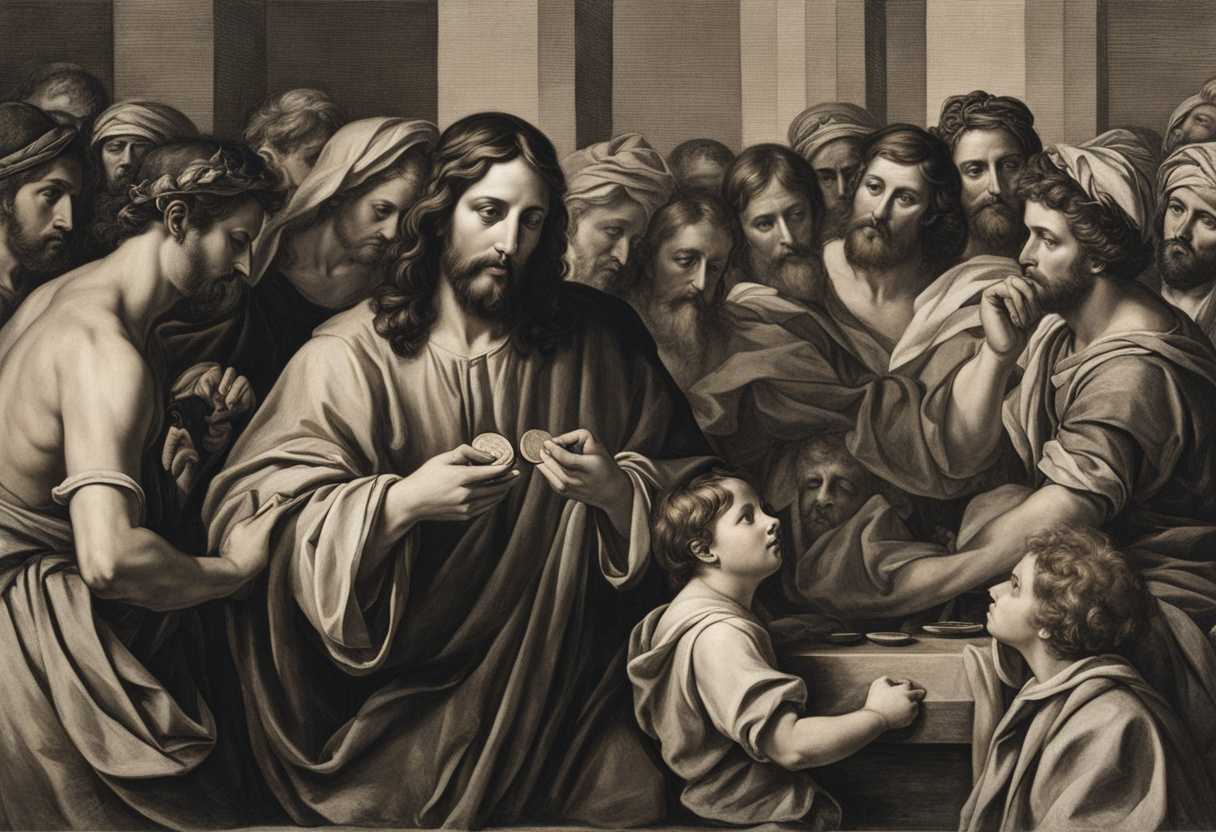
Setting the Scene for Matthew 22:17-21
In Matthew chapter 22, we find Jesus engaged in a heated discussion with the Pharisees and Herodians in the temple in Jerusalem. The Pharisees, known for their strict adherence to Jewish law, and the Herodians, supporters of King Herod and the Roman occupation, have come together to challenge Jesus. The scene is tense as they try to trap Jesus with their questions about paying taxes to Caesar.
Surrounded by a crowd of onlookers, Jesus stands calmly in the midst of the temple courts, his disciples by his side. The ornate pillars and intricate carvings of the temple provide a grand backdrop to this confrontation. The Pharisees and Herodians, with their flowing robes and stern expressions, stand opposite Jesus, their faces betraying their ulterior motives.
As the debate intensifies, Jesus’ wisdom and insight shine through, leaving his opponents amazed and silenced. In this pivotal moment, Jesus delivers his famous response, “Render to Caesar the things that are Caesar’s, and to God the things that are God’s,” revealing a profound truth that transcends the political intrigue of the moment. The atmosphere crackles with tension as the crowd contemplates the words of this extraordinary teacher in their midst.
What is Matthew 22:17-21 about?
This verse, spoken by Jesus, highlights the importance of balance and responsibility in our lives. Jesus is teaching us the principle of honoring both our earthly obligations and our spiritual duties by saying “Render to Caesar what is Caesar’s, and to God what is God’s.” It reminds us that while we should fulfill our responsibilities as members of society, we must also remember our higher allegiance to God. We are also called to devote ourselves to God and live out our faith in our daily lives, just as we are expected to pay taxes and obey laws in the earthly realm. This verse challenges us to reflect on how we prioritize our commitments and reminds us that we can serve both the earthly and spiritual realms without compromising our beliefs. We are encouraged to live a balanced and purposeful life that reflects both our earthly citizenship and our heavenly inheritance by acknowledging the dual nature of our obligations.
So, as you navigate the complexities of life, remember the wisdom in Jesus’ words. Consider how you can fulfill your earthly responsibilities while also honoring your spiritual duties. Reflect on the ways you can integrate your faith into all aspects of your life, giving due reverence to both Caesar and God.
Understanding what Matthew 22:17-21 really means
In the narrative of Matthew 22:17-21, we witness a strategic attempt by the Pharisees and Herodians to entangle Jesus in a controversial question regarding the payment of taxes to Caesar. This ploy aimed to trap Jesus in a dilemma where any response could potentially alienate Him from either the Jewish populace or the Roman authorities. To fully grasp the weight of Jesus’ profound reply, it is essential to appreciate the historical and political backdrop of the Jewish-Roman relations during that time.
When Jesus utters the famous words, “Render therefore unto Caesar the things which are Caesar’s; and unto God the things that are God’s,” He draws a clear distinction between the realm of civic duty and spiritual allegiance. This statement underscores the importance of recognizing the authority of earthly governments while upholding the supremacy of God in our lives. It serves as a timeless reminder for believers to navigate the complexities of secular governance while remaining steadfast in their devotion to God.
The broader biblical context echoes this sentiment of honoring both earthly authorities and divine sovereignty. Paul, in Romans 13:1-7, emphasizes the divine establishment of governing powers, urging Christians to submit to them. Similarly, Peter, in 1 Peter 2:13-17, advocates for respect towards human institutions for the sake of the Lord. These passages collectively reinforce the idea of balancing civic responsibilities with spiritual obligations, mirroring the essence of Jesus’ response in Matthew 22.
In today’s world, where the realms of politics and religion frequently intersect, the message of Matthew 22:17-21 remains profoundly relevant. It prompts believers to reflect on how they can fulfill their civic duties conscientiously while remaining true to their faith principles. This passage serves as a guiding light for individuals grappling with ethical dilemmas arising from conflicting demands of the state and their religious convictions.
To illustrate the practical application of this biblical principle, consider a scenario where a Christian business owner faces a legal mandate that contradicts their religious beliefs. Just as Jesus advised rendering unto Caesar what is due to Caesar and unto God what is due to God, this individual may navigate the situation by complying with legal requirements while ensuring that their business practices align with their faith values. This anecdote exemplifies the nuanced approach advocated by Jesus in addressing the tension between secular obligations and spiritual commitments.
In conclusion, Matthew 22:17-21 invites believers to introspect on their dual roles as citizens of earthly nations and heirs of the Kingdom of God. It calls for a harmonious integration of civic responsibilities with unwavering loyalty to God, emphasizing the importance of aligning our actions with our devotion. As we navigate the complexities of a world where political and spiritual realms converge, may we heed the wisdom encapsulated in Jesus’ timeless words, striving to honor both our earthly duties and our heavenly calling.
Is it possible to fully serve both God and worldly powers?
According to the verse you mentioned, it is not possible to fully serve both God and worldly powers. Jesus emphasized the idea of giving to Caesar what belongs to Caesar and giving to God what belongs to God. This demonstrates the distinction between responsibilities to worldly authorities and responsibilities to God. It implies that we cannot serve both simultaneously with equal fervor and dedication, as one’s allegiance may conflict with the other.
Therefore, in the context of this verse, it is clear that one should prioritize serving God above worldly powers. While it is essential to fulfill our duties as citizens or members of society, our ultimate allegiance and obedience should be towards God. Trying to serve both God and worldly powers equally can lead to divided loyalties and compromised faith. Jesus highlighted the importance of giving to God what is rightfully His, ultimately making it a matter of where one’s heart and devotion lie.
Application
Just as we balance our duties at work and at home, let’s also prioritize honoring God in all that we do. Just as we give our best to our families, let’s also give our whole selves to our Creator. Let’s not hold back or compartmentalize our faith, but instead, let’s live out our beliefs boldly and authentically. Are we truly offering God the reverence and obedience He deserves in every part of our lives?

Reverend Michael Johnson is an experienced Church Minister with a profound expertise in spirituality and guidance. With a serene presence and a compassionate heart, he has faithfully served his congregation for over 20 years, leading them on a spiritual journey towards inner peace and enlightenment. Reverend Johnson’s extensive knowledge of religious philosophies and profound understanding of human nature have made him a trusted confidant and mentor to many, as he seamlessly weaves his profound wisdom into life teachings. Reverend Johnson’s calming demeanor and empathetic nature continue to uplift and heal souls, nurturing a sense of unity and tranquility within his community.