
Matthew 22:29-32 is about Jesus asserting the Resurrection by reminding the Pharisees that God is not God of the dead but of the living, emphasizing belief in the afterlife and the power of God to overcome death.
29 But Jesus answered them, “You are wrong, because you know neither the Scriptures nor the power of God.
30 For in the resurrection they neither marry nor are given in marriage, but are like angels in heaven.
31 And as for the resurrection of the dead, have you not read what was said to you by God:
32 ‘I am the God of Abraham, and the God of Isaac, and the God of Jacob’? He is not God of the dead, but of the living.”
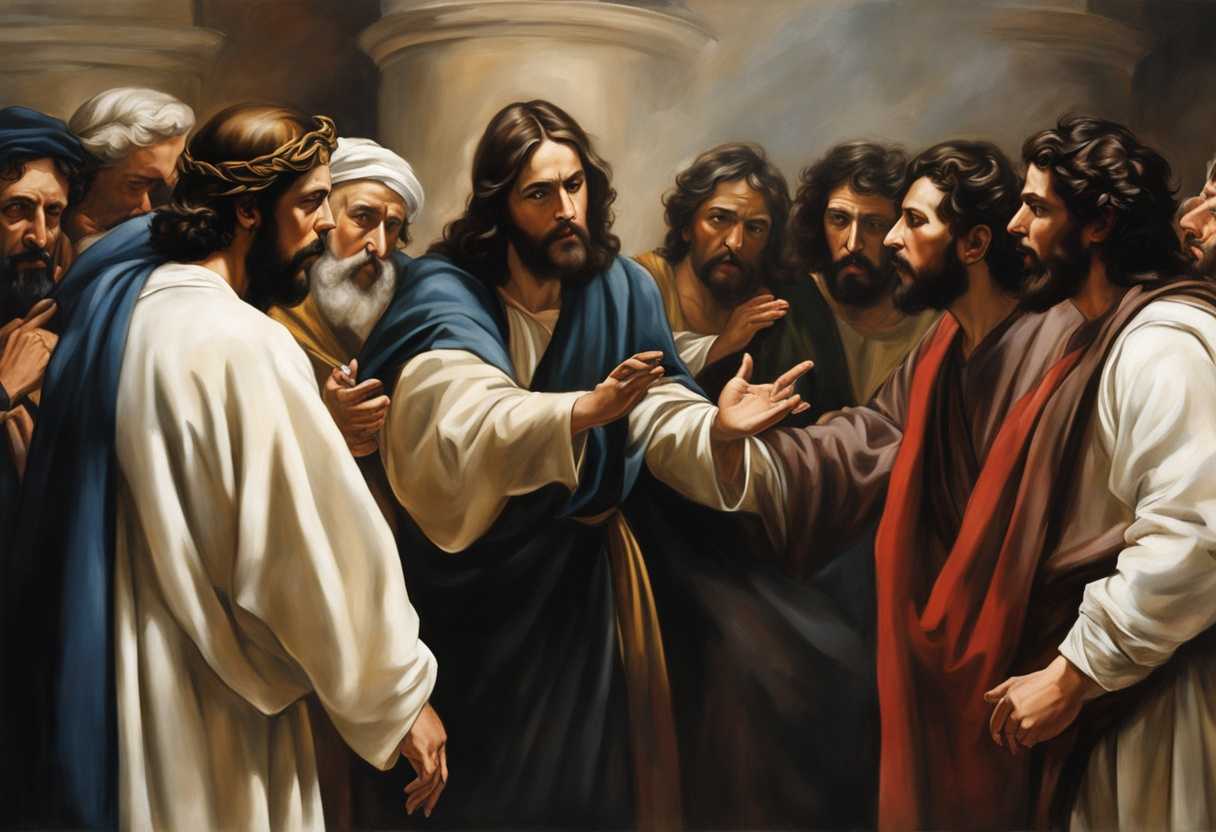
Setting the Scene for Matthew 22:29-32
In Matthew chapter 22, Jesus is engaged in a heated debate with the Pharisees and Sadducees in the temple in Jerusalem. The Pharisees, who were known for their strict adherence to Jewish law, were trying to test Jesus by asking him difficult questions. The Sadducees, on the other hand, did not believe in the resurrection of the dead, which was a point of contention in their discussion with Jesus.
The scene is set in the bustling courtyard of the temple, with crowds of people milling about, listening intently to the debate between Jesus and the religious leaders. The air is tense with anticipation as Jesus skillfully navigates the tricky questions thrown at him, using parables and wisdom to confound his opponents. The Pharisees and Sadducees are visibly frustrated as Jesus turns the tables on them, exposing their hypocrisy and lack of understanding of the scriptures.
As the sun begins to set over the temple, Jesus delivers a powerful message about the resurrection, leaving the religious leaders speechless and the crowd in awe of his teachings. The scene captures the essence of Jesus’ ministry – challenging the religious norms of the time and offering a message of hope and salvation to all who would listen.
What is Matthew 22:29-32 about?
This verse highlights a fundamental belief in the Christian faith – the concept of resurrection. Jesus emphasizes the continuity and eternal nature of life beyond physical death by referencing God’s interaction with Abraham, Isaac, and Jacob. These patriarchs, though long gone, remain connected to God in a way that transcends earthly existence. This connection serves as a powerful example of how God’s power extends beyond our temporal understanding of life and death.
Have you ever considered the profound implications of resurrection in your own faith journey? This verse challenges us to think beyond the limitations of our physical bodies and consider the eternal nature of our souls. It invites us to contemplate the depth of God’s power and the everlasting relationship He offers to all who believe. May we find comfort and hope in the promise of resurrection and the unbreakable bond we share with our Creator as we meditate on this verse.
Understanding what Matthew 22:29-32 really means
In Matthew 22:29-32, Jesus engages with the Sadducees, who challenge Him on the concept of resurrection. He responds by pointing out their error in not knowing the Scriptures or the power of God. This interaction highlights the importance of a deep understanding of God’s word and His divine capabilities. Jesus clarifies that in the resurrection, earthly institutions like marriage will not exist as they do on earth; instead, people will be like angels in heaven, indicating a transformed existence beyond earthly relationships.
By referencing God’s self-identification as the God of Abraham, Isaac, and Jacob in Exodus 3:6, Jesus affirms the reality of the resurrection. The present tense “I am” used by God signifies that these patriarchs are alive to Him, reinforcing the belief in life after death. This teaching is further supported by Paul in 1 Corinthians 15:42-44, where he discusses the imperishable and glorious nature of the resurrection body. Additionally, in John 11:25-26, Jesus declares Himself as the resurrection and the life, offering eternal life to those who believe in Him, providing hope and assurance of resurrection for believers.
Today, many individuals grapple with doubts and uncertainties regarding faith and the afterlife. Understanding the Scriptures and trusting in God’s power, as emphasized by Jesus, can help believers navigate these challenges. The promise of resurrection offers hope and assurance in a world marked by fear and uncertainty surrounding death. The idea that earthly relationships will be transformed in the resurrection can bring solace to those mourning the loss of loved ones, knowing that a future reunion awaits in a glorified state.
To illustrate this concept, consider a child afraid of the dark. Just as a parent turns on a light to dispel the fear, Jesus’ teaching on the resurrection shines a light on the unknown, assuring us that there is nothing to fear in death. Just as the child learns to trust the parent’s words and the power of the light, we are called to trust in the Scriptures and the power of God, finding comfort and hope in His promises. By delving into the meanings of key phrases in this passage and connecting them to other biblical passages, we can grasp the profound hope and assurance that Jesus offers regarding the resurrection and eternal life, providing enduring comfort and encouragement in our faith journey today.
What does resurrection life look like for believers?
Resurrection life for believers can be understood as a transformation from physical to spiritual existence, as seen in the verse. This passage emphasizes the continuity of life after death, indicating that believers will not cease to exist after physical death but will experience a new form of life. The concept of resurrection life includes a sense of eternal connection with God, transcending the limitations of this earthly life. The verse highlights that resurrection life for believers involves a deep relationship with God. Believers are seen as children of God, embraced by Him in a special way in the afterlife. This relationship is characterized by a sense of belonging, love, and security in the presence of God, which brings hope and reassurance to believers.
Additionally, resurrection life for believers is marked by a fulfillment of God’s promises and a continuity of His plan for humanity. It signifies a victorious outcome over sin and death, as believers are raised to a new life in the presence of God. This concept brings comfort and encouragement to believers, knowing that their faithfulness will be rewarded with eternal life in the kingdom of God.
Application
In a world full of distractions, let us anchor ourselves in the timeless wisdom of God’s Word. Listen not to the noise of the world but to the quiet voice of truth that resonates within you. Open your heart to the richness and clarity that the Scriptures offer. Let the words guide you as you navigate the complexities of modern life. Will you take the courageous step to immerse yourself in God’s Word and let it illuminate your path forward?

Reverend Michael Johnson is an experienced Church Minister with a profound expertise in spirituality and guidance. With a serene presence and a compassionate heart, he has faithfully served his congregation for over 20 years, leading them on a spiritual journey towards inner peace and enlightenment. Reverend Johnson’s extensive knowledge of religious philosophies and profound understanding of human nature have made him a trusted confidant and mentor to many, as he seamlessly weaves his profound wisdom into life teachings. Reverend Johnson’s calming demeanor and empathetic nature continue to uplift and heal souls, nurturing a sense of unity and tranquility within his community.