
Matthew 23:1-8 is about Jesus warning the crowds and his disciples against the hypocrisy of the scribes and Pharisees, emphasizing the importance of practicing what they preach and not seeking personal glory through religious practices.
1 Then Jesus said to the crowds and to his disciples,
2 “The scribes and the Pharisees sit on Moses’ seat,
3 so do and observe whatever they tell you, but not the works they do. For they preach, but do not practice.
4 They tie up heavy burdens, hard to bear, and lay them on people’s shoulders, but they themselves are not willing to move them with their finger.
5 They do all their deeds to be seen by others. For they make their phylacteries broad and their fringes long,
6 and they love the place of honor at feasts and the best seats in the synagogues,
7 and greetings in the marketplaces and being called rabbi by others.
8 But you are not to be called rabbi, for you have one teacher, and you are all brothers.
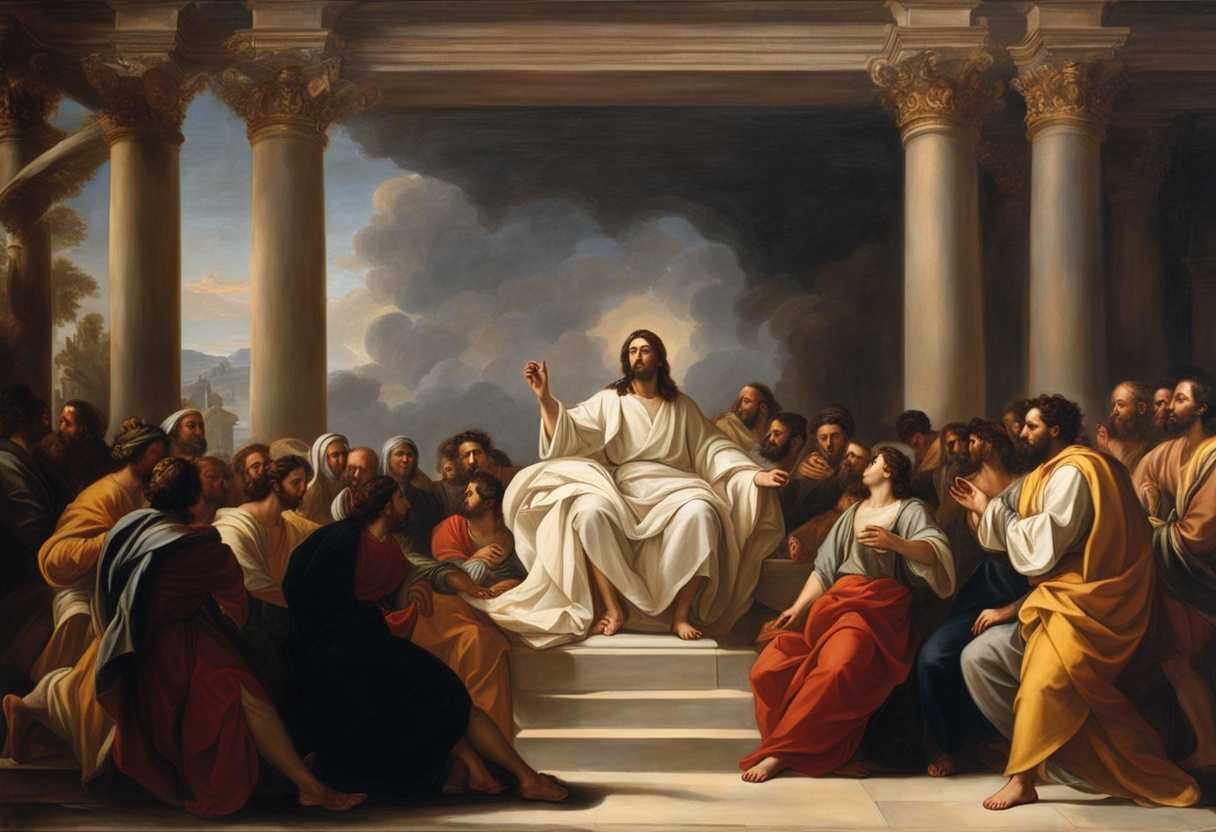
Setting the Scene for Matthew 23:1-8
The scene in Matthew 23:1-8 takes place in Jerusalem, specifically in the temple courts. Jesus is surrounded by a large crowd of people, including his disciples and other followers. The Pharisees and teachers of the law are also present, observing Jesus closely as he begins to address the crowd.
The Pharisees and teachers of the law had been critical of Jesus and his teachings, often challenging him and trying to trap him with their questions. In this particular scene, Jesus seizes the opportunity to address the crowd and confront the religious leaders about their hypocrisy. He warns the people to listen to the teachings of the Pharisees but not to follow their example, as they do not practice what they preach.
As Jesus speaks, the atmosphere is tense, with the religious leaders growing increasingly uncomfortable with his words. The crowd listens intently as Jesus exposes the hypocrisy of the Pharisees, urging them to live out their faith with sincerity and humility. The scene is charged with emotion and conviction as Jesus delivers his message with authority and wisdom.
What is Matthew 23:1-8 about?
This verse serves as a powerful reminder to all of us, especially those in positions of religious leadership, to practice what we preach. Jesus is cautioning against the dangers of hypocrisy and pride, emphasizing the importance of living a life that aligns with the teachings we share with others. It challenges us to reflect on our actions and intentions, urging us to be genuine in our beliefs and not simply perform rituals or acts of righteousness for show. Our actions as teachers and leaders carry weight and influence over those we guide and mentor. We must be mindful of the example we set and the message we convey through our behavior. Are we truly embodying the values we espouse, or are we merely going through the motions? Do our words and actions reflect humility, sincerity, and a genuine commitment to our faith, or are we guilty of seeking recognition and praise from others? Let us take this verse as a call to self-examination and a reminder to lead with authenticity and humility. Our role as teachers and leaders is a sacred trust, and we must strive to honor that responsibility with integrity and sincerity. Let us identify our motives, guard against the pitfalls of pride and hypocrisy, and endeavor to live out our faith in a way that truly impacts and inspires others.
Understanding what Matthew 23:1-8 really means
In Matthew 23:1-8, Jesus addresses the crowds and His disciples, cautioning them about the behavior of the Pharisees and teachers of the law. He emphasizes the importance of humility, sincerity, and servant leadership in contrast to the hypocrisy and self-serving nature of the religious leaders of the time. The phrase “The teachers of the law and the Pharisees sit in Moses’ seat” signifies their position of authority in teaching God’s law, highlighting the responsibility that comes with such a role. However, Jesus warns against following their actions, as they do not practice what they preach, calling for integrity and authenticity in both words and deeds.
Moreover, Jesus criticizes the Pharisees for burdening others with heavy loads of rules without offering support or compassion, condemning their actions done for show rather than genuine devotion to God. He stresses the importance of seeking God’s approval over the admiration of people, reminding His followers that true greatness lies in humility and service. The call to not be called ‘Rabbi’ but to recognize one Teacher and embrace equality among believers underscores the value of humility and unity within the community of faith.
Drawing parallels to other biblical passages such as James 1:22, which urges believers to not only listen to the word but also live it out, and Matthew 20:26-28, emphasizing servant leadership as the path to greatness, reinforces the timeless principles of integrity, authenticity, and selfless service. Similarly, 1 Peter 5:3 aligns with the call for leaders to be humble examples rather than authoritarian figures, guiding with humility and grace.
In today’s context, the message of Matthew 23:1-8 remains relevant as it challenges individuals, especially leaders, to embody integrity, authenticity, and servant leadership. In a world where hypocrisy can be prevalent, this passage calls for genuine living and sincere actions that align with one’s beliefs. It prompts modern leaders to prioritize service over power and recognition, fostering a culture of mutual respect and support within communities. By promoting equality and humility, this passage encourages individuals to transcend societal hierarchies and divisions, embracing a sense of brotherhood and unity among believers.
Consider a workplace scenario where a manager enforces strict rules but fails to abide by them, causing discontent among employees. In contrast, a manager who leads by example, shares responsibilities, and treats everyone with respect cultivates a positive and productive environment. Similarly, Jesus calls for leaders to be humble servants, setting a precedent for mutual respect and support within communities. Ultimately, Matthew 23:1-8 serves as a timeless reminder of the values of humility, integrity, and servant leadership, challenging individuals to live authentically, serve selflessly, and treat others with equality and respect.
Are we practicing humility in our leadership roles?
We, in our leadership roles, must practice humility by avoiding the desire for recognition and putting the well-being of others before our own interests. This involves leading with a sense of servanthood rather than seeking authority or power for its own sake. We can set an example that aligns with the teachings of scripture by humbling ourselves and acknowledging that our leadership is a responsibility granted to us.
Applying the principle of humility in leadership means focusing on serving and uplifting those who rely on our guidance, rather than seeking praise or prestige. When we lead with humility, we are more likely to foster an environment of trust, respect, and collaboration among those we lead. We can cultivate a leadership style that reflects a genuine commitment to the well-being of others and the greater good by following the example set forth in the scriptures.
Application
Let’s embrace humility in all aspects of our lives, at work and with our loved ones. Let sincerity and genuine care guide our actions. Let’s lead with humility and compassion, setting aside the desire for recognition. How can you let these words guide you today?

Reverend Michael Johnson is an experienced Church Minister with a profound expertise in spirituality and guidance. With a serene presence and a compassionate heart, he has faithfully served his congregation for over 20 years, leading them on a spiritual journey towards inner peace and enlightenment. Reverend Johnson’s extensive knowledge of religious philosophies and profound understanding of human nature have made him a trusted confidant and mentor to many, as he seamlessly weaves his profound wisdom into life teachings. Reverend Johnson’s calming demeanor and empathetic nature continue to uplift and heal souls, nurturing a sense of unity and tranquility within his community.