
Matthew 23:2-4 is about Jesus criticizing the religious leaders for their hypocritical behavior of teaching and instructing others to follow the law, while not practicing it themselves.
2 “The scribes and the Pharisees sit on Moses’ seat,
3 so do and observe whatever they tell you, but not the works they do. For they preach, but do not practice.
4 They tie up heavy burdens, hard to bear, and lay them on people’s shoulders, but they themselves are not willing to move them with their finger.
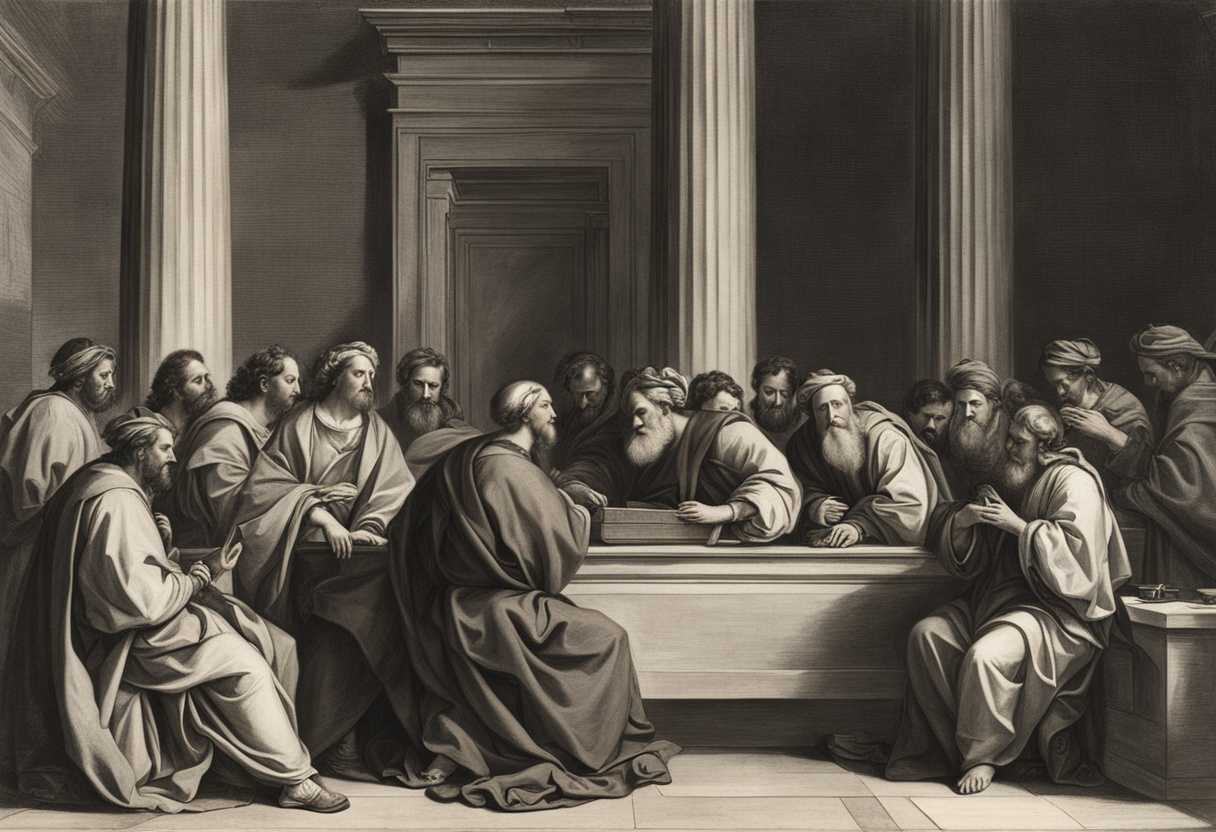
Setting the Scene for Matthew 23:2-4
In Matthew chapter 23, Jesus is addressing a large crowd of people gathered in the temple in Jerusalem. The scene is bustling with activity as people from all walks of life have come to hear Jesus speak. The temple courtyard is filled with merchants selling their goods, priests going about their duties, and ordinary people seeking spiritual guidance.
Among the crowd are the Pharisees and scribes, the religious leaders of the time, who have come to challenge Jesus and test his teachings. They are dressed in their finest robes, standing out in the crowd with their air of authority and self-righteousness. Jesus, on the other hand, is surrounded by his disciples, a group of humble and devoted followers who have left everything to follow him.
As Jesus begins to speak, the atmosphere in the temple becomes tense. The Pharisees and scribes listen intently, ready to pounce on any perceived blasphemy or heresy. Jesus, however, does not hold back, calling out the hypocrisy and pride of the religious leaders and urging the people to follow God’s commandments with sincerity and humility. The scene is charged with emotion as Jesus delivers his powerful message of love, justice, and righteousness.
What is Matthew 23:2-4 about?
This verse serves as a stern warning against the dangers of hypocrisy and self-righteousness in religious leaders. Jesus is pointing out the discrepancy between the outward appearance of piety and the true motives of these supposed leaders. He is drawing attention to the fact that they may look clean and righteous on the outside but are filled with corruption and deceit within by calling them “whitewashed tombs.” We, as teachers, must constantly reflect on our own actions and motives to ensure that we are not falling into the trap of hypocrisy. Are we practicing what we preach? Are we truly leading our students with integrity and authenticity? These questions are crucial for us to consider as we guide others on their spiritual journey. We must strive to be genuine, humble, and sincere in our actions, always keeping in mind that our ultimate goal is to lead by example and truly serve those entrusted to our care.
Understanding what Matthew 23:2-4 really means
In Matthew 23:2-4, Jesus addresses the crowds and His disciples, shedding light on the scribes and Pharisees’ hypocrisy. These religious leaders, who hold positions of authority and teach the Law of Moses, are criticized for failing to practice what they preach. While Jesus acknowledges the validity of their teachings, He condemns their lack of integrity in their actions. The warning against following their example serves as a cautionary tale about discerning between sound teachings and poor role models.
The scribes and Pharisees are depicted as burdening people with heavy and unyielding rules while refusing to lift a finger to help. This portrayal highlights the danger of hypocrisy and the misuse of authority. Their failure to embody the principles they espouse serves as a stark reminder of the importance of leading by example. Jesus’ words serve as a timeless reminder of the pitfalls of empty rhetoric and the necessity of genuine, lived-out faith.
Drawing parallels to other biblical passages reinforces the message of practicing what one preaches. James 1:22 underscores the deception of being mere hearers of the word, while Matthew 7:3-5 urges self-examination before passing judgment on others. 1 Peter 5:2-3 emphasizes the servant-leadership model, calling for humility and integrity in guiding others. These passages collectively emphasize the significance of authenticity and accountability in both leadership and personal conduct.
The relevance of this message extends beyond ancient times, resonating with contemporary society. It underscores the critical need for integrity in leadership, whether in religious institutions or secular organizations. Individuals are challenged to align their actions with their beliefs, fostering a culture of consistency and trust. Moreover, the call for compassion and support reminds us not to impose burdens on others without offering assistance, embodying a spirit of empathy and solidarity.
Consider a scenario where a manager preaches punctuality but habitually arrives late to meetings. Such behavior not only undermines their authority but also diminishes team morale. This anecdote mirrors the essence of Jesus’ admonition, illustrating the detrimental effects of incongruence between words and deeds. Leaders, whether in the workplace or the church, must exemplify the values they promote to inspire and guide effectively.
In conclusion, Matthew 23:2-4 serves as a poignant reminder of the timeless principles of authenticity and integrity in leadership. It challenges individuals to uphold their beliefs through consistent actions and advocates for a compassionate and supportive approach to guiding others. As we reflect on these teachings, may we strive to embody the virtues of sincerity, accountability, and empathy in our roles as leaders and followers alike.
Are my actions consistent with my beliefs?
Jesus condemns the Pharisees for not practicing what they preach in Matthew 23:2-4. He points out that they lay heavy burdens on others but do not lift a finger to help. This verse highlights the importance of aligning our actions with our beliefs. It speaks to the hypocrisy of claiming to follow God’s teachings but not living them out in our daily lives.
Reflecting on this verse, we should examine our own actions to ensure they are consistent with our beliefs. It is not enough to just talk about our faith; we must also walk the walk. Our actions should reflect the values and principles we claim to hold dear. We show true obedience to God and demonstrate our commitment to following His teachings by living out our beliefs authentically. We should strive to be genuine in our faith, ensuring that our actions align with our beliefs. May we be a living example of the love, mercy, and compassion that we profess to follow in our hearts. We can honor God and inspire others to do the same by embodying our beliefs through our actions.
Application
Imagine your life as a bustling office where every word and action shapes its atmosphere. Jesus calls us to be humble leaders, true to our word and sincere in our actions. Let’s be the colleagues and family members who lift others up with honesty and without pride. Are you prepared to bring this authenticity into every corner of your daily life?

Reverend Michael Johnson is an experienced Church Minister with a profound expertise in spirituality and guidance. With a serene presence and a compassionate heart, he has faithfully served his congregation for over 20 years, leading them on a spiritual journey towards inner peace and enlightenment. Reverend Johnson’s extensive knowledge of religious philosophies and profound understanding of human nature have made him a trusted confidant and mentor to many, as he seamlessly weaves his profound wisdom into life teachings. Reverend Johnson’s calming demeanor and empathetic nature continue to uplift and heal souls, nurturing a sense of unity and tranquility within his community.