
Matthew 23:27-32 is about Jesus condemning the religious leaders for their hypocrisy and outward piety while inwardly being full of greed and wickedness, warning them of the consequences of their actions and reminding them of the responsibility they bear for the blood of the prophets.
27 “Woe to you, scribes and Pharisees, hypocrites! For you are like whitewashed tombs, which outwardly appear beautiful, but within are full of dead people’s bones and all uncleanness.”
28 So you also outwardly appear righteous to others, but within you are full of hypocrisy and lawlessness.
29 “Woe to you, scribes and Pharisees, hypocrites! For you build the tombs of the prophets and decorate the monuments of the righteous,
30 and say, ‘If we had lived in the days of our fathers, we would not have taken part with them in shedding the blood of the prophets.’
31 Thus you witness against yourselves that you are sons of those who murdered the prophets.
32 Fill up, then, the measure of your fathers.
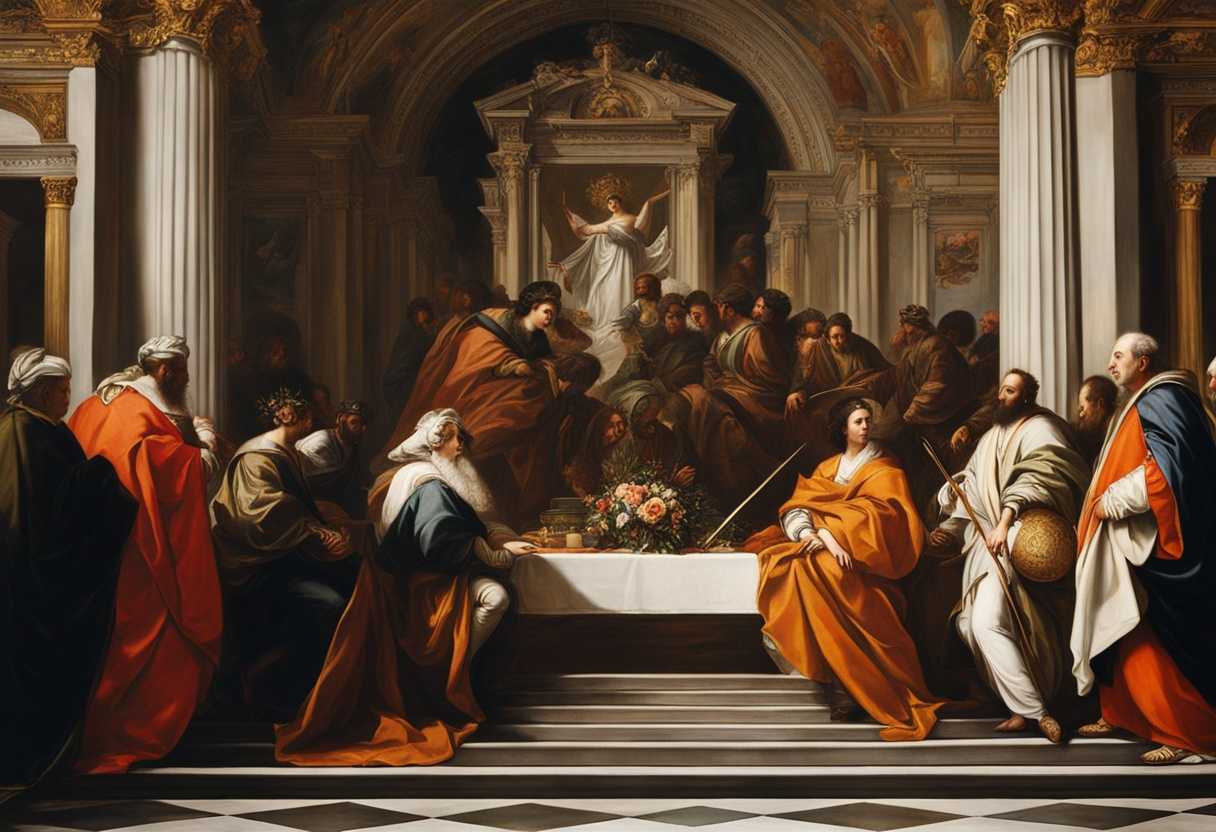
Setting the Scene for Matthew 23:27-32
In Matthew chapter 23, Jesus is addressing a crowd of people and his disciples in the temple in Jerusalem. The scene is intense as Jesus confronts the religious leaders, the scribes, and the Pharisees for their hypocrisy and lack of true righteousness. The atmosphere is charged with tension as Jesus rebukes them for their outward show of piety while their hearts are filled with greed and wickedness.
The scribes and Pharisees, known for their strict adherence to religious laws and traditions, are present in the scene, along with a crowd of onlookers. They have gathered in the temple to hear Jesus speak, but instead of receiving praise, they are met with scathing criticism. Jesus uses strong language to denounce their hypocrisy, calling them “whitewashed tombs” that appear beautiful on the outside but are full of dead men’s bones and uncleanness on the inside.
The temple surroundings provide a solemn backdrop to this confrontation, with the grandeur of the religious institution contrasting sharply with the moral decay that Jesus is exposing. The audience listens intently as Jesus warns them not to follow the example of the religious leaders, who are more concerned with outward appearances than with true righteousness. The scene is a powerful reminder of the importance of genuine faith and humility before God.
What is Matthew 23:27-32 about?
When we look at this verse, we see Jesus standing up against the religious leaders of his time who were more focused on outward appearances and rituals rather than true faith and compassion. He condemns their hypocrisy, pointing out that they may look righteous on the outside but inside, they are full of greed and wickedness. The warning of judgment serves as a reminder that our actions and intentions will be judged by a higher power, and it is not just about following rules or traditions.
Imagine walking alongside Jesus as he speaks these words. Can you feel the urgency in his message, urging us to not just go through the motions of religion but to truly live out our beliefs with sincerity and integrity? It serves as a powerful reminder for us to examine our own hearts and actions, making sure that they align with the values of love, honesty, and humility. Let this verse challenge us to be authentic in our faith, showing kindness and compassion to others instead of just putting on a show of righteousness.
Understanding what Matthew 23:27-32 really means
In Matthew 23:27-32, Jesus delivers a powerful message to the Pharisees and teachers of the law, condemning their hypocrisy and false righteousness. He uses vivid imagery, likening them to whitewashed tombs—beautiful on the outside but filled with death and decay within. This metaphor serves as a stark reminder that true righteousness is not about outward appearances but stems from a pure heart and genuine intentions. Jesus cuts through their facade, exposing their hypocrisy and wickedness hidden behind a veneer of piety.
The phrase “full of hypocrisy and wickedness” encapsulates Jesus’ indictment of the Pharisees. Despite their outward displays of religious devotion, their hearts are far from God, consumed by deceit and malice. Their actions betray their true nature, revealing a disconnect between their professed beliefs and their actual behavior. By highlighting their hypocrisy, Jesus challenges us to examine our own lives and ensure that our actions align with our beliefs, avoiding the trap of mere outward show without inner transformation.
Jesus further rebukes the Pharisees for honoring the prophets and decorating the graves of the righteous while disregarding their teachings and living contrary to their example. This serves as a cautionary tale against superficial displays of respect and reverence that mask underlying disobedience and unrighteousness. It prompts us to consider whether our actions truly reflect our values and beliefs or if we, too, are guilty of paying lip service to righteousness while harboring wickedness in our hearts.
The relevance of these verses extends beyond the historical context to our modern-day lives. In a world where appearances often take precedence over authenticity, Jesus’ words serve as a timely reminder to prioritize inner integrity over external image. The prevalence of social media and societal pressures to present a flawless facade make it easy to fall into the trap of hypocrisy, emphasizing the need for genuine faith and sincerity in our actions.
Just as the Pharisees faced Jesus’ rebuke for their hypocrisy, we are called to examine our own lives and ensure that our outward expressions of faith are rooted in genuine devotion and inner transformation. The anecdote of the empty gift box serves as a poignant illustration of the disappointment that arises when outward appearances do not align with inner reality. It underscores the importance of authenticity and integrity in our relationships, both with others and with God.
In conclusion, Matthew 23:27-32 challenges us to move beyond surface-level righteousness and embrace a faith that transforms our hearts and actions. It urges us to cultivate a genuine relationship with God, one that is characterized by integrity and authenticity rather than mere outward compliance. Let us heed Jesus’ warning against hypocrisy and strive for a faith that is sincere, transparent, and deeply rooted in the truth of God’s word.
What masks are we wearing to hide our true selves?
The masks we wear to hide our true selves are like whitewashed tombs – beautiful and pristine on the outside, but filled with decay and ugliness within. We try to project an image of perfection to the world, while hiding our flaws, insecurities, and sins. We wear masks of righteousness and piety, yet our hearts are filled with greed, hypocrisy, and wickedness.
Instead of facing our inner struggles and seeking genuine transformation, we choose to conceal our true selves behind a facade of false virtue. We fear vulnerability and judgment, so we continue to wear the masks that shield us from the truth of who we really are. But these masks only serve to distance us from authenticity, genuine relationships, and ultimately, from God.
Application
In the twists and turns of the digital age, the journey within is as crucial as the tasks in the virtual boardroom. Take a moment to look beneath the surface codes of your being. Dare to break the firewall of falsehood and let authenticity reign in your digital soul. It’s time to upgrade your spiritual software and realign your connection with the divine network. Will you take the ultimate update and let your inner light shine through the pixelated darkness?

Reverend Michael Johnson is an experienced Church Minister with a profound expertise in spirituality and guidance. With a serene presence and a compassionate heart, he has faithfully served his congregation for over 20 years, leading them on a spiritual journey towards inner peace and enlightenment. Reverend Johnson’s extensive knowledge of religious philosophies and profound understanding of human nature have made him a trusted confidant and mentor to many, as he seamlessly weaves his profound wisdom into life teachings. Reverend Johnson’s calming demeanor and empathetic nature continue to uplift and heal souls, nurturing a sense of unity and tranquility within his community.