
Matthew 24:1-2 is about Jesus predicting the destruction of the Temple in Jerusalem to symbolize the end of the Old Covenant era and the beginning of a new spiritual order.
1 Jesus left the temple and was going away when his disciples came to point out to him the buildings of the temple.
2 But he answered them, “You see all these, do you not? Truly, I say to you, there will not be left here one stone upon another that will not be thrown down.”
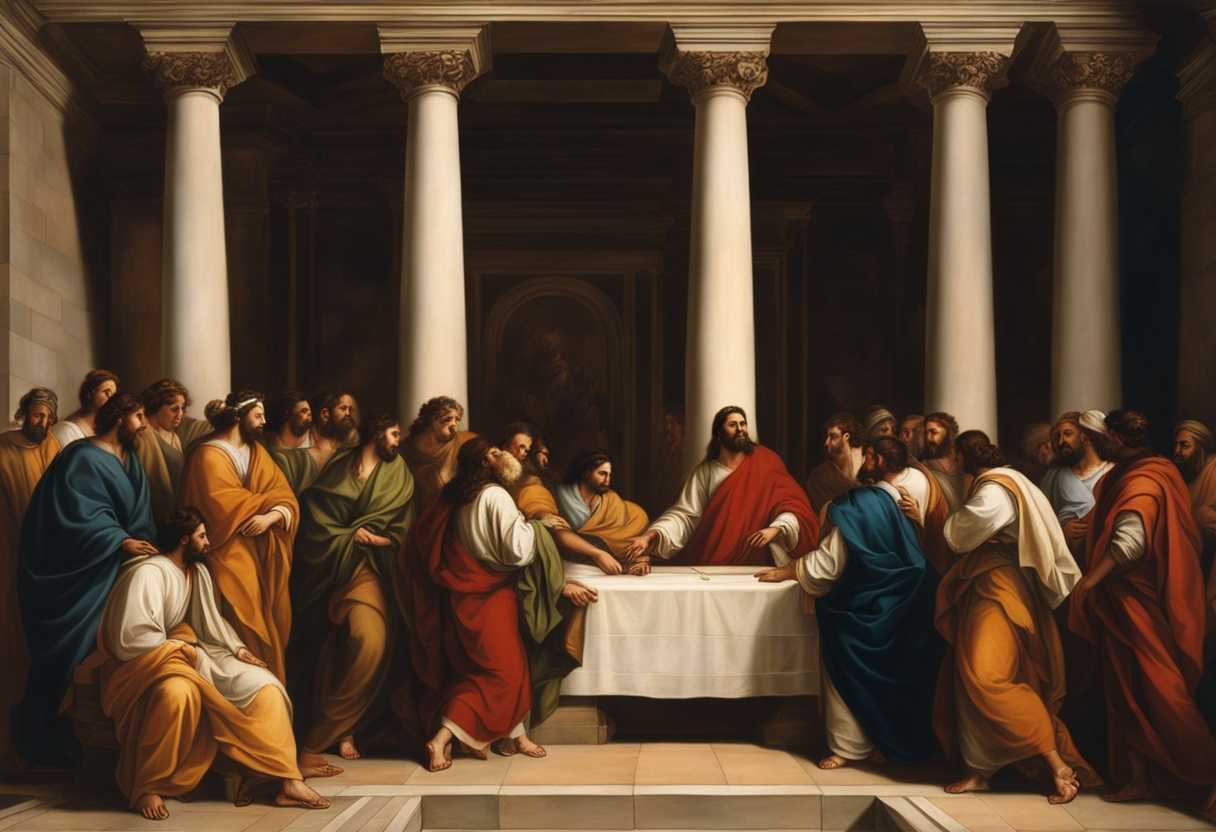
Setting the Scene for Matthew 24:1-2
The scene in Matthew 24:1-2 takes place in Jerusalem, specifically at the temple. Jesus and his disciples are in the city, and as they are leaving the temple, his disciples point out the grandeur of the buildings to him. The temple in Jerusalem was a magnificent structure, one of the most important religious and cultural sites in the region. The disciples were likely in awe of its size and beauty.
As they stand outside the temple, Jesus delivers a prophecy about its destruction. This moment sets the stage for the rest of Matthew 24, where Jesus goes on to speak about the signs of the end times and the importance of being prepared for his second coming. The disciples must have been shocked and troubled by Jesus’ words, as the temple held immense significance in their religious and cultural life.
The scene is filled with tension and anticipation as Jesus foretells the destruction of the temple and speaks about the future events that will unfold. The disciples are left pondering the significance of his words and grappling with the implications of what he has just revealed to them.
What is Matthew 24:1-2 about?
This verse from the Bible holds deep significance as Jesus predicts the destruction of the temple in Jerusalem. It serves as a powerful reminder of the transient nature of material things and the impermanence of our physical world. Jesus is emphasizing the importance of focusing on spiritual matters and the eternal rather than being consumed by worldly possessions or structures by foretelling the temple’s destruction.
This prediction also serves as a warning about the consequences of straying from faith and losing sight of what truly matters. It prompts us to reflect on our own priorities and to consider the legacy we are building for ourselves beyond material wealth or achievements. Jesus’s words urge us to seek a deeper connection with the divine and to place our trust in things that are everlasting and unchanging. It challenges us to look beyond the physical structures of this world and to cultivate a spiritual foundation that will sustain us through all trials and tribulations. We should consider what temples we have built in our own lives that may need destruction as we ponder upon this verse. Are there structures or beliefs that we cling to that are preventing us from growing spiritually? How can we shift our focus towards what is eternal and lasting rather than temporary and fleeting? May we heed Jesus’s warning and strive to build a foundation that is rooted in faith, love, and righteousness.
Understanding what Matthew 24:1-2 really means
In Matthew 24:1-2, we find Jesus and His disciples departing from the temple, with the disciples admiring the grandeur of the temple buildings. Jesus, however, shocks them by proclaiming that not one stone of the temple will be left upon another. This statement carries profound significance, as it foretells the complete destruction of the temple, which historically took place in AD 70 when the Romans razed Jerusalem. Jesus’ words serve as a stark reminder of the impermanence of earthly structures and possessions, urging us to consider the transient nature of all things in this world.
The phrase “Do you see all these things?” prompts reflection on the physical magnificence of the temple, which held immense religious and national significance for the Jews. By foretelling its destruction, Jesus shifts the focus from material grandeur to spiritual truths. This message resonates with believers today, encouraging us to prioritize our spiritual lives over worldly achievements. Just as the temple crumbled, so too will all earthly possessions fade away, highlighting the fleeting nature of material wealth and success.
Parallel passages in Luke 21:5-6 and Mark 13:1-2 reinforce Jesus’ prophecy regarding the temple’s destruction, emphasizing the temporary nature of earthly structures. Additionally, Paul’s words in 1 Corinthians 3:16-17 remind us that believers are now the temple of God, emphasizing the shift from physical buildings to spiritual sanctuaries. This shift challenges us to consider where we invest our time, energy, and resources – in temporary, earthly pursuits or in nurturing our spiritual growth and relationship with God.
Consider a scenario where someone dedicates their life to building a successful business, only to witness its collapse unexpectedly. This serves as a poignant illustration of the transient nature of worldly achievements and the importance of placing our ultimate trust in God, who remains eternal and unchanging. Reflect on your own pursuits – are you prioritizing temporary, earthly gains over spiritual fulfillment and a deeper connection with God? Jesus’ words invite us to realign our priorities, recognizing the eternal significance of investing in our spiritual well-being.
While the destruction of the temple brought about devastation, it also ushered in a new era where God’s presence transcends physical structures, dwelling within each believer. This profound truth underscores God’s intimate relationship with us, emphasizing that true worship is not confined to a building but resides in the hearts of His people. By internalizing the lessons from Matthew 24:1-2, we can gain clarity on what holds lasting value in life and strive to align our pursuits with God’s eternal purposes.
What material possessions are we overly attached to?
We are often overly attached to material possessions that we believe provide security, status, and happiness in our lives. These possessions can include physical items such as money, cars, clothes, and gadgets, as well as intangible things like relationships, careers, and social media presence. We invest so much of our time, energy, and emotions into acquiring and maintaining these possessions, believing that they define our worth and identity.
However, the passage in Matthew reminds us that no matter how attached we are to our material possessions, they are ultimately temporary and fleeting. The destruction of the temple symbolizes the impermanence of physical structures and material wealth. It serves as a powerful reminder that our true security and value come from our connection to something greater than ourselves, whether that be God, spirituality, or our inner selves. When we let go of our excessive attachment to material possessions, we can find a deeper sense of fulfillment and purpose in life.
Application
Imagine your life as a busy city—a web of responsibilities with work and family. Just as a building needs a strong foundation to withstand storms, your heart and soul need preparation for life’s trials. Reflect on Matthew 24:1-2 and let it be your blueprint. Will you take a moment to strengthen your faith and secure your spiritual base today?

Reverend Michael Johnson is an experienced Church Minister with a profound expertise in spirituality and guidance. With a serene presence and a compassionate heart, he has faithfully served his congregation for over 20 years, leading them on a spiritual journey towards inner peace and enlightenment. Reverend Johnson’s extensive knowledge of religious philosophies and profound understanding of human nature have made him a trusted confidant and mentor to many, as he seamlessly weaves his profound wisdom into life teachings. Reverend Johnson’s calming demeanor and empathetic nature continue to uplift and heal souls, nurturing a sense of unity and tranquility within his community.