
is about Jesus foretelling the signs of the end times, including wars, famines, diseases, and earthquakes, as warnings for humanity to be prepared for His second coming.
3 As he sat on the Mount of Olives, the disciples came to him privately, saying, “Tell us, when will these things be, and what will be the sign of your coming and of the end of the age?”
4 And Jesus answered them, “See that no one leads you astray.
5 For many will come in my name, saying, ‘I am the Christ,’ and they will lead many astray.
6 And you will hear of wars and rumors of wars. See that you are not alarmed, for this must take place, but the end is not yet.
7 For nation will rise against nation, and kingdom against kingdom, and there will be famines and earthquakes in various places.
8 All these are but the beginning of the birth pains.
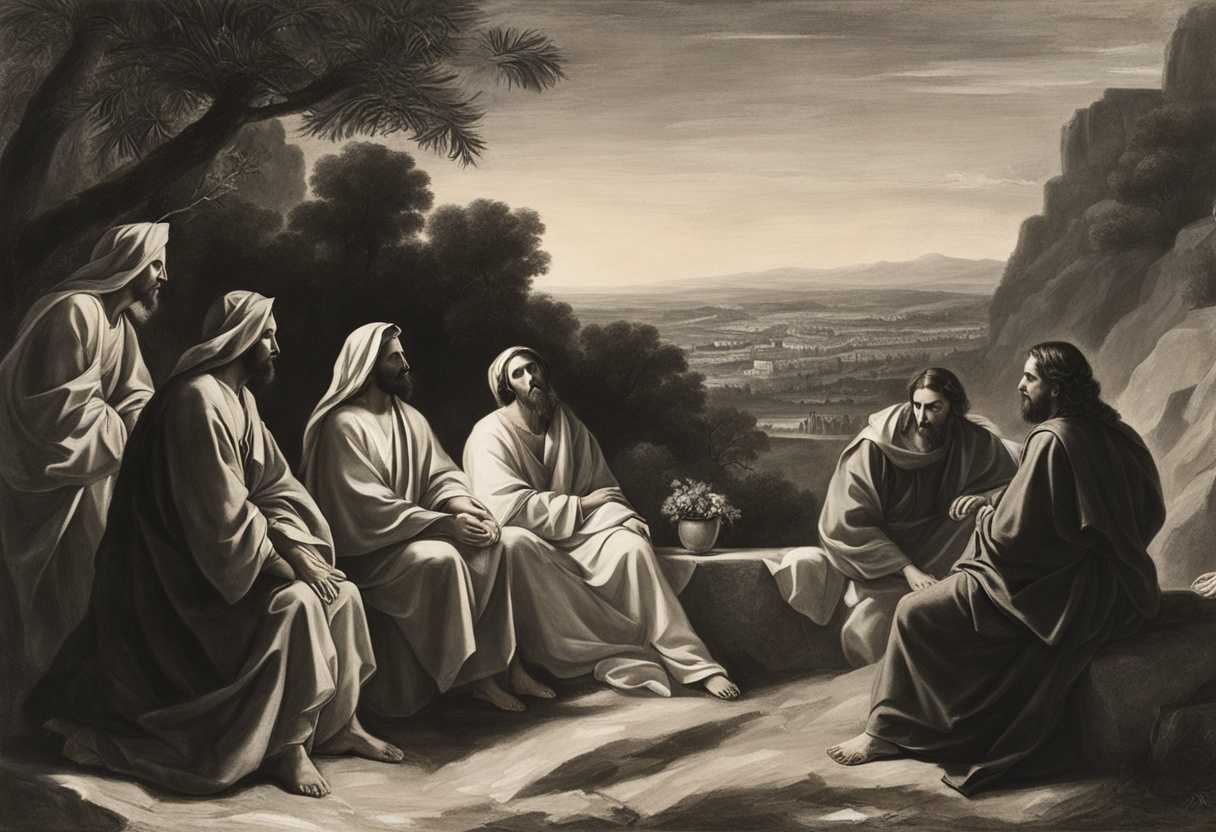
Setting the Scene for Matthew 24:3-8
In Matthew chapter 24, we find Jesus sitting on the Mount of Olives with his disciples. The scene is set against the backdrop of Jerusalem, with the magnificent temple in view. The disciples, including Peter, James, John, and Andrew, are gathered around Jesus, eager to hear his teachings. They had just left the temple where Jesus had foretold its destruction, prompting the disciples to ask him about the signs of the end times.
As they sit on the Mount of Olives, the disciples listen intently as Jesus begins to describe the signs that will precede the end of the age. Jesus speaks of wars, famines, and earthquakes that will mark the beginning of birth pains before his second coming. The disciples are filled with a mixture of awe and trepidation as they try to comprehend the magnitude of what Jesus is revealing to them. The atmosphere is charged with anticipation and a sense of urgency as Jesus imparts these crucial teachings to his closest followers, preparing them for the trials that lie ahead.
What is Matthew 24:3-8 about?
This verse from the Bible is a powerful reminder of the signs that were predicted to signal the end times by Jesus himself. When we consider the mention of wars, famines, earthquakes, and persecution, it prompts us to reflect on the turmoil and hardships that can be present in the world. These signs serve as a cautionary message to remind us that life on earth is not without challenges and difficulties. We must consider how to navigate through times of struggle and uncertainty as we ponder these prophetic words. How do we respond to the wars and conflicts that arise around us? How do we show compassion and support in the face of famines and disasters? How do we stand firm in our faith and beliefs despite persecution and opposition? These questions encourage us to introspect and reflect on our own actions and attitudes towards the world around us. We are urged to remain steadfast in our beliefs and values, even when faced with adversity, in contemplating these signs of the end times. It is a reminder to hold onto hope and faith, trusting in the greater plan that is beyond our understanding. Let us embody love and compassion in a world that may often seem chaotic and troubled, striving to be a source of light and positivity amidst the darkness.
Understanding what Matthew 24:3-8 really means
Jesus, seated on the Mount of Olives, imparts wisdom to His disciples, a setting rich with significance in His ministry. The disciples, eager to understand the signs of His return and the end times, seek clarity on the future’s unfolding. Their inquiry reflects a common human curiosity about the culmination of God’s plan and the establishment of His eternal kingdom.
In response, Jesus foretells a series of events that will precede His return. He speaks of wars and rumors of wars, symbolizing the turmoil and conflict that will mark the period leading up to the end times. The imagery of nations rising against nations and kingdoms against kingdoms underscores the pervasive nature of strife and discord that will engulf the world. Additionally, the mention of famines and earthquakes in various places serves as indicators of the escalating distress and upheaval in the world.
These signs, Jesus emphasizes, are but the beginning of birth pains, hinting at a more profound process unfolding towards the fulfillment of God’s divine plan. The parallels with other biblical passages, such as Revelation 6:1-8, 2 Timothy 3:1-5, and Luke 21:10-11, further underscore the consistency of this message across different parts of Scripture. These passages collectively paint a picture of a world in turmoil, beset by conflict, moral decay, and natural disasters as precursors to the final days.
The relevance of these teachings to contemporary audiences is striking. In a world rife with news of wars, natural calamities, and societal unrest, the passage serves as a poignant reminder of the impermanence of worldly affairs. It urges believers to remain vigilant, spiritually prepared, and anchored in faith amidst the trials and tribulations that characterize the present age. The message is clear: these tumultuous events are not random but integral parts of the prophetic timeline leading to God’s ultimate purposes.
Consider a family living in a disaster-prone region, diligently preparing for emergencies and staying informed to navigate potential chaos. Similarly, Christians are called to be spiritually equipped for the “birth pains” foretold by Jesus. Just as the family’s readiness brings peace amid potential turmoil, spiritual preparedness offers believers solace and confidence in the face of global upheaval. The passage in Matthew 24:3-8 thus stands as a clarion call to awareness and readiness, reminding believers that amidst the world’s upheavals, God’s sovereign plan is unfolding, and His promises will ultimately be fulfilled.
How can we discern the signs of the times?
Jesus is outlining signs of the times that will signal the end of the age in the verses you mentioned. To discern these signs, we need to be discerning and observant of the events occurring around us. We can discern the signs of the times by paying attention to the events happening in the world.
These signs include natural disasters, societal unrest, and an increase in false prophets. When we see these things happening, we can recognize that the end times are drawing near. We can be sensitive to the signs of the times and be prepared for what is to come by rooting ourselves in scripture and maintaining constant communication with God through prayer.
Application
Think of Matthew 24:3-8 as your life’s warning light, signaling for you to stay alert and grounded. Just as you would prepare for a big project at work or ensure your family is safe, it’s time to focus on your faith. Don’t let fear or anxiety overwhelm you. Instead, lean into God’s wisdom for navigating these stormy times. Are you ready to deepen your faith and trust in the Lord amid life’s uncertainties?

Reverend Michael Johnson is an experienced Church Minister with a profound expertise in spirituality and guidance. With a serene presence and a compassionate heart, he has faithfully served his congregation for over 20 years, leading them on a spiritual journey towards inner peace and enlightenment. Reverend Johnson’s extensive knowledge of religious philosophies and profound understanding of human nature have made him a trusted confidant and mentor to many, as he seamlessly weaves his profound wisdom into life teachings. Reverend Johnson’s calming demeanor and empathetic nature continue to uplift and heal souls, nurturing a sense of unity and tranquility within his community.