
Matthew 25:31-33 is about the future return of Jesus Christ as the ultimate judge, separating the righteous from the wicked with divine authority and establishing his reign over all nations.
31 “When the Son of Man comes in his glory, and all the angels with him, then he will sit on his glorious throne.
32 Before him will be gathered all the nations, and he will separate people one from another as a shepherd separates the sheep from the goats.
33 And he will place the sheep on his right, but the goats on the left.
Setting the Scene for Matthew 25:31-33
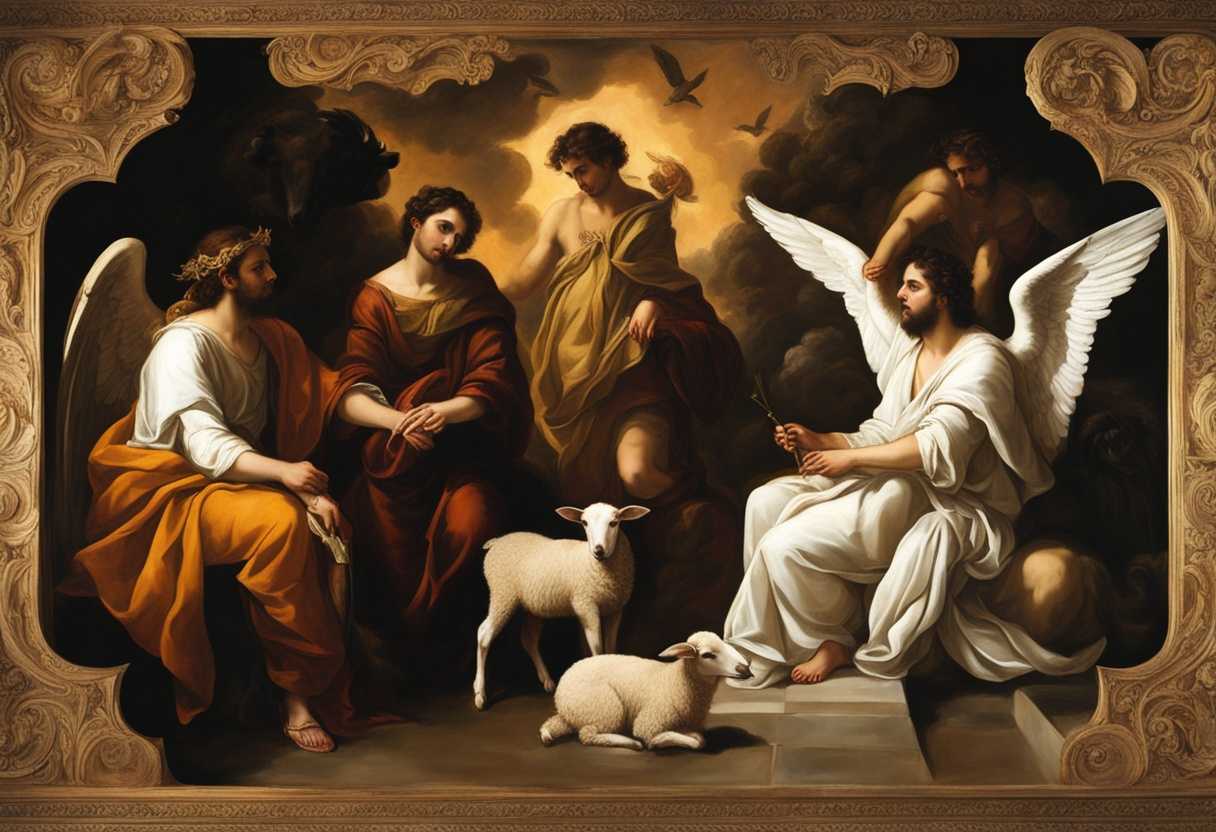
In Matthew chapter 25, verses 31-33, the scene is set on the day of judgment, where Jesus is depicted as the Son of Man sitting on his glorious throne. Gathered before him are all the nations, and he begins to separate the people as a shepherd separates the sheep from the goats. The sheep are placed on his right, symbolizing those who have lived righteous lives and followed his teachings, while the goats are placed on his left, representing those who have not.
The people in this scene have come to be there through their actions and choices during their lives on earth. The sheep are commended for their acts of kindness, compassion, and service to others, as they are told they have inherited the kingdom prepared for them since the creation of the world. In contrast, the goats are rebuked for their lack of care and concern for those in need, and they are sent away to eternal punishment.
The surroundings are described as majestic and awe-inspiring, with Jesus radiating divine glory and authority as he pronounces judgment. The scene conveys a sense of finality and accountability, as each person’s fate is determined by their deeds and the sincerity of their faith. It serves as a powerful reminder of the importance of living a life in accordance with the teachings of Jesus and showing love and compassion to others.
What is Matthew 25:31-33 about?
Imagine being a shepherd carefully separating his flock of sheep from a group of goats, knowing each animal by name and characteristics. Jesus uses powerful imagery in this verse to convey the idea of the final judgment where he will separate the righteous from the unrighteous. Just like a shepherd knows his animals, Jesus knows each of us intimately, our thoughts, actions, and intentions. The separation is not arbitrary but based on how we have lived our lives and treated others.
Reflect on this verse and ask yourself, which group do you belong to? Are you living a life of kindness, compassion, and love, or are you neglecting the needs of others and acting selfishly? The image of the shepherd separating the sheep from the goats should prompt introspection and self-reflection. It reminds us that our actions have consequences and that we are accountable for how we treat our fellow human beings. Let this verse inspire you to strive for righteousness and kindness in all aspects of your life, knowing that ultimately, we will be judged by our actions.
Understanding what Matthew 25:31-33 really means
Introduction
In the Gospel of Matthew, we encounter a profound teaching by Jesus regarding the final judgment. This passage holds significant weight as it delves into the imagery and symbolism surrounding the return of Christ and the ultimate separation of the righteous from the unrighteous. Understanding the layers of meaning behind Jesus’ words is crucial for grasping the depth of His message and its implications for our lives.
Key Phrases and Their Meanings
“When the Son of Man comes in his glory,” portrays the majestic return of Christ, highlighting His divine authority and splendor. The mention of “all the angels with him” emphasizes the grandeur of the event, with heavenly beings accompanying Jesus, signifying the importance of this momentous occasion. As Jesus “sits on his glorious throne,” the imagery conveys His role as the supreme judge and king, exalted above all creation. The gathering of “all the nations before him” underscores the universal nature of the judgment, encompassing every individual. The metaphor of separating “the people as a shepherd separates the sheep from the goats” illustrates the discernment and judgment process, with sheep symbolizing the righteous and goats representing the unrighteous.
Related Biblical Passages
In Revelation 20:11-15, we witness a vivid description of the final judgment and the Book of Life, reinforcing the theme of accountability before God. John 5:22-29 echoes Jesus’ authority to judge and the resurrection of the dead, underscoring the eternal consequences of our actions. Ezekiel 34:17-24 portrays God as the righteous shepherd who judges between the sheep and the goats, highlighting His care and justice in discerning the faithful from the unfaithful.
Relevance to People Today
This teaching prompts us to reflect on the significance of aligning our lives with Christ’s teachings, recognizing that our choices carry eternal weight. It urges us to cultivate a spirit of self-reflection and accountability in our daily interactions, prompting us to embody compassion and justice in all our endeavors.
Anecdote for Illustration
Consider a community where individuals are known for their kindness and support towards one another. When a new family struggles to settle in, those who extend a helping hand, offering food, guidance, and friendship, exemplify the “sheep” in Jesus’ parable. Their actions mirror the love and compassion Christ calls us to embody. Conversely, those who turn a blind eye to the needs of the newcomers, solely focusing on their own concerns, represent the “goats.” This narrative vividly illustrates how our choices reflect our alignment with Christ’s teachings and the impending judgment we will face.
Conclusion
In conclusion, this passage serves as a poignant reminder for us to live consciously, cognizant of the final judgment awaiting us. It beckons us to strive towards emulating the “sheep” who emulate Christ’s love and service, rather than the “goats” who neglect the call to compassion and justice. Let us heed this teaching, evaluating our lives and actions to ensure they mirror the values of the Kingdom of God.
How can we show compassion and care for others?
One way we can show compassion and care for others is by recognizing the humanity in each person we meet. We demonstrate our love for fellow human beings by treating them with kindness and empathy. Every act of compassion, no matter how small, can make a significant impact on someone else’s life.
Another way to show care for others is by actively seeking out those in need. We can look for opportunities to serve and help those who are less fortunate or struggling. We fulfill our calling to be a source of support and comfort to those around us by being aware of the needs of others and responding with love and generosity.
Lastly, we can show compassion and care by being willing to go out of our way to help others. This may involve sacrificing our time, resources, or convenience to assist someone in need. We reflect the love and compassion that we have received from a higher power by demonstrating selflessness and a willingness to serve others.
Application
Think about your daily grind—work, family, all the hustle. Now, let Matthew 25:31-33 be your wake-up call. Your faith isn’t just a weekend plan; it’s a call to action. Imagine every act of kindness as a direct service to our Lord. This is your chance to light up the world with love and compassion. Are you ready to step up and truly make a difference in someone’s life today?

Reverend Michael Johnson is an experienced Church Minister with a profound expertise in spirituality and guidance. With a serene presence and a compassionate heart, he has faithfully served his congregation for over 20 years, leading them on a spiritual journey towards inner peace and enlightenment. Reverend Johnson’s extensive knowledge of religious philosophies and profound understanding of human nature have made him a trusted confidant and mentor to many, as he seamlessly weaves his profound wisdom into life teachings. Reverend Johnson’s calming demeanor and empathetic nature continue to uplift and heal souls, nurturing a sense of unity and tranquility within his community.