
Matthew 26:14-27 is about the betrayal of Jesus by Judas Iscariot for thirty pieces of silver, leading to Jesus’ arrest, trial, and crucifixion, fulfilling the divine plan for salvation through Jesus’ sacrifice.
14 Then one of the twelve, whose name was Judas Iscariot, went to the chief priests
15 and said, “What will you give me if I deliver him over to you?” And they paid him thirty pieces of silver.
16 And from that moment he sought an opportunity to betray him.
17 Now on the first day of Unleavened Bread the disciples came to Jesus, saying, “Where will you have us prepare for you to eat the Passover?”
18 He said, “Go into the city to a certain man and say to him, ‘The Teacher says, My time is at hand. I will keep the Passover at your house with my disciples.’”
19 So the disciples did as Jesus had directed them, and they prepared the Passover.
20 When it was evening, he reclined at table with the twelve.
21 And as they were eating, he said, “Truly, I say to you, one of you will betray me.”
22 And they were very sorrowful and began to say to him one after another, “Is it I, Lord?”
23 He answered, “He who has dipped his hand in the dish with me will betray me.
24 The Son of Man goes as it is written of him, but woe to that man by whom the Son of Man is betrayed! It would have been better for that man if he had not been born.
25 Judas, who would betray him, answered, “Is it I, Rabbi?” He said to him, “You have said so.”
26 Now as they were eating, Jesus took bread, and after blessing it broke it and gave it to the disciples, and said, “Take, eat; this is my body.”
27 And he took a cup, and when he had given thanks he gave it to them, saying, “Drink of it, all of you,
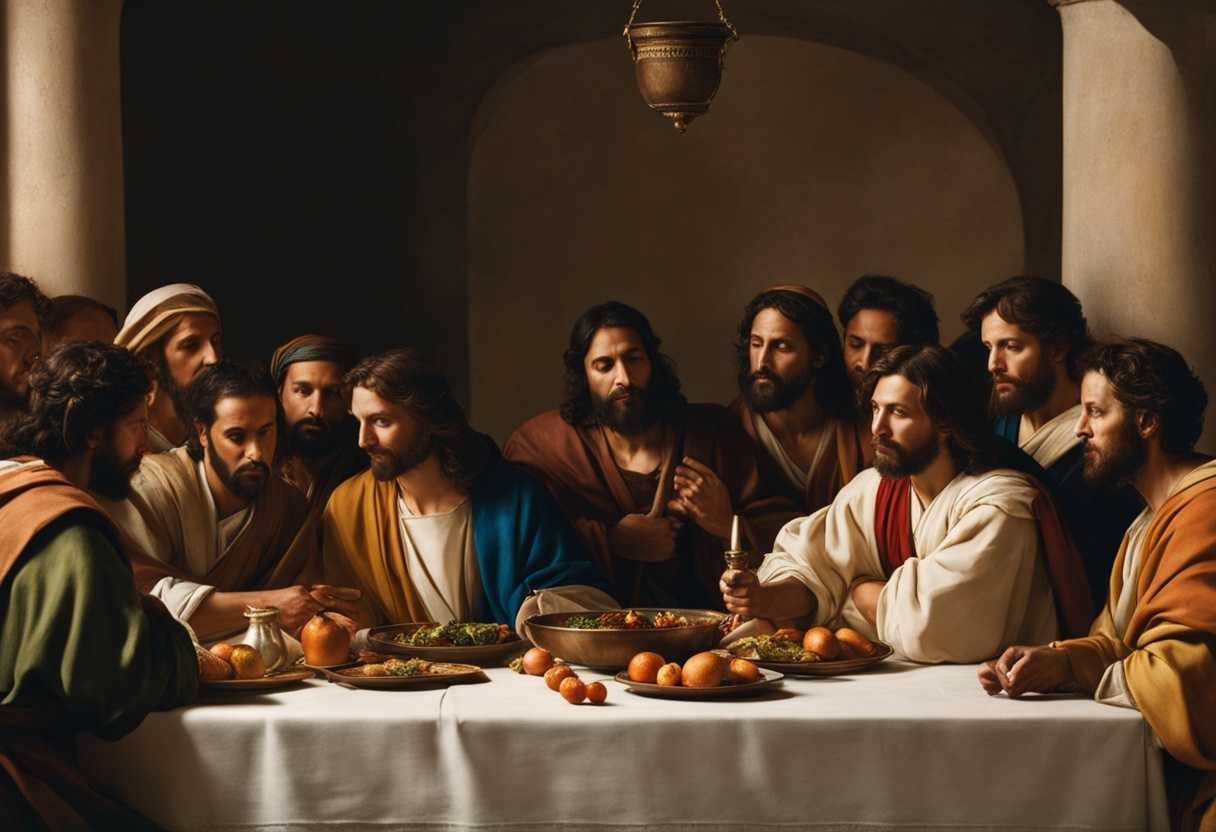
Setting the Scene for Matthew 26:14-27
The scene in Matthew 26:14-27 takes place in the city of Jerusalem during the time of Passover. Jesus is gathered with his twelve disciples in a room to share the Passover meal, also known as the Last Supper. The disciples present include Peter, James, John, Andrew, Philip, Thomas, Bartholomew, Matthew, James the son of Alphaeus, Thaddaeus, Simon the Zealot, and Judas Iscariot.
The room is dimly lit with oil lamps, casting a warm glow over the group as they recline at the table. The air is filled with the scent of roasted lamb, unleavened bread, and bitter herbs, traditional foods of the Passover meal. Jesus sits at the head of the table, sharing words of wisdom and breaking bread with his disciples. Judas Iscariot, overcome by greed and temptation, slips out of the room to betray Jesus to the chief priests for thirty pieces of silver.
As the evening progresses, Jesus foretells his impending betrayal and crucifixion, causing a somber mood to settle over the room. The disciples are filled with confusion and fear as they try to comprehend the events that are about to unfold. The atmosphere is heavy with tension and anticipation as Jesus prepares to fulfill his divine purpose on earth.
What is Matthew 26:14-27 about?
This verse is a poignant reminder of the depth of betrayal and the ultimate sacrifice made by Jesus. It captures the human frailty and greed that led Judas to betray his teacher and friend, Jesus, for a mere thirty pieces of silver. Can you imagine the weight of guilt and regret Judas must have felt for his actions that paved the way for Jesus’ crucifixion?
The betrayal of Jesus by Judas serves as a powerful example of the consequences of betrayal and the price of greed. It highlights the complexity of human nature and the capacity for both great love and deep betrayal within us all. Reflecting on this verse reminds us of the importance of loyalty, integrity, and the choices we make in our relationships with others. What lessons can we learn from Judas’ betrayal and Jesus’ forgiveness and love even in the face of betrayal? It challenges us to examine our own actions and relationships, urging us to strive for honesty, loyalty, and compassion in all that we do.
Understanding what Matthew 26:14-27 really means
The passage in Matthew 26:14-27 delves into the somber events leading to the betrayal of Jesus by Judas Iscariot, a pivotal moment in the narrative of the Last Supper. The gravity of Jesus’ sacrifice becomes more apparent when we grasp the context of this betrayal, highlighting the depth of deceit and betrayal by one of Jesus’ closest companions. The phrase “One of the Twelve” underscores the intimacy of the betrayal, emphasizing the personal nature of the act that was about to unfold.
The mention of “thirty pieces of silver” as the price for Jesus’ betrayal speaks volumes about the low value Judas placed on Jesus’ life. This amount, equivalent to the price of a slave, reflects the extent to which Judas was willing to go for personal gain. The question posed by Judas, “What are you willing to give me if I deliver him over to you?” reveals his willingness to trade Jesus for material wealth, showcasing the depths of his betrayal.
In the midst of this treachery, the poignant words, “Surely you don’t mean me, Rabbi?” uttered by Judas, highlight his deceit and hypocrisy as he feigned innocence while plotting Jesus’ betrayal. These key phrases and their meanings provide insight into the complex dynamics at play during this crucial moment in Jesus’ life. They prompt us to reflect on the themes of trust and betrayal, which resonate with many who have experienced similar struggles in their own relationships.
Drawing connections to Old Testament prophecies such as Zechariah 11:12-13 and verses like Psalm 41:9 further enrich our understanding of the betrayal Jesus faced. These passages foreshadowed the events that unfolded, underscoring the profound significance of Jesus’ sacrifice. Exploring related biblical texts like John 13:21-30 offers additional perspectives on Judas’ actions, deepening our comprehension of the complexities surrounding his betrayal.
The timeless themes of trust, value, forgiveness, and redemption embedded in this passage hold relevance for people today. Reflecting on the implications of Judas’ actions can prompt introspection on how we value others and ourselves. Jesus’ response to betrayal serves as a powerful lesson in forgiveness and redemption, inspiring us to extend grace even in the face of deep hurt.
Consider the scenario of a trusted friend betraying you for personal gain. The emotional turmoil and sense of betrayal you might experience mirror the anguish Jesus felt. This anecdote illustrates the depth of Jesus’ love and forgiveness, underscoring His ultimate sacrifice for humanity despite the betrayal He endured. By applying the lessons from this passage to our lives, we can cultivate integrity, foster trust in our relationships, and strive for a life characterized by honesty and faithfulness.
As we delve into the meanings and implications of this passage, we uncover profound lessons that challenge us to reflect on our relationships, values, and actions. By internalizing these teachings and applying them to our daily lives, we can honor Jesus’ sacrifice and strive to embody the virtues of trust, forgiveness, and integrity in our interactions with others.
How can we resist the temptation of betrayal for money?
One way to resist the temptation of betrayal for money is to stay rooted in our values and principles. When we are tempted by the allure of wealth or material gain, we can remind ourselves of what truly matters to us and the kind of person we aspire to be. We can find strength to resist betraying others for financial gain by focusing on our integrity and morals.
Another way to resist the temptation of betrayal for money is to cultivate a strong sense of empathy and compassion. When we consider the impact our actions may have on others, especially those we are close to and care about, it can help us make choices that align with our values. We can better understand the consequences of our actions and make a more conscious decision by putting ourselves in the shoes of the person we may betray.
Additionally, seeking support from trusted friends, family members, or mentors can help us navigate difficult situations where we may be tempted to betray for money. Having open and honest conversations with others can provide valuable perspective and guidance, and reinforce our commitment to staying true to ourselves and our beliefs. We can resist the temptation of betrayal and make choices that reflect our integrity and moral compass by surrounding ourselves with a strong support system.
Application
Let’s take a moment to ponder the sacrifice Jesus made for us – a reminder of His immense love. Let’s stride forward with a burning passion to embrace His teachings, and illuminate the world with His message of forgiveness and salvation. Embrace His love and let it radiate through your actions. Will you join hands in sharing this abundant love and hope with those around you?

Reverend Michael Johnson is an experienced Church Minister with a profound expertise in spirituality and guidance. With a serene presence and a compassionate heart, he has faithfully served his congregation for over 20 years, leading them on a spiritual journey towards inner peace and enlightenment. Reverend Johnson’s extensive knowledge of religious philosophies and profound understanding of human nature have made him a trusted confidant and mentor to many, as he seamlessly weaves his profound wisdom into life teachings. Reverend Johnson’s calming demeanor and empathetic nature continue to uplift and heal souls, nurturing a sense of unity and tranquility within his community.