
Matthew 26:20-30 is about the Last Supper, where Jesus institutes the sacrament of the Eucharist, symbolizing his body and blood given for the salvation of humanity, and foretells his impending betrayal by Judas and denial by Peter.
20 When it was evening, he reclined at table with the twelve.
21 And as they were eating, he said, “Truly, I say to you, one of you will betray me.”
22 And they were very sorrowful and began to say to him one after another, “Is it I, Lord?”
23 He answered, “He who has dipped his hand in the dish with me will betray me.
24 The Son of Man goes as it is written of him, but woe to that man by whom the Son of Man is betrayed! It would have been better for that man if he had not been born.
25 Judas, who would betray him, answered, “Is it I, Rabbi?” He said to him, “You have said so.”
26 Now as they were eating, Jesus took bread, and after blessing it broke it and gave it to the disciples, and said, “Take, eat; this is my body.”
27 And he took a cup, and when he had given thanks he gave it to them, saying, “Drink of it, all of you,
28 for this is my blood of the covenant, which is poured out for many for the forgiveness of sins.
29 I tell you I will not drink again of this fruit of the vine until that day when I drink it new with you in my Father’s kingdom.”
30 And when they had sung a hymn, they went out to the Mount of Olives.
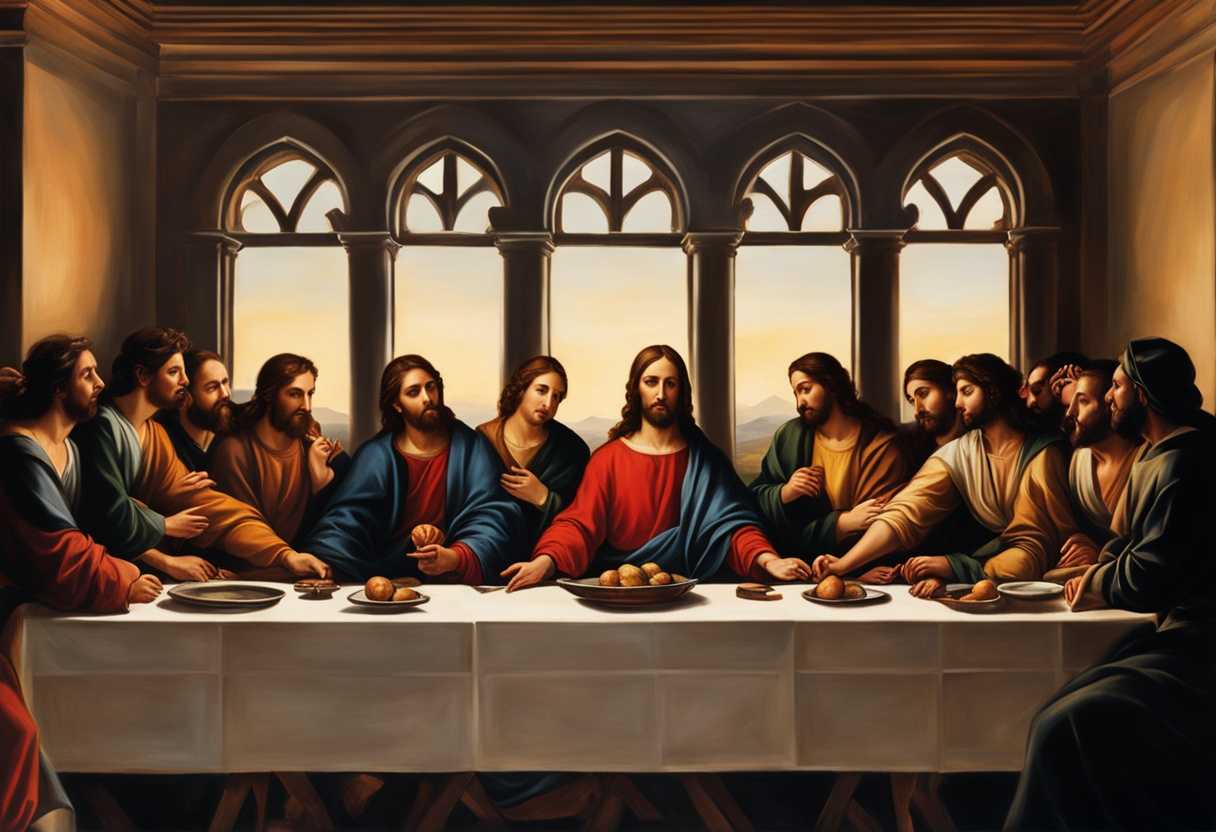
Setting the Scene for Matthew 26:20-30
In Matthew chapter 26, we find Jesus and his twelve disciples gathered together in a room in Jerusalem to celebrate the Passover meal. The room is dimly lit by oil lamps, casting a warm glow over the faces of those present. The air is filled with the scent of roasted lamb, unleavened bread, and bitter herbs, traditional foods eaten during the Passover feast.
Seated around a low table on cushions, Jesus, Peter, James, John, and the rest of the disciples recline in the customary manner of the time. Their sandals are off, and their feet are washed, a sign of hospitality and humility. The atmosphere is both solemn and expectant as Jesus begins to speak about the events that are about to unfold, hinting at his impending betrayal and crucifixion.
As the meal progresses, Jesus takes bread, blesses it, and breaks it, sharing it with his disciples, symbolizing his body that will be broken for them. He then takes a cup of wine, gives thanks, and passes it around, symbolizing his blood that will be shed for the forgiveness of sins. The disciples listen intently, their hearts heavy with the weight of Jesus’ words, yet also filled with a sense of awe and mystery at the significance of what is taking place.
What is Matthew 26:20-30 about?
This verse encapsulates a pivotal moment in the life of Jesus Christ where he gathers his disciples for the Last Supper, a symbolic event that holds deep significance in Christian theology. Jesus shares bread and wine with his followers in this gathering, using these elements to symbolize his impending sacrifice on the cross. Jesus foretells his betrayal by Judas Iscariot and his subsequent crucifixion by breaking the bread and offering the wine, highlighting the selfless act of love and redemption that he is about to undertake for the salvation of humanity. Christians participating in this act of communion are reminded of the ultimate sacrifice that Jesus made for the forgiveness of sins and the promise of eternal life. The sharing of bread and wine symbolizes not only the physical sustenance provided by these elements but also the spiritual nourishment and unity that Christians experience through their shared faith in Christ. This verse serves as a powerful reminder of the depth of Jesus’ love and the profound impact of his sacrifice, inviting believers to reflect on the significance of his death and resurrection in their own lives. What does it mean to partake in the bread and wine as a symbol of Jesus’ body and blood? How does this act of communion connect believers to the sacrifice and teachings of Jesus? These questions invite us to contemplate the profound theological and spiritual implications of the Last Supper and its enduring relevance in Christian faith and practice.
Understanding what Matthew 26:20-30 really means
The passage in Matthew 26:20-30 captures the poignant moment of the Last Supper, a significant event where Jesus shares a final meal with His disciples before His crucifixion. Set during the Jewish festival of Passover, which commemorates the Israelites’ liberation from Egyptian slavery, the scene is rich with symbolism and meaning. As evening falls, Jesus is found reclining at the table with the Twelve, a gesture that signifies intimacy and fellowship in that cultural context.
In the midst of this solemn gathering, Jesus utters the prophetic words, “Truly I tell you, one of you will betray me.” This statement not only reveals His divine insight but also underscores the fulfillment of ancient prophecies. The subsequent phrases, “Take and eat; this is my body,” and “This is my blood of the covenant, which is poured out for many for the forgiveness of sins,” introduce the profound concepts of the Eucharist or Communion. Here, Jesus symbolically offers His body and blood, foreshadowing His sacrificial death for the redemption of humanity.
The Last Supper finds resonance in various biblical passages, such as Exodus 12:1-14, which establishes the institution of the Passover, and 1 Corinthians 11:23-26, where Paul recounts the significance of the Last Supper in Christian practice. Additionally, John 13:1-17 portrays the poignant moment of Jesus washing the disciples’ feet during the same meal, emphasizing the values of servanthood and humility.
Today, the Last Supper remains foundational for Christian practices like Communion, serving as a poignant reminder of Jesus’ sacrifice and the establishment of a new covenant. It imparts timeless lessons on fellowship, humility, and service to others, echoing themes of betrayal, sacrifice, and forgiveness that resonate universally. Just as the disciples gathered around Jesus, believers are called to come together in fellowship, embodying the spirit of love, forgiveness, and grace.
In a modern context, the essence of the Last Supper can be likened to a family gathering for a holiday meal, where relationships, shared history, and love bind individuals together. Similarly, communities today can emulate the spirit of sharing and sacrificial love seen in the Last Supper by supporting one another in times of need. By reflecting on this profound event, individuals can draw strength and inspiration to navigate their own challenges with grace, compassion, and a spirit of service. The Last Supper stands as a timeless testament to Jesus’ love and sacrifice, urging believers to embody His teachings in their daily lives.
What does it mean to share in the Lord’s Supper?
To share in the Lord’s Supper is to partake in a symbolic and sacred meal that Jesus instituted during the Last Supper before His crucifixion. Believers remember and proclaim Jesus’ sacrifice for the forgiveness of their sins by participating in this act. The breaking of bread symbolizes Christ’s body that was broken for them, and the sharing of the cup represents His blood that was shed for the remission of their sins. Through this communion, believers express their unity with Christ and with one another as the body of Christ.
Partaking in the Lord’s Supper is not merely a ritual but a solemn reminder of what Jesus accomplished on the cross and the new covenant that He established. It is a time of reflection, gratitude, and recommitment to living in obedience to Christ. Additionally, sharing in the Lord’s Supper is a visible way for believers to declare their faith in Jesus as the bread of life and the source of eternal salvation. It is a time to look forward to the future hope of Christ’s return and the ultimate fulfillment of His kingdom.
Application
Embrace the bond of love and community that Jesus exemplified at the Last Supper. Take part in the Eucharist with humility and thankfulness for Christ’s ultimate sacrifice. Let this holy occasion strengthen your faith and connection with God. Will you answer this call with unwavering love and dedication in your heart?

Reverend Michael Johnson is an experienced Church Minister with a profound expertise in spirituality and guidance. With a serene presence and a compassionate heart, he has faithfully served his congregation for over 20 years, leading them on a spiritual journey towards inner peace and enlightenment. Reverend Johnson’s extensive knowledge of religious philosophies and profound understanding of human nature have made him a trusted confidant and mentor to many, as he seamlessly weaves his profound wisdom into life teachings. Reverend Johnson’s calming demeanor and empathetic nature continue to uplift and heal souls, nurturing a sense of unity and tranquility within his community.