
Matthew 26:23-25 is about Jesus pointing out the betrayal of Judas, who feigned innocence alongside the other disciples while already planning to betray Jesus, revealing the tension and deception among followers even in the presence of the righteous.
23 He answered, “He who has dipped his hand in the dish with me will betray me.
24 The Son of Man goes as it is written of him, but woe to that man by whom the Son of Man is betrayed! It would have been better for that man if he had not been born.
25 Judas, who would betray him, answered, “Is it I, Rabbi?” He said to him, “You have said so.”
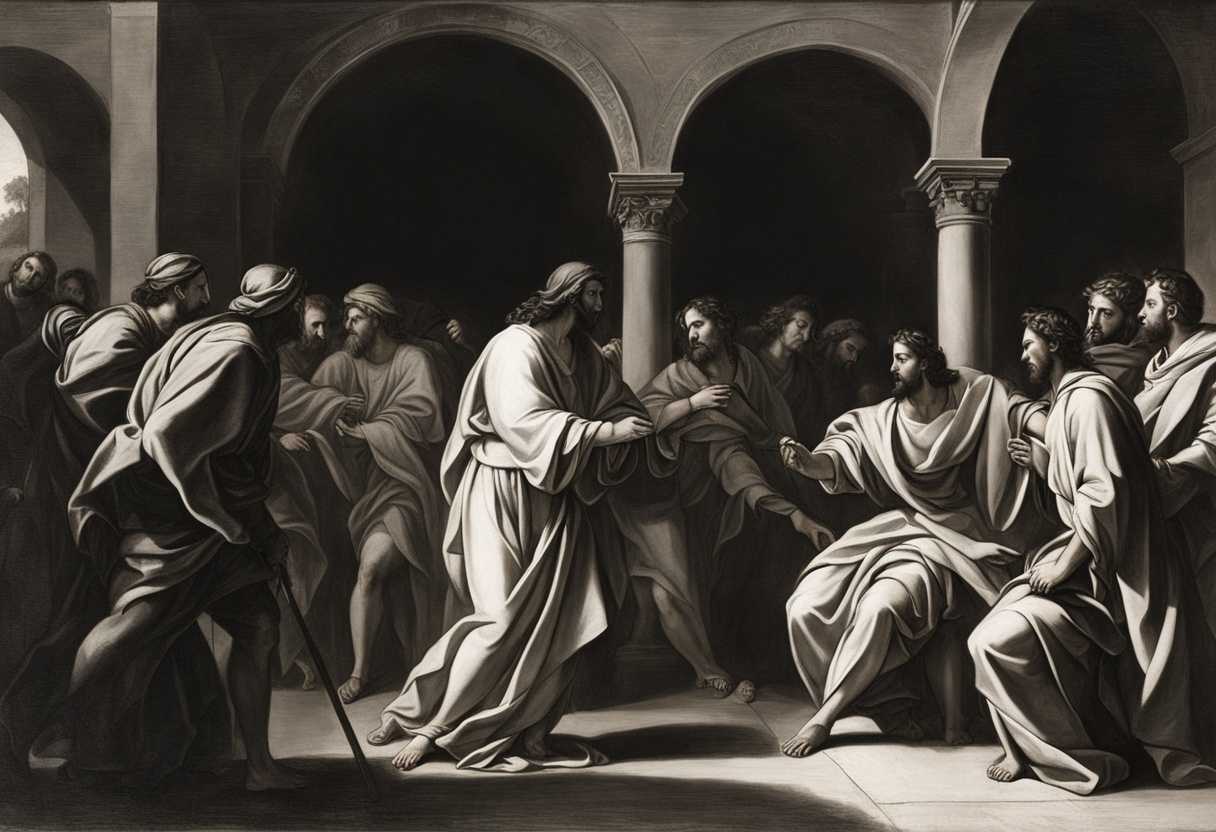
Setting the Scene for Matthew 26:23-25
In Matthew chapter 26, we find Jesus sharing a meal with his disciples in a room in Jerusalem. The room is dimly lit by oil lamps, casting a warm glow over the group gathered around a low table. The air is filled with the aroma of roasted lamb, unleavened bread, and bitter herbs, as they partake in the Passover meal.
Sitting with Jesus at the table are his twelve disciples, including Judas Iscariot, who had already agreed to betray Jesus. The atmosphere is tense as Jesus reveals that one of them will betray him. Each disciple is taken aback, questioning Jesus, “Surely not I, Lord?” The room falls silent as they await Jesus’ response, their faces reflecting a mix of confusion, fear, and disbelief.
Judas, feeling the weight of his impending betrayal, nervously asks Jesus the same question. The room is filled with a heavy silence as Jesus responds, “You have said so.” The disciples exchange troubled glances, grappling with the revelation that one of their own would betray their beloved teacher. The scene is charged with emotion and anticipation as the events leading to Jesus’ crucifixion begin to unfold.
What is Matthew 26:23-25 about?
This verse highlights a very significant moment in the life of Jesus where one of his disciples, Judas, makes the ultimate betrayal by agreeing to hand him over to the authorities for thirty pieces of silver. It symbolizes the themes of greed, betrayal, and the weight of personal gain over loyalty and friendship. Judas, who was one of Jesus’ closest followers, chooses to betray him for a small sum of money, showing how material possessions can corrupt even the strongest of bonds.
Have you ever reflected on the importance of staying true to your values and not letting greed or selfish desires drive your actions? This verse serves as a powerful reminder of the consequences of betrayal and the impact it can have on relationships and trust. It prompts us to consider the choices we make in our own lives and the values we prioritize, urging us to always strive for integrity and loyalty in our interactions with others.
Understanding what Matthew 26:23-25 really means
In the poignant narrative of the Last Supper, captured in Matthew 26:23-25, we witness a moment of profound intimacy and betrayal among Jesus and His disciples. As Jesus shares a final meal with His closest companions before His crucifixion, He unveils the unsettling truth that one among them will betray Him. The act of betrayal, symbolized by the one who dips his hand into the bowl with Jesus, underscores the depth of trust and fellowship that existed within this inner circle. It serves as a stark reminder of the pain that can accompany betrayal, especially when it comes from someone we hold dear.
Moreover, Jesus’ acknowledgment that His suffering and death align with the divine plan, as foretold in Scripture, reveals His unwavering obedience to God’s will. Despite the impending betrayal and agony that awaited Him, Jesus remained resolute in fulfilling His purpose. This declaration not only speaks to Jesus’ steadfast faith but also offers solace to believers today, assuring us that even in our darkest moments of betrayal and suffering, God’s sovereign plan is at work.
The weight of betrayal is further emphasized by Jesus’ solemn warning about the betrayer, expressing that it would have been better for him not to have been born. This severe consequence underscores the moral responsibility we carry in our relationships and the gravity of turning against God’s chosen path. Judas’ feigned innocence, as he questions Jesus, reflects the internal turmoil and duplicity that often accompany acts of betrayal, highlighting the complexity of human nature and the struggle between loyalty and self-interest.
Drawing parallels to contemporary experiences, these verses compel us to reflect on the themes of trust, betrayal, and divine providence in our own lives. The pain of betrayal, whether in personal relationships or professional settings, resonates deeply with the human experience. However, just as Jesus remained steadfast in the face of betrayal, we are encouraged to find strength in our faith and resilience to navigate such challenges. Through integrity, faithfulness, and a belief in God’s overarching plan, we can weather the storms of betrayal and emerge stronger on the other side.
In conclusion, the narrative of Jesus’ betrayal at the Last Supper serves as a poignant reminder of the complexities of human relationships and the unwavering faithfulness of Christ in fulfilling His divine mission. These verses from Matthew 26:23-25 urge us to remain steadfast in our faith, even amidst betrayal and hardship, trusting in God’s ultimate plan for our lives. As we navigate the intricacies of trust and betrayal in our own journeys, may we find solace in the example of Jesus’ unwavering commitment to God’s will, guiding us towards forgiveness, resilience, and a deeper understanding of divine providence.
How can we cultivate honesty and loyalty in relationships?
One way to cultivate honesty and loyalty in relationships is by being truthful and transparent with those we care about. We build a foundation of trust that ultimately fosters loyalty by always being open and honest with our words and actions. When we communicate sincerely and authentically, we create a safe space for our loved ones to do the same, strengthening the bond between us.
Furthermore, practicing empathy and understanding in our relationships can also help nurture honesty and loyalty. We demonstrate our commitment to their well-being and feelings by actively listening to our partners, friends, or family members and trying to see situations from their perspective. This empathy allows us to form deeper connections with others and encourages them to reciprocate with the same level of honesty and loyalty.
Lastly, showing appreciation and gratitude for the people in our lives can go a long way in fostering honesty and loyalty. Recognizing and valuing the efforts and presence of others in our lives creates a positive and supportive atmosphere that encourages mutual trust and commitment. We reinforce these values in our relationships and strengthen the bond with those we hold dear by expressing gratitude for the honesty and loyalty we receive.
Application
Just as Judas Iscariot’s betrayal echoes through the ages, let us honor our own values and relationships with unwavering loyalty. In a world filled with distractions and challenges, staying faithful is our beacon of integrity. Today, let us renew our commitment to our loved ones and to our faith. How will you fortify your bonds and beliefs in this turbulent world?

Reverend Michael Johnson is an experienced Church Minister with a profound expertise in spirituality and guidance. With a serene presence and a compassionate heart, he has faithfully served his congregation for over 20 years, leading them on a spiritual journey towards inner peace and enlightenment. Reverend Johnson’s extensive knowledge of religious philosophies and profound understanding of human nature have made him a trusted confidant and mentor to many, as he seamlessly weaves his profound wisdom into life teachings. Reverend Johnson’s calming demeanor and empathetic nature continue to uplift and heal souls, nurturing a sense of unity and tranquility within his community.