
Matthew 26:26-29 is about Jesus instituting the ritual of communion during the Last Supper, symbolizing his body and blood given for the salvation of humanity and emphasizing the importance of remembrance and fellowship among his followers.
26 Now as they were eating, Jesus took bread, and after blessing it broke it and gave it to the disciples, and said, “Take, eat; this is my body.”
27 And he took a cup, and when he had given thanks he gave it to them, saying, “Drink of it, all of you,
28 for this is my blood of the covenant, which is poured out for many for the forgiveness of sins.
29 I tell you I will not drink again of this fruit of the vine until that day when I drink it new with you in my Father’s kingdom.”
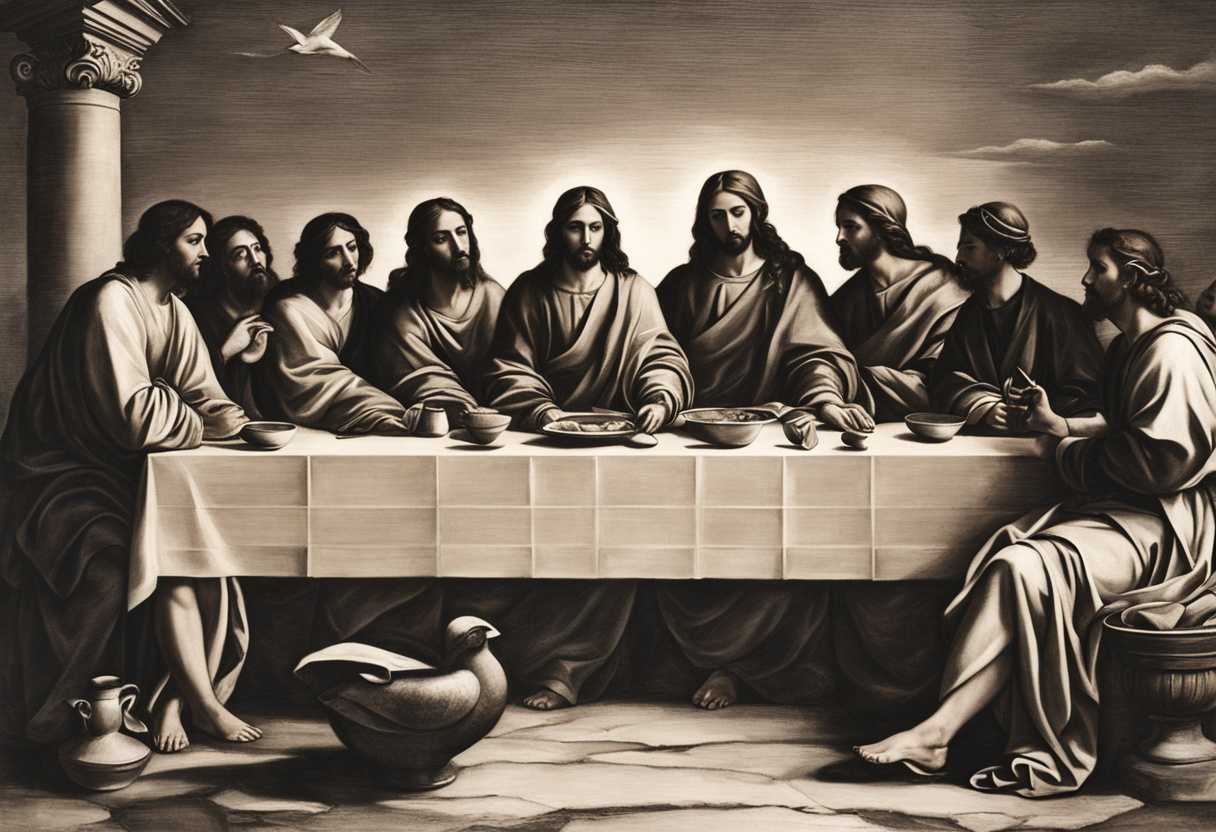
Setting the Scene for Matthew 26:26-29
In Matthew chapter 26, we find Jesus sharing a meal with his disciples in an upper room in Jerusalem. The room is dimly lit by oil lamps, casting a warm glow over the wooden table where they are gathered. The air is filled with the scent of freshly baked bread and the sound of quiet conversation among the disciples.
Sitting around the table are Jesus and his twelve disciples, including Peter, James, John, and Judas Iscariot. They have come together to celebrate the Passover meal, a significant event in the Jewish calendar. As they eat, Jesus takes a loaf of bread, blesses it, breaks it, and gives it to his disciples, saying, “Take, eat; this is my body.” He then takes a cup of wine, gives thanks, and offers it to them, saying, “Drink from it, all of you; for this is my blood of the covenant, which is poured out for many for the forgiveness of sins.”
The atmosphere in the room is solemn yet filled with a sense of anticipation as Jesus speaks of the sacrifice he is about to make for the salvation of humanity. The disciples listen intently, their hearts heavy with the weight of his words, yet also filled with a sense of wonder at the love and grace being extended to them. This intimate moment shared between Jesus and his closest followers foreshadows the events that are about to unfold in the coming days, leading to the ultimate sacrifice on the cross.
What is Matthew 26:26-29 about?
Ah, the significance of the Lord’s Supper! Jesus establishes a sacred ritual for his followers to commemorate his sacrifice for humanity in this powerful moment. He symbolizes his body and blood by breaking bread and sharing wine, which he would offer on the cross to redeem us from sin. This act serves as a poignant reminder of his love, grace, and the ultimate price he paid for our salvation.
Can you imagine the depth of love and sacrifice Jesus displayed as he shared this intimate meal with his disciples? The Lord’s Supper is a tangible symbol of our unity with Christ and with one another as believers. It serves as a profound expression of our faith and a powerful reminder of the central message of Christianity – the unmerited grace and love of God. We not only remember what Jesus did for us but also reaffirm our commitment to follow him and live out his teachings in our daily lives as we partake in the Lord’s Supper.
Understanding what Matthew 26:26-29 really means
In the poignant setting of the Last Supper, a momentous occasion before Jesus’ crucifixion, we encounter a pivotal event in Christian faith. As Jesus shares a final meal with His disciples, He institutes the Lord’s Supper, a sacrament of profound significance in Christian worship. The act of Jesus taking bread, blessing it, breaking it, and giving it to His disciples holds rich symbolism. The bread, representing His body broken for humanity, signifies the sanctification of His sacrifice and the divine nature of His offering.
When Jesus declares, “Take, eat; this is my body,” He extends an invitation to His followers to partake in His sacrifice, symbolizing unity with Him. This phrase underscores the sacrificial love that underpins Jesus’ willingness to suffer for the sins of humanity. As He takes the cup, gives thanks, and instructs them to drink, the act of thanksgiving amidst impending suffering highlights the importance of gratitude in all circumstances. The inclusivity in His words, “Drink ye all of it,” emphasizes that His sacrifice is for everyone, transcending boundaries.
The declaration, “For this is my blood of the new testament, which is shed for many for the remission of sins,” signifies the establishment of a new covenant between God and humanity through Jesus’ sacrificial death. His blood becomes the ultimate symbol of forgiveness, offering redemption and reconciliation to all who believe. Looking towards the future, Jesus speaks of a day when He will drink anew with His disciples in His Father’s kingdom, offering a message of hope and assurance of eternal life.
In today’s context, the Lord’s Supper continues to hold profound relevance for believers. Just as physical food sustains the body, partaking in Communion provides spiritual nourishment and strengthens faith. It fosters a sense of community and unity among believers, reminding them of their shared faith and purpose. Through the act of Communion, believers have a regular opportunity to remember Jesus’ sacrifice, reflect on their lives, and renew their commitment to following Him.
Imagine a family gathering for a special meal, sharing stories and expressing gratitude, strengthening their bond and love for one another. Similarly, the Lord’s Supper serves as a spiritual family meal, bringing believers together, reminding them of Jesus’ sacrificial love, and reinforcing their unity in faith. In conclusion, the passage from Matthew 26:26-29 stands as a profound reminder of Jesus’ sacrificial love and the new covenant He established, calling believers to unity, gratitude, and hope, making it deeply relevant in today’s world.
How can we remember Jesus in our daily lives?
We can remember Jesus in our daily lives by reflecting on the significance of the Last Supper. We can remember Jesus’ sacrifice for us by sharing bread and wine with his disciples as symbols of his body and blood. This can serve as a reminder of his love for us and the importance of living out his teachings in our own lives. We can remember Jesus by partaking in communion or the Eucharist, where we symbolically share in the bread and wine as a way to honor the sacrifice Jesus made for us. This practice helps us to stay connected to Jesus and his teachings, serving as a regular reminder of his presence in our lives.
Additionally, we can remember Jesus by emulating his actions and teachings in our interactions with others. We can reflect the values that Jesus embodied during his time on earth by showing love, compassion, forgiveness, and service to those around us. This allows us to carry his legacy forward in our daily lives and be a light to the world, just as he was during his ministry.
Application
Think of the bread and wine in Matthew 26:26-29 as reminders of Christ’s sacrifice, like a parent’s tireless work for their family’s wellbeing. Let this motivate you to reflect deeply on your own life’s purpose. Will you honor this gift by striving harder in your faith journey and serving others with genuine love? Are you ready to transform this symbol into real, everyday action?

Reverend Michael Johnson is an experienced Church Minister with a profound expertise in spirituality and guidance. With a serene presence and a compassionate heart, he has faithfully served his congregation for over 20 years, leading them on a spiritual journey towards inner peace and enlightenment. Reverend Johnson’s extensive knowledge of religious philosophies and profound understanding of human nature have made him a trusted confidant and mentor to many, as he seamlessly weaves his profound wisdom into life teachings. Reverend Johnson’s calming demeanor and empathetic nature continue to uplift and heal souls, nurturing a sense of unity and tranquility within his community.