
Matthew 26:26-30 is about the Last Supper where Jesus institutes the practice of Communion, symbolizing his sacrifice for the forgiveness of sins and establishing a new covenant between God and humanity.
26 Now as they were eating, Jesus took bread, and after blessing it broke it and gave it to the disciples, and said, “Take, eat; this is my body.”
27 And he took a cup, and when he had given thanks he gave it to them, saying, “Drink of it, all of you,
28 for this is my blood of the covenant, which is poured out for many for the forgiveness of sins.
29 I tell you I will not drink again of this fruit of the vine until that day when I drink it new with you in my Father’s kingdom.”
30 And when they had sung a hymn, they went out to the Mount of Olives.
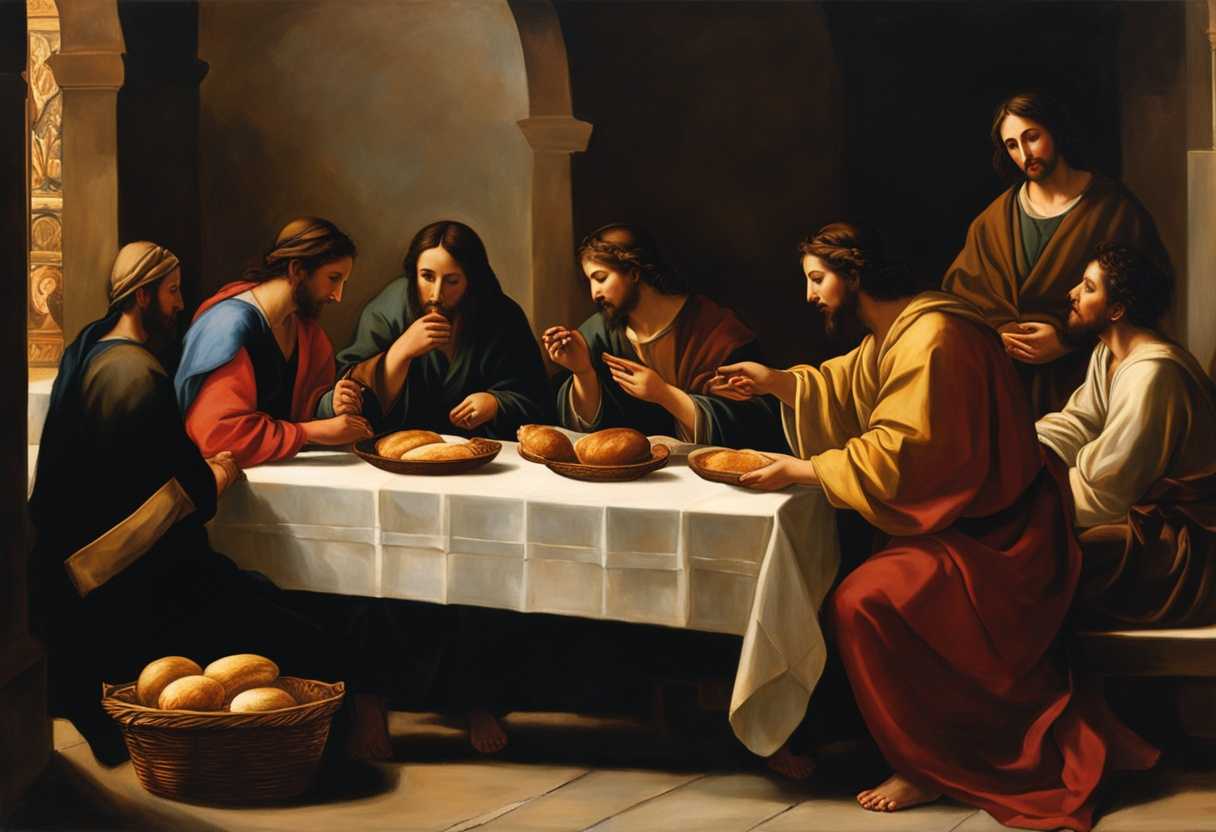
Setting the Scene for Matthew 26:26-30
In Matthew chapter 26, we find Jesus and his twelve disciples gathered together in an upper room in Jerusalem to celebrate the Passover meal. The room is dimly lit by oil lamps, casting a warm glow over the wooden table set with unleavened bread, bitter herbs, and wine. The disciples, including Peter, James, John, and Judas Iscariot, are reclining around the table, their sandals kicked off and their robes draped loosely around them.
As they begin to eat, Jesus takes the unleavened bread, blesses it, and breaks it, passing it around to his disciples, saying, “Take, eat; this is my body.” He then takes the cup of wine, gives thanks, and offers it to them, saying, “Drink from it, all of you; for this is my blood of the covenant, which is poured out for many for the forgiveness of sins.” The disciples listen intently, their eyes fixed on Jesus as he speaks with a solemn yet loving tone.
The atmosphere in the room is heavy with emotion as Jesus foretells his impending betrayal and crucifixion. Despite the somber mood, there is a sense of unity and intimacy among the group, as they share this sacred meal together in obedience to the traditions of their faith. The disciples are filled with a mixture of confusion, fear, and devotion as they try to comprehend the significance of Jesus’ words and actions in this pivotal moment.
What is Matthew 26:26-30 about?
Jesus is setting up a powerful symbol for his followers to remember the sacrifice he would make for them in this verse. Jesus is establishing a tangible way for his disciples to connect with his ultimate act of love and redemption by using bread and wine to represent his body and blood. This symbolic act is meant to remind believers of the profound significance of Jesus’ sacrifice and the depth of his love for them.
Think about the impact of this moment – Jesus, knowing what awaited him, still chose to give of himself in such a profound way. The Lord’s Supper becomes a sacred ritual that allows us to reflect on the depth of Jesus’ love and sacrifice for us. It serves as a reminder of the ultimate price paid for our salvation and a call to live our lives in response to such immense love. We partake in this symbolic meal, inviting us to remember, reflect, and respond to the incredible gift of grace we have received through Jesus’ sacrifice.
Understanding what Matthew 26:26-30 really means
The passage in Matthew 26:26-30 captures a pivotal moment in Christian history – the Last Supper, where Jesus shared a meal with His disciples before His crucifixion. This event holds immense significance as it marks the institution of the Lord’s Supper, also known as Communion, a central sacrament in Christian worship. As we delve into the breakdown and commentary of these verses, we uncover profound symbolism and meaning that continue to resonate with believers today.
When Jesus took the bread, blessed it, broke it, and gave it to His disciples, He was symbolically representing His body, which would be broken for the salvation of humanity. This act echoes Jesus’ statement in John 6:35, where He declares Himself as the “bread of life,” emphasizing that He is the sustenance for our spiritual nourishment. By commanding His followers to partake in His sacrifice through the words, “Take, eat; this is my body,” Jesus invites us to participate in Communion as an act of faith and remembrance, as reiterated in 1 Corinthians 11:24 by Paul.
The significance deepens as Jesus takes the cup, gives thanks, and shares it with His disciples, instructing them to drink from it. The cup symbolizes His blood, shed for the forgiveness of sins, echoing the necessity of bloodshed for atonement as stated in Hebrews 9:22. Through these actions, Jesus establishes the foundation of the New Covenant, fulfilling the prophecy of a new covenant in Jeremiah 31:31-34 and offering redemption for all who believe in Him.
Looking towards the future, Jesus speaks of a time when He will drink the fruit of the vine anew with His disciples in His Father’s kingdom, pointing to a future reunion in God’s eternal Kingdom as described in Revelation 19:9. This forward-looking hope underscores the eternal fellowship believers will have with Christ, making Communion not only a remembrance of His sacrifice but also a foretaste of the joyous reunion to come.
In our contemporary context, the practice of Communion continues to hold profound relevance for believers. It serves as a source of spiritual nourishment, uniting believers in a sense of community and fostering hope and assurance in the promise of a future reunion with Christ. Personal anecdotes of how Communion has brought comfort and clarity during challenging times further highlight the transformative power of this sacrament in the lives of believers.
As we reflect on the meaningful phrases and detailed explanations within these verses, we are reminded of the depth of Jesus’ sacrifice and the establishment of a new covenant through His blood. The Last Supper stands as a testament to the enduring impact of Christ’s sacrifice on Christian faith and practice, urging believers to approach Communion with reverence, gratitude, and a deep sense of unity with fellow believers.
How can we remember Jesus in our daily lives?
We can remember Jesus in our daily lives by participating in the act of communion, as described in the verse. This act symbolizes Jesus’ sacrifice for us and reminds us of the importance of his presence in our lives. Regularly partaking in communion can help us cultivate a deeper connection with Jesus and keep his teachings at the forefront of our minds.
Furthermore, we can remember Jesus by emulating his actions and teachings in our interactions with others. Jesus showed love, compassion, forgiveness, and humility throughout his life, and we can strive to mirror these qualities in our own lives. We honor Jesus and continue to spread his message of love to those around us by treating others with kindness and understanding.
Additionally, setting aside time for prayer and reflection can help us to remember Jesus in our daily lives. We can pray to Jesus for guidance, strength, and wisdom, just as he spent time in prayer with his disciples. Through this communication with Jesus, we can deepen our relationship with him and seek his presence in all that we do.
Application
Think of communion like a family dinner, where the table invites everyone to connect and renew bonds. When Jesus shared bread and wine, He created a lasting legacy of unity. Isn’t it time you joined the table, not just out of habit, but for a genuine connection with Christ and your faith family? This is your moment to stop and reconnect in this fast-paced world. Will you answer the call to experience this profound unity?

Reverend Michael Johnson is an experienced Church Minister with a profound expertise in spirituality and guidance. With a serene presence and a compassionate heart, he has faithfully served his congregation for over 20 years, leading them on a spiritual journey towards inner peace and enlightenment. Reverend Johnson’s extensive knowledge of religious philosophies and profound understanding of human nature have made him a trusted confidant and mentor to many, as he seamlessly weaves his profound wisdom into life teachings. Reverend Johnson’s calming demeanor and empathetic nature continue to uplift and heal souls, nurturing a sense of unity and tranquility within his community.