
Matthew 26:26 is about Jesus instituting the Last Supper with his disciples, where he gives them bread, symbolizing his body that would be broken for the salvation of humanity.
26 Now as they were eating, Jesus took bread, and after blessing it broke it and gave it to the disciples, and said, “Take, eat; this is my body.”
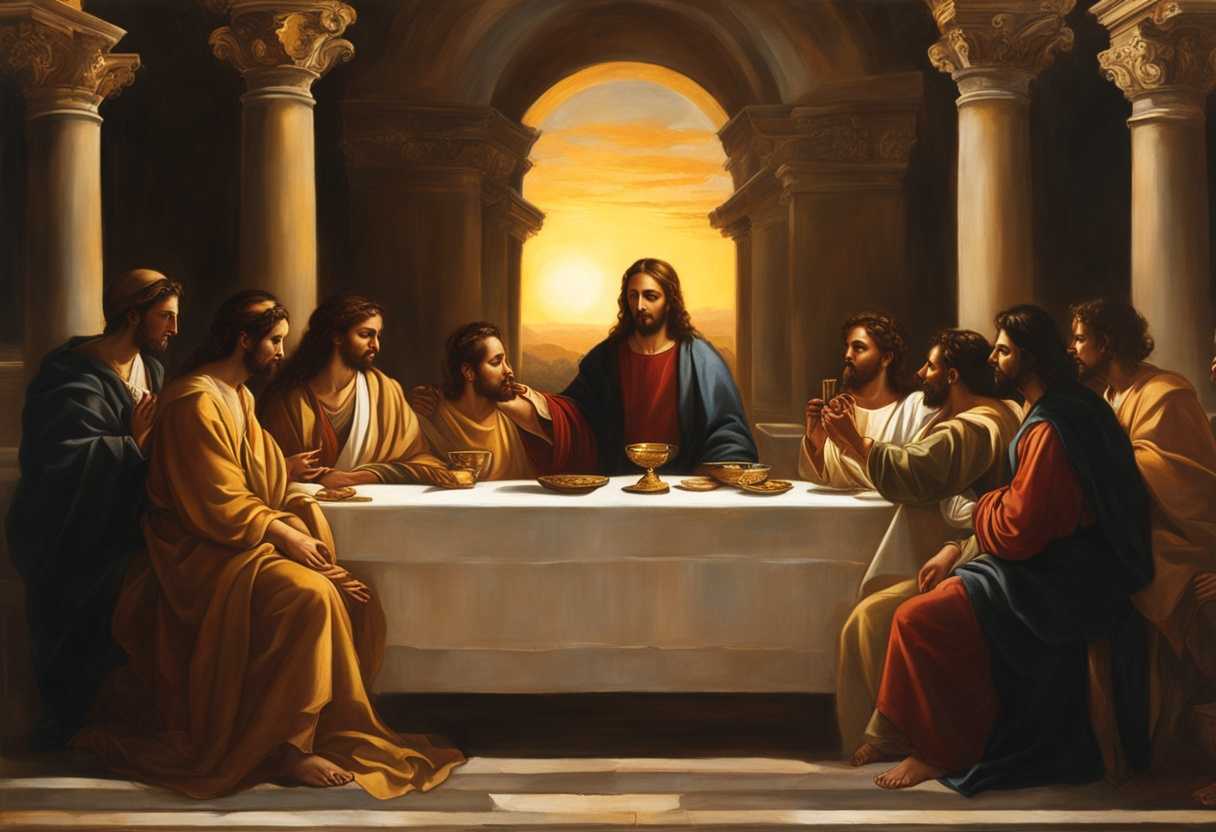
Setting the Scene for Matthew 26:26
In Matthew chapter 26, we find Jesus sharing a meal with his disciples in an upper room in Jerusalem. The room is dimly lit by oil lamps, casting a warm glow over the small group gathered around a simple wooden table. The air is filled with the aroma of freshly baked bread and roasted lamb, the traditional Passover meal.
Sitting at the head of the table is Jesus, his kind eyes filled with love and wisdom as he looks upon his closest companions. Around him are the twelve disciples, including Peter, James, John, and Judas Iscariot. They have come together to celebrate the Passover, a significant Jewish festival commemorating the Israelites’ liberation from slavery in Egypt.
As the meal progresses, Jesus takes a loaf of bread, blesses it, breaks it, and gives it to his disciples, saying, “Take, eat; this is my body.” This symbolic act foreshadows the sacrifice he is about to make for the redemption of humanity. The atmosphere in the room is solemn yet filled with a sense of anticipation as Jesus prepares his disciples for the events that are about to unfold.
What is Matthew 26:26 about?
Jesus establishes the tradition of the Lord’s Supper in this powerful verse, where bread represents his body, and wine represents his blood that was shed for us. It serves as a profound reminder of the sacrifice Jesus made for our salvation. Reflect on this verse as you consider the depth of love and selflessness displayed by Jesus in offering his body and blood for our redemption. This act of communion not only commemorates Jesus’ sacrifice but also unites us as believers in a shared remembrance of his incredible love for us.
Think about the significance of partaking in the Lord’s Supper. It is a tangible way for us to connect with Jesus, remembering his ultimate sacrifice and the forgiveness and salvation it brings. Consider the privilege of joining with other believers in recognizing the profound act of love that Jesus demonstrated for each one of us individually as you participate in this sacred ritual. Let this verse serve as a reminder of the profound depth of Jesus’ love and the significance of the sacrifice he made for us. How does partaking in the Lord’s Supper impact your relationship with Jesus and your understanding of his love for you?
Understanding what Matthew 26:26 really means
In the poignant moment of the Last Supper, as Jesus shared a final meal with His disciples before His crucifixion, He took bread, a simple element, and infused it with profound spiritual significance. This act marked the institution of the Eucharist, a sacrament central to the Christian faith, where ordinary elements convey extraordinary truths. As Jesus blessed and broke the bread, He symbolically represented His impending sacrifice, foreshadowing the breaking of His body for the salvation of humanity. By giving the bread to His disciples, Jesus invited them into a new covenant, sharing His sacrifice with them and establishing a bond of unity and faith.
In John 6:35, Jesus declares, “I am the bread of life.” This statement emphasizes His role as the spiritual sustenance for believers, offering eternal nourishment to those who come to Him. Paul’s recounting of the Last Supper in 1 Corinthians 11:24-25 underscores the importance of remembering Jesus’ sacrifice through the symbolic acts of breaking bread and drinking the cup. Luke 22:19-20 also portrays the significance of the new covenant sealed in Jesus’ blood, further emphasizing the enduring impact of the Last Supper on Christian theology and practice.
The relevance of this verse extends to contemporary believers in various ways. Just as physical bread sustains the body, Jesus, as the “bread of life,” sustains our spirits, providing nourishment and sustenance for our faith journey. The act of sharing bread during the Eucharist symbolizes unity among believers, fostering a sense of community and shared faith that transcends individual experiences. Regular participation in the Eucharist serves as a reminder of Jesus’ sacrifice, prompting gratitude and a deepened understanding of His love for humanity.
Consider a family gathering where sharing a meal brings loved ones closer, fostering love and unity. Similarly, when Christians partake in the Eucharist, they are reminded of their spiritual family and the unifying love that binds them together through Jesus’ sacrificial love. This act of communion not only nourishes the soul but also strengthens the bonds of fellowship among believers, echoing the unity and love exemplified by Jesus during the Last Supper.
In conclusion, Matthew 26:26 stands as a poignant reminder of Jesus’ love and sacrifice, calling believers to remember His selfless act, partake in the Eucharist with gratitude, and live out the unity and spiritual nourishment that Jesus offers. Through this sacred sacrament, Christians are invited to deepen their faith, express gratitude for Christ’s sacrifice, and embrace the unity and community that stem from sharing in the body and blood of Jesus.
What does it mean to partake in remembrance?
To partake in remembrance means to commemorate or honor a significant event or person by engaging in an act of recollection or reflection. Jesus instructs his disciples in the mentioned verse to take bread, bless it, and share it amongst themselves, symbolizing his body. The disciples were not only physically eating bread but were also engaging in a spiritual practice of remembering Jesus and his sacrifice for them by partaking in this ritual.
Through this act of remembrance, believers are encouraged to reflect on the life and teachings of Jesus, as well as his ultimate sacrifice on the cross. It serves as a reminder of the love, grace, and salvation that Jesus offers to all who believe in him. Christians who participate in the Lord’s Supper or communion not only remember Jesus’ sacrifice but also reaffirm their commitment to follow him and live out his teachings in their daily lives.
Application
Think of Jesus’ sacrifice like a rock-solid foundation in your hectic life, the bedrock amidst work deadlines and family commitments. Matthew 26:26 is your reminder to take time for communion, bolstering your faith through prayer and worship. Just as you prioritize family dinners or crucial meetings, make room to honor His sacrifice. Are you ready to deepen your faith and strengthen your bond with God today?

Reverend Michael Johnson is an experienced Church Minister with a profound expertise in spirituality and guidance. With a serene presence and a compassionate heart, he has faithfully served his congregation for over 20 years, leading them on a spiritual journey towards inner peace and enlightenment. Reverend Johnson’s extensive knowledge of religious philosophies and profound understanding of human nature have made him a trusted confidant and mentor to many, as he seamlessly weaves his profound wisdom into life teachings. Reverend Johnson’s calming demeanor and empathetic nature continue to uplift and heal souls, nurturing a sense of unity and tranquility within his community.