
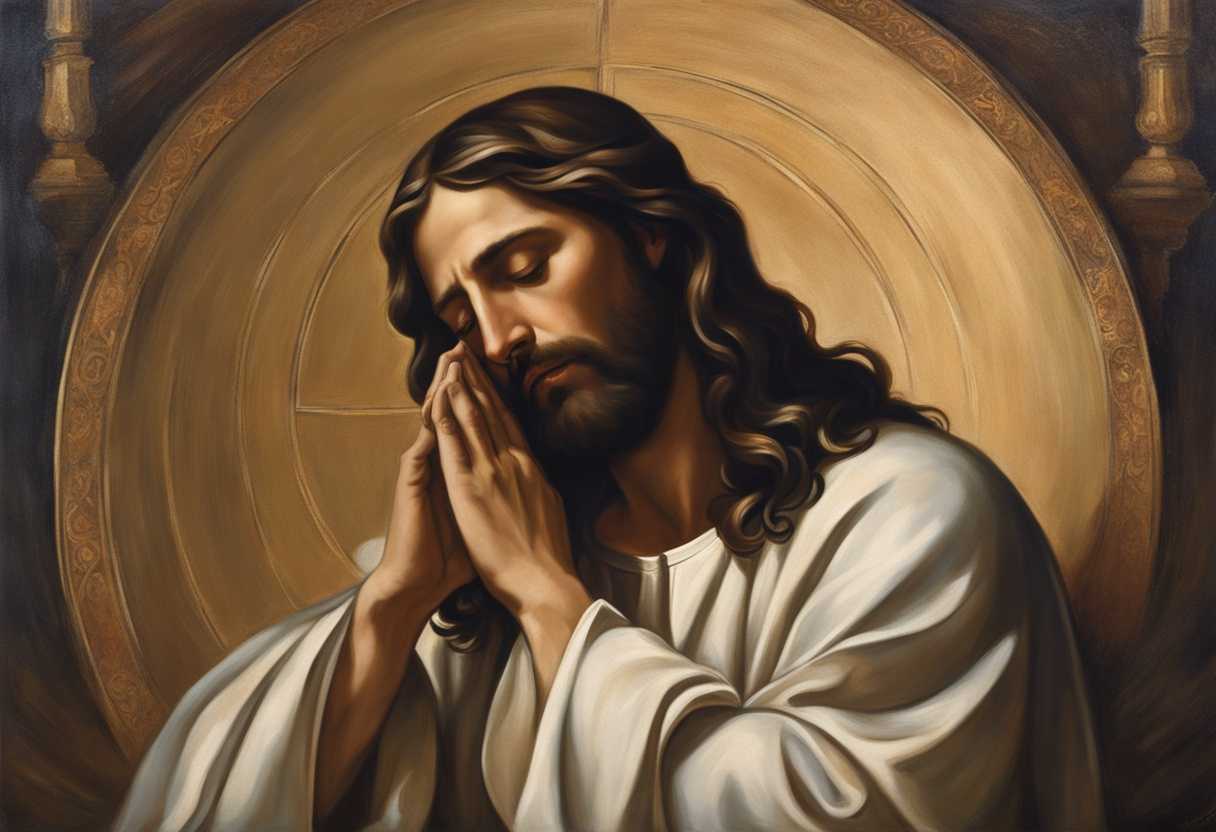
Matthew 26:42 is about Jesus praying in the garden of Gethsemane, expressing his willingness to submit to God’s will, even though he knows that he is about to endure great suffering and sacrifice for the salvation of humanity.
42 Again, for the second time, he went away and prayed, “My Father, if this cannot pass unless I drink it, your will be done.”
Setting the Scene for Matthew 26:42
In Matthew chapter 26, we find Jesus in the Garden of Gethsemane with his disciples. The scene is set late at night, with a full moon casting a soft glow over the olive trees and the Mount of Olives in the background. The air is heavy with the scent of blooming flowers and the sounds of crickets chirping in the distance.
Jesus, feeling the weight of what is to come, takes Peter, James, and John with him deeper into the garden to pray. As they reach a secluded spot, Jesus shares his anguish with them, expressing his desire for the cup of suffering to be taken away from him, yet submitting to God’s will above all else. The disciples, exhausted from the events of the day, struggle to stay awake as Jesus pours out his heart in prayer.
The disciples, who have followed Jesus faithfully throughout his ministry, are now faced with the reality of his impending betrayal and crucifixion. They are torn between their love and loyalty to their beloved teacher and the fear and uncertainty of what lies ahead. As Jesus wrestles with his own emotions and the weight of the world’s sins, the disciples, in their human frailty, struggle to comprehend the magnitude of the events unfolding before them.
What is Matthew 26:42 about?
Jesus exemplifies ultimate surrender to God’s will in this verse, showcasing a profound moment in his life. Before facing the crucifixion, a painful and challenging event that awaited him, Jesus chooses to pray in Gethsemane. This act of prayer signifies his submission to God’s plan, showcasing his unwavering faith and obedience to carry out the divine purpose set before him.
Have you ever faced a situation where you had to submit to something greater than yourself, even if it was difficult or painful? Jesus’ prayer in Gethsemane serves as a powerful example for us to follow, reminding us of the importance of trusting in God’s will and finding strength in surrender. It prompts us to reflect on our own lives and consider how we can align our actions with God’s plan, even in times of uncertainty or adversity. We are invited to contemplate the significance of surrendering to God’s will in our own lives as we ponder on this verse. It challenges us to examine our faith and trust in divine guidance, inspiring us to seek strength and solace in prayer during moments of difficulty or decision-making. May we also find courage and grace in relinquishing control and embracing God’s will in our journeys, just as Jesus found peace and clarity through submission in Gethsemane.
Understanding what Matthew 26:42 really means
In the poignant narrative of Jesus praying in the Garden of Gethsemane before His arrest, Matthew 26:42 captures a profound moment of submission to God’s will amidst impending suffering. The verse begins with the intimate address, “My Father,” underscoring the deep relationship between Jesus and God, characterized by trust and submission. Jesus acknowledges the inevitability of His impending suffering with the phrase, “If this cannot pass unless I drink it,” recognizing the path laid out before Him. The pivotal declaration, “Your will be done,” epitomizes ultimate surrender to God’s divine plan, prioritizing God’s will over personal desires.
This verse resonates with the broader theme of submission to God’s will, challenging believers to prioritize divine guidance over personal autonomy in a world that often exalts individual desires. It serves as a beacon of guidance for individuals navigating difficult decisions or facing hardships, urging them to emulate Jesus’ example of unwavering faith and trust in God’s plan. The parallel in Luke 22:42 further reinforces the message of submission to God’s will, emphasizing the importance of aligning one’s desires with God’s purpose.
Philippians 2:8 sheds light on Jesus’ profound humility and obedience, culminating in His sacrificial death on the cross, illustrating the depth of His submission to God’s will. Romans 12:2 encourages believers to seek transformation through aligning their minds with God’s will, emphasizing the goodness and perfection inherent in surrendering to His divine plan. These passages collectively underscore the significance of yielding to God’s will as a transformative and faith-strengthening act.
In contemporary society, where the pursuit of personal fulfillment often takes precedence, Matthew 26:42 serves as a poignant reminder of the value of surrendering to God’s will. It offers solace and guidance to individuals grappling with challenging decisions or enduring hardships, urging them to find strength in faith and trust in God’s overarching plan. By reflecting on this verse, individuals can draw inspiration to prioritize God’s will, even when it entails personal sacrifice or uncertainty.
Anecdotal accounts further illuminate the verse’s relevance in real-life scenarios. Consider a person facing a career dilemma, torn between a lucrative opportunity conflicting with their values and a sense of calling from God. Reflecting on Matthew 26:42 can provide clarity and fortitude to prioritize God’s will, even amidst uncertainty and potential sacrifice. Personal testimonies, like that of a congregant finding peace and strength in the midst of illness by embracing God’s plan, underscore the verse’s enduring impact in guiding believers through trials.
In conclusion, Matthew 26:42 stands as a poignant testament to the profound significance of surrendering to God’s will, especially in times of adversity. It beckons believers to trust in God’s divine plan, embodying unwavering faith and submission in the face of personal challenges or sacrifices. As individuals grapple with decisions and hardships, this verse serves as a timeless beacon of guidance, urging them to emulate Jesus’ example of resolute surrender to God’s will.
How can we align our will with God’s?
Jesus in this verse prays to God, expressing his human desire to be spared from the impending suffering he was about to endure, yet he ultimately submits his own will to God’s will. Through Jesus’s example, we learn that aligning our will with God’s involves surrendering our own desires and preferences to God’s plan and purpose for our lives. It requires an attitude of humility, trust, and obedience, even when faced with challenges or difficulties.
To align our will with God’s, we can seek to understand his will through prayer, studying scripture, and listening to the guidance of the Holy Spirit. We can strive to cultivate a heart that is open to God’s leading, willing to follow where he guides us, and ready to accept his will even when it may be different from our own. We can walk in alignment with God’s perfect will for our lives, finding peace and fulfillment by placing our trust in His wisdom and sovereignty and doing His good and pleasing will.
Application
Think about when you’re juggling work tasks and family commitments—there’s a moment you realize you can’t control everything. Jesus experienced that too, feeling vulnerable as He prayed for God’s plan. He showed us that true strength is in letting go and trusting a higher purpose. Just like resetting after a long day, will you trust God’s direction and surrender your plans to His will?

Reverend Michael Johnson is an experienced Church Minister with a profound expertise in spirituality and guidance. With a serene presence and a compassionate heart, he has faithfully served his congregation for over 20 years, leading them on a spiritual journey towards inner peace and enlightenment. Reverend Johnson’s extensive knowledge of religious philosophies and profound understanding of human nature have made him a trusted confidant and mentor to many, as he seamlessly weaves his profound wisdom into life teachings. Reverend Johnson’s calming demeanor and empathetic nature continue to uplift and heal souls, nurturing a sense of unity and tranquility within his community.