
Matthew 26:47 is about the moment Judas, one of Jesus’ disciples, betrays him by leading a group with swords and clubs to arrest him in the Garden of Gethsemane, highlighting the theme of betrayal and the fulfillment of prophecy.
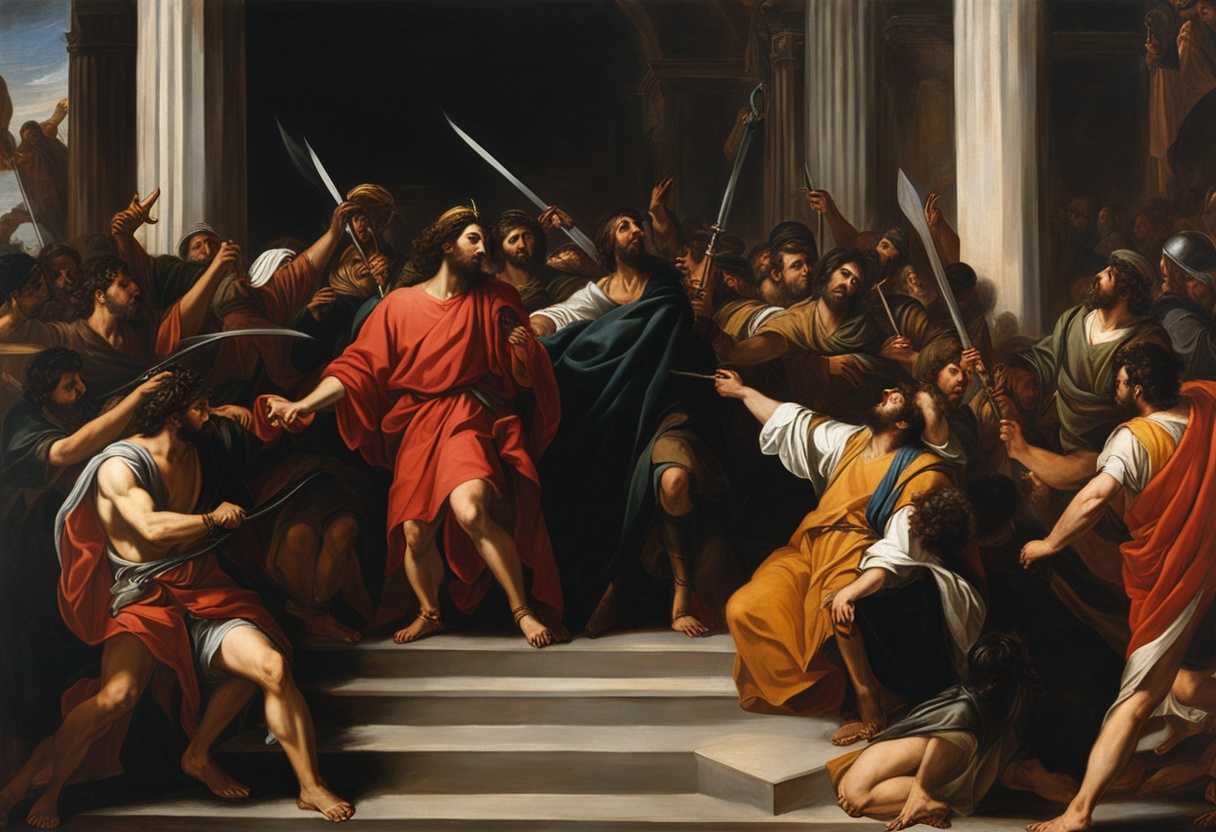
47 While he was still speaking, Judas came, one of the twelve, and with him a great crowd with swords and clubs, from the chief priests and the elders of the people.
Setting the Scene for Matthew 26:47
In Matthew chapter 26, we find Jesus and his disciples in the Garden of Gethsemane. The scene is set late at night, with the moon casting a soft glow on the olive trees surrounding them. Jesus, knowing that his time has come, has come here to pray and prepare for his impending arrest and crucifixion.
As Jesus is praying, Judas Iscariot arrives with a large crowd armed with swords and clubs. Judas, one of Jesus’ disciples, betrays him with a kiss, signaling to the crowd who Jesus is. The disciples, including Peter, James, and John, are startled and confused by the sudden turn of events. Peter, in his impulsive nature, draws his sword and cuts off the ear of one of the high priest’s servants.
The tension is palpable as Jesus rebukes Peter, reminding him that those who live by the sword will die by the sword. Despite the chaos unfolding around them, Jesus remains calm and submits to his captors, knowing that this is all part of fulfilling the will of God. The Garden of Gethsemane becomes a pivotal moment in the story of Jesus’ sacrifice for humanity.
What is Matthew 26:47 about?
This powerful verse captures a moment of ultimate betrayal and deception. Judas, one of Jesus’ own disciples, uses a gesture of affection and friendship – a kiss – to betray Him into the hands of those who seek to arrest Him. This passage speaks to the depths of human betrayal and the pain that comes from being deceived by someone close to you. The complexities of human relationships and the potential for betrayal that exists even among those we trust confront us as we reflect on this verse. It prompts us to consider the implications of our own actions and the importance of integrity and loyalty in our interactions with others. How would you feel if someone you trusted and cared for betrayed you in such a profound way? What would it be like to be in Jesus’ shoes, facing betrayal from one of your closest companions? This verse serves as a reminder of the fragility of trust and the need to choose our allegiances wisely.
Understanding what Matthew 26:47 really means
In the somber setting of the Garden of Gethsemane, a pivotal moment unfolds as Jesus, in the midst of prayer, is confronted by Judas Iscariot and a multitude armed with swords and clubs. The urgency of the situation is palpable as Jesus is interrupted while addressing His disciples, underscoring the gravity of the impending betrayal. The mention of Judas as “one of the Twelve” serves as a stark reminder of the betrayal’s source, coming from within Jesus’ inner circle, adding layers of complexity to the unfolding events. The arrival of a large, armed crowd symbolizes the forceful and hostile manner in which Jesus is being apprehended, contrasting sharply with His message of peace and love.
In John 18:3, we learn that the crowd was sent by the chief priests and Pharisees, shedding light on the orchestrated nature of the betrayal. The poignant exchange between Jesus and Judas in Luke 22:47-48, where Jesus questions Judas about his act of betrayal, adds a humanizing element to the narrative, showcasing Jesus’ compassion even in the face of imminent betrayal. The prophetic reference in Psalm 41:9 to betrayal by a trusted companion echoes the betrayal Jesus experiences, emphasizing the timeless nature of such betrayals throughout history.
The themes of betrayal, trust, and faithfulness resonate deeply with people today, as many have experienced the sting of betrayal from those they held dear. Jesus’ unwavering composure in the face of betrayal serves as a beacon of hope, inspiring believers to maintain their faith and integrity even in the most challenging circumstances. This verse prompts reflection on the importance of spiritual vigilance, reminding us to be discerning and steadfast in our beliefs, even when those closest to us falter.
Consider a scenario where a trusted colleague suddenly turns against you at work, spreading falsehoods for personal gain. The sense of betrayal and hurt mirrors what Jesus endured, highlighting the universal nature of betrayal’s pain. Yet, just as Jesus forgave and remained resolute, we too can draw strength from our faith to navigate such trials with grace and forgiveness. Reflect on your own responses to betrayal—did you choose vengeance or forgiveness? How can you embody trust and support for others, ensuring you do not inadvertently betray someone’s trust?
As you ponder the implications of this verse in your life, consider how you can emulate Jesus’ example of faithfulness and forgiveness in the face of adversity. Pray for the resilience to uphold your beliefs and extend grace to those who may have wronged you. By delving into the profound lessons embedded in this verse and its broader context, we can glean valuable insights into navigating betrayal, fortifying our faith, and fostering trust and compassion in our relationships.
What is the role of betrayal in our spirituality?
Betrayal plays a significant role in our spirituality as it is a test of our faith and trust in others. When we experience betrayal, it can deeply shake our beliefs and leave us feeling hurt and abandoned. However, it is during these challenging times that our spirituality is truly tested. How we choose to respond to betrayal can either strengthen or weaken our connection to our faith. Betrayal in the context of the verse mentioned sees betrayal as a betrayal of trust and loyalty. It highlights the pain and anguish that can come from being betrayed by someone close to us. This can serve as a reminder of the importance of forgiveness, both for ourselves and for those who have wronged us. Betrayal can ultimately teach us valuable lessons about resilience, compassion, and the power of forgiveness in our spiritual growth and development.
Application
Think of Jesus’ arrest as a powerful reminder—He stepped into the chaos to offer us peace. In the hustle of work and the love within families, He made the ultimate sacrifice. Reflect on this and ask yourself: Are your actions aligned with His teachings? It’s time to pause and take stock of your faith journey. How will you honor Christ in your life today?

Reverend Michael Johnson is an experienced Church Minister with a profound expertise in spirituality and guidance. With a serene presence and a compassionate heart, he has faithfully served his congregation for over 20 years, leading them on a spiritual journey towards inner peace and enlightenment. Reverend Johnson’s extensive knowledge of religious philosophies and profound understanding of human nature have made him a trusted confidant and mentor to many, as he seamlessly weaves his profound wisdom into life teachings. Reverend Johnson’s calming demeanor and empathetic nature continue to uplift and heal souls, nurturing a sense of unity and tranquility within his community.