
Matthew 26:53-54 is about Jesus acknowledging the power He possesses to call upon legions of angels for protection, but choosing to surrender Himself to fulfill the divine purpose of His sacrificial death.
53 Do you think that I cannot appeal to my Father, and he will at once send me more than twelve legions of angels?
54 But how then should the Scriptures be fulfilled, that it must be so?”
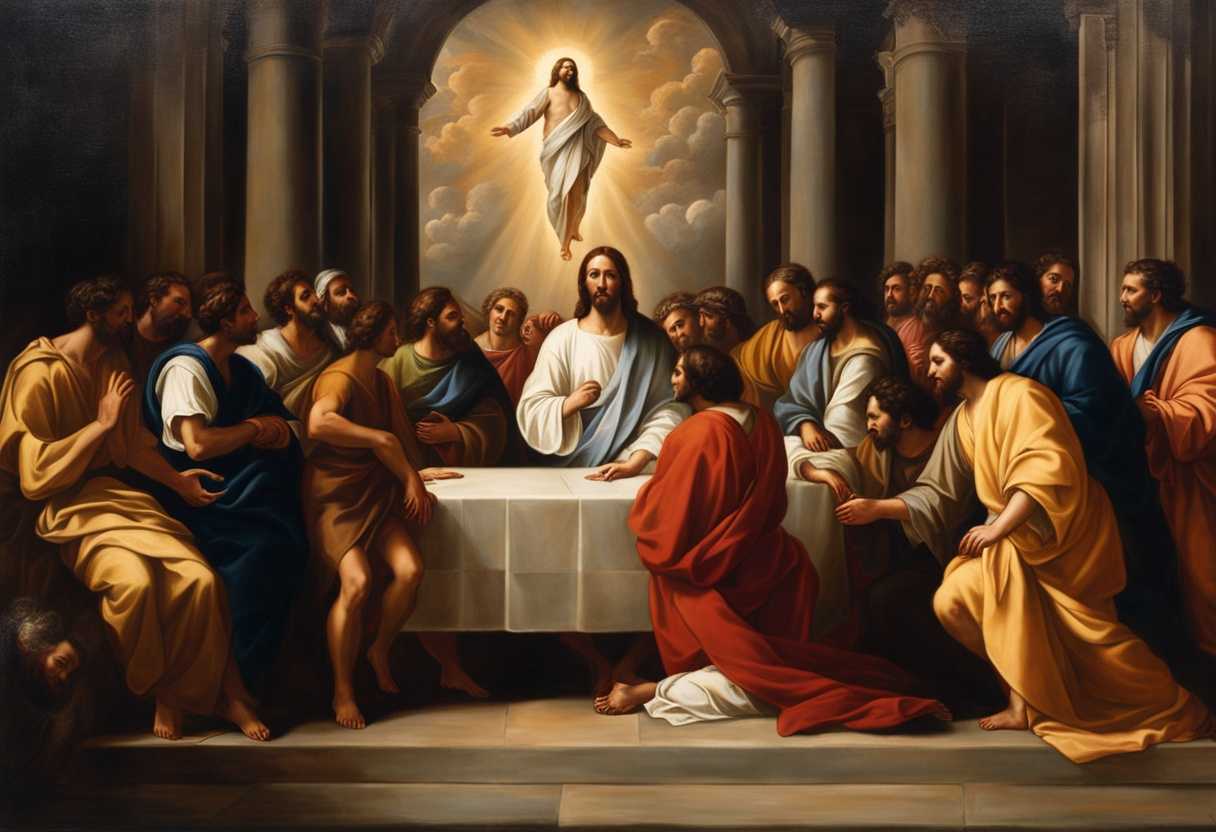
Setting the Scene for Matthew 26:53-54
In Matthew chapter 26, we find Jesus in the Garden of Gethsemane with his disciples. The scene is set late at night, with a full moon casting a soft glow over the olive trees and the disciples gathered around Jesus. The air is heavy with a sense of foreboding as Jesus knows that his betrayal and crucifixion are imminent.
The disciples present with Jesus in this moment include Peter, James, and John, among others. They had come to the garden with Jesus after sharing the Passover meal together. Jesus, feeling the weight of what is to come, retreats to pray, asking his disciples to keep watch with him. However, they struggle to stay awake, succumbing to exhaustion.
As Jesus prays fervently, he is eventually interrupted by the arrival of Judas Iscariot, leading a crowd armed with swords and clubs to arrest him. In the midst of this tense moment, Jesus speaks the words in Matthew 26:53-54, acknowledging the divine plan at work and the necessity of his arrest to fulfill the scriptures. The scene captures a pivotal moment in Jesus’ journey towards the cross, with his disciples witnessing the unfolding of events that will lead to his crucifixion and resurrection.
What is Matthew 26:53-54 about?
Jesus’ obedience to God’s will and his selfless sacrifice for humanity is a powerful example that we see in this verse. Despite having the power to summon angels for protection and easily avoid suffering, Jesus willingly chose to endure the cross. This decision not only demonstrates his unwavering commitment to fulfilling God’s plan but also reflects his deep love and willingness to endure pain and sacrifice for the greater good.
Have you ever thought about the immense strength of character and love for humanity it takes to willingly forgo personal comfort and safety for a higher purpose? Jesus’s actions in this verse can inspire us to reflect on our own choices and motivations. It encourages us to prioritize selflessness, obedience to God, and the greater good over personal desires. Jesus’s willingness to fulfill God’s plan despite the hardships it entails serves as a powerful reminder of the importance of faith, sacrifice, and obedience in our own lives.
Understanding what Matthew 26:53-54 really means
In the poignant account of Jesus’ arrest in the Garden of Gethsemane, we witness a profound interaction between Jesus and Peter. As Peter impulsively defends Jesus by cutting off the ear of the high priest’s servant, Jesus responds with a statement that reverberates with divine authority and profound implications. “Do you think I cannot call on my Father, and he will at once put at my disposal more than twelve legions of angels?” This declaration not only showcases Jesus’ inherent power but also underscores the voluntary nature of His submission to the events leading to His crucifixion.
The imagery of twelve legions of angels, totaling over 72,000 heavenly beings, serves as a striking symbol of the overwhelming divine might at Jesus’ command. Despite this staggering display of power, Jesus chooses to forego availing Himself of this celestial army. Instead, He prioritizes the fulfillment of Scripture and the divine plan of redemption, stating, “But how then would the Scriptures be fulfilled that say it must happen in this way?” In this moment, Jesus highlights the paramount importance of aligning His actions with the prophetic utterances and the overarching redemptive narrative woven throughout Scripture.
Drawing parallels to other biblical passages enriches our understanding of Jesus’ words in Matthew 26:53-54. Isaiah 53:7 prophetically portrays Jesus’ silent submission to suffering, mirroring His quiet acceptance of the unfolding events in Gethsemane. John 18:36 further elucidates Jesus’ mission, emphasizing the spiritual nature of His kingdom and the divergence from earthly power struggles. Hebrews 1:14 sheds light on the role of angels as obedient servants in executing God’s will, echoing the immense heavenly host Jesus could have summoned but chose not to.
The timeless relevance of these verses resonates with believers today, urging us to trust in God’s sovereign plan, exercise restraint in alignment with His will, and embrace the fulfillment of Scripture in our lives. Just as Jesus exemplified unwavering trust in the Father’s plan amidst imminent suffering, we are called to emulate His faithfulness in our own trials. The narrative prompts us to reflect on the power of restraint, the significance of divine timing, and the beauty of submitting our will to God’s higher purposes.
To illustrate the concept of restraint and trust in action, consider the analogy of a firefighter faced with a perilous situation. Despite possessing the means to rush into danger, the firefighter exercises restraint, waiting for the appropriate moment guided by a higher plan. Similarly, Jesus, with the might of angelic hosts at His disposal, chose the path of obedience and sacrifice, embodying the ultimate example of divine restraint for a greater purpose.
In conclusion, the exchange between Jesus and Peter in the Garden of Gethsemane encapsulates profound truths about divine authority, scriptural fulfillment, and the call to trust in God’s overarching plan. These verses challenge us to embrace faith, patience, and obedience in our journey, knowing that God’s plans, though sometimes veiled in mystery, are always orchestrated for our ultimate good and His eternal glory.
What role does God’s power play in our trials?
God’s power plays a significant role in providing us with support, strength, and protection in our trials. The verse alludes to the fact that if God were to call upon His power, He could provide abundant resources and assistance in overcoming challenges. This suggests that God’s power is limitless and can intervene on our behalf when we face difficulties or tribulations. We can find comfort in knowing that we are not alone in our struggles by understanding the depth of God’s power. We can trust in His ability to guide us through our trials and provide us with the strength to persevere. Knowing that God’s power is at work in our lives can give us hope and assurance that we can overcome any obstacle that comes our way. Relying on God’s power in times of trial can help us find peace and confidence, knowing that He is with us every step of the way.
Application
Embrace God’s will like a compass guiding your path in a chaotic world. Surrender your desires at His feet, acknowledging His supreme power. Trust in His plan, even when the road ahead seems unclear. Will you choose to walk in His light, relinquishing control and finding peace in His purpose for you today?

Reverend Michael Johnson is an experienced Church Minister with a profound expertise in spirituality and guidance. With a serene presence and a compassionate heart, he has faithfully served his congregation for over 20 years, leading them on a spiritual journey towards inner peace and enlightenment. Reverend Johnson’s extensive knowledge of religious philosophies and profound understanding of human nature have made him a trusted confidant and mentor to many, as he seamlessly weaves his profound wisdom into life teachings. Reverend Johnson’s calming demeanor and empathetic nature continue to uplift and heal souls, nurturing a sense of unity and tranquility within his community.