
Matthew 26:8-9 is about the act of Mary anointing Jesus with expensive perfume as an expression of her deep love and devotion, highlighting the importance of sacrificial love and worship towards Christ.
8 But when the disciples saw it, they were indignant, saying, “Why this waste?
9 For this ointment could have been sold for a large sum and given to the poor.
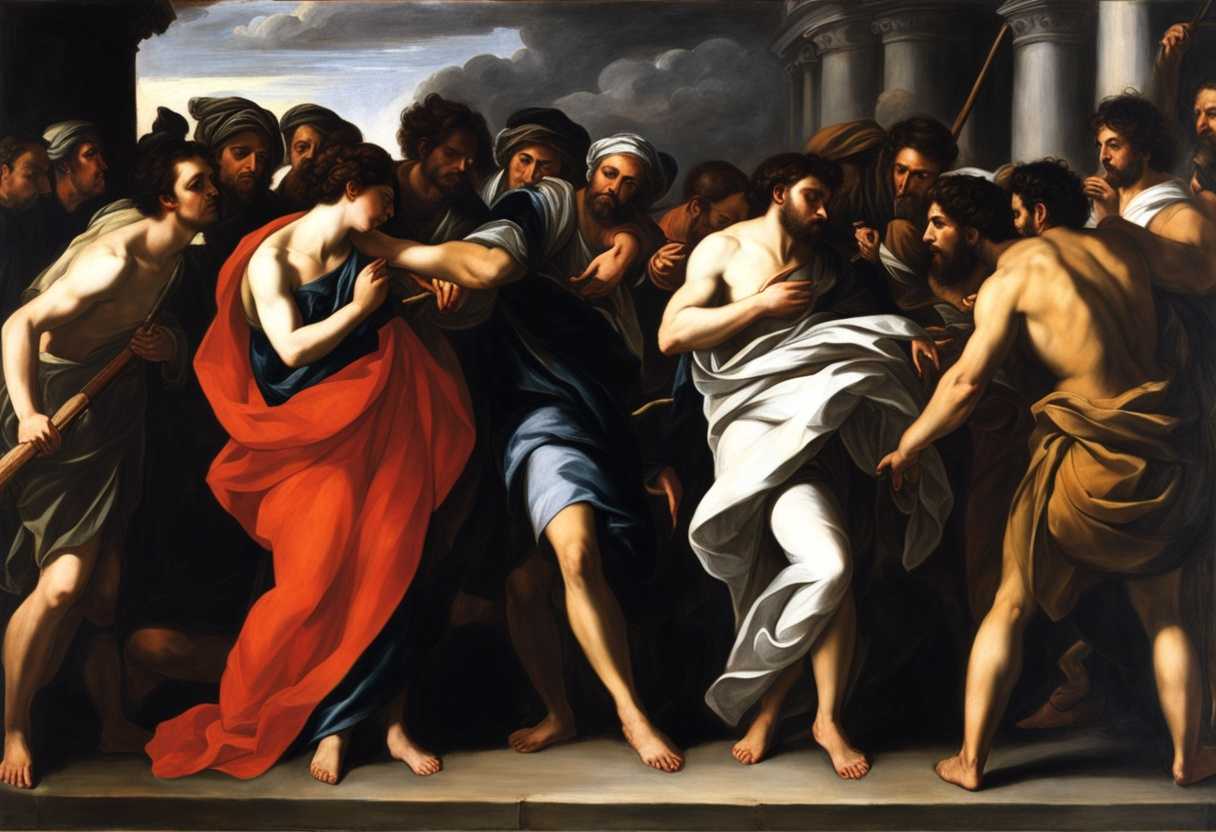
Setting the Scene for Matthew 26:8-9
In Matthew chapter 26, we find Jesus dining at the home of Simon the leper in Bethany, a village just outside Jerusalem. The scene is set in a modest yet welcoming home, with a table spread with food and various guests reclining around it. Among those present are Jesus, Simon the leper, Mary, Martha, and Lazarus.
Simon the leper, who had likely been healed by Jesus previously, is hosting this gathering to honor Jesus. Mary, the sister of Martha and Lazarus, enters the room with an alabaster jar of expensive perfume. She approaches Jesus and pours the perfume on his head as an act of deep reverence and love. The fragrance fills the room, creating a poignant and sacred atmosphere.
The disciples, including Judas Iscariot, who would later betray Jesus, are also present in the room. Judas questions the extravagance of Mary’s gesture, suggesting that the perfume could have been sold to help the poor. However, Jesus defends Mary’s actions, commending her for preparing him for his burial. This intimate and emotional moment foreshadows the events that will soon unfold in Jesus’ life, adding a sense of poignancy and significance to the gathering.
What is Matthew 26:8-9 about?
A woman pours expensive perfume on Jesus in this heartwarming and powerful moment, showing deep love and devotion. Despite the disciples’ questioning of the value and purpose of such an extravagant act, Jesus defends and praises her for her genuine display of affection. This moment serves as a profound reminder of the importance of genuine acts of love and devotion, even when others may not understand or appreciate them.
Have you ever felt misunderstood or criticized for acts of kindness or love? How did it make you feel and how did you respond? This verse challenges us to reflect on our own reactions towards acts of love and devotion, prompting us to consider if we are quick to judge or dismiss them. It invites us to be more open-minded and understanding, recognizing that expressions of love and devotion can come in various forms and should be cherished and respected. Jesus’ defense of the woman exemplifies his compassion and empathy, encouraging us to embrace and appreciate such gestures with a similar spirit.
Understanding what Matthew 26:8-9 really means
In Matthew 26:8-9, we encounter a poignant moment where a woman anoints Jesus with expensive perfume, prompting the disciples to react with indignation. The disciples’ response, marked by their disapproval and questioning of the perceived wastefulness of the act, reveals a misunderstanding of the woman’s profound gesture of devotion and the impending sacrifice of Jesus. The word “indignant” used to describe the disciples’ reaction signifies a strong sense of displeasure or anger, showcasing their inability to grasp the deeper spiritual significance of the woman’s actions.
As the disciples question, “Why this waste?” they reveal their limited perspective, suggesting that the valuable perfume could have been put to more practical use, such as aiding the poor. The emphasis on the perfume being “sold for a high price” underscores the disciples’ focus on the material value of the gift, leading them to overlook the spiritual and symbolic value inherent in the woman’s act of anointing Jesus.
Parallel accounts in John 12:1-8 and Mark 14:3-9 provide additional insights into this narrative, highlighting Judas Iscariot’s ulterior motives and Jesus’ defense of the woman’s actions as a beautiful expression of love and devotion. Proverbs 19:17 further reinforces the disciples’ concern for the poor, emphasizing the importance of kindness towards those in need.
This passage challenges contemporary readers to discern true acts of devotion that may not align with conventional practical or materialistic views. It prompts reflection on the delicate balance between practical concerns and spiritual expressions of worship, urging individuals to appreciate diverse forms of faith and love for God. Moreover, it serves as a caution against hastily judging others’ actions without understanding their intentions or the broader context.
To illustrate this lesson, consider a scenario where someone donates a substantial sum to construct a magnificent church. While some may critique this as a misuse of resources that could have been directed towards social programs, the donor’s intention might be to create a sacred space for communal worship, echoing the woman’s anointing of Jesus as a profound display of love and reverence.
In conclusion, Matthew 26:8-9 invites us to delve beneath the surface and grasp the profound significance of acts of devotion. It encourages us to embrace the diverse ways individuals express their faith and love for God, cautioning against hasty judgments rooted in materialistic perspectives. Let us heed this timeless lesson and cultivate a deeper understanding of genuine acts of devotion and love in our lives.
How can we prioritize serving others over personal gain?
Jesus highlights the importance of prioritizing serving others over personal gain in this verse. He commends the woman who chose to pour expensive oil on his head instead of selling it for profit, emphasizing her act of service and sacrifice. We are reminded to shift our focus from personal gain to serving the needs of those around us by recognizing the value of selfless acts of kindness and generosity towards others.
When we prioritize serving others over personal gain, we follow the example set by Jesus during his time on earth. He consistently put the needs of others before his own desires, teaching us the importance of sacrificial love and compassion. We can foster a sense of community and unity among ourselves by emulating his selfless attitude, ultimately embodying the selfless love and servant-heartedness that Jesus demonstrated. We can actively seek opportunities in our daily lives to serve and uplift those in need, rather than solely focusing on our own interests. We reflect the teachings of Jesus and contribute to creating a more compassionate and caring society by humbly choosing to prioritize the well-being of others over personal gain.
Application
Let’s embody the spirit of giving and selflessness in our actions today. Just as Jesus demonstrated love and generosity, let’s spread kindness and compassion to those around us. Take a moment to reflect on how you can make a positive impact on others, be it in your workplace, with your family, or within your community. Will you choose to be a beacon of love and light in the lives of those around you?

Reverend Michael Johnson is an experienced Church Minister with a profound expertise in spirituality and guidance. With a serene presence and a compassionate heart, he has faithfully served his congregation for over 20 years, leading them on a spiritual journey towards inner peace and enlightenment. Reverend Johnson’s extensive knowledge of religious philosophies and profound understanding of human nature have made him a trusted confidant and mentor to many, as he seamlessly weaves his profound wisdom into life teachings. Reverend Johnson’s calming demeanor and empathetic nature continue to uplift and heal souls, nurturing a sense of unity and tranquility within his community.