
Matthew 27:17 is about Pilate giving the crowd the choice to release either Jesus or Barabbas, symbolizing the conflict between following the righteous path or the ways of the world.
17 So when they had gathered, Pilate said to them, “Whom do you want me to release for you: Barabbas, or Jesus who is called Christ?”
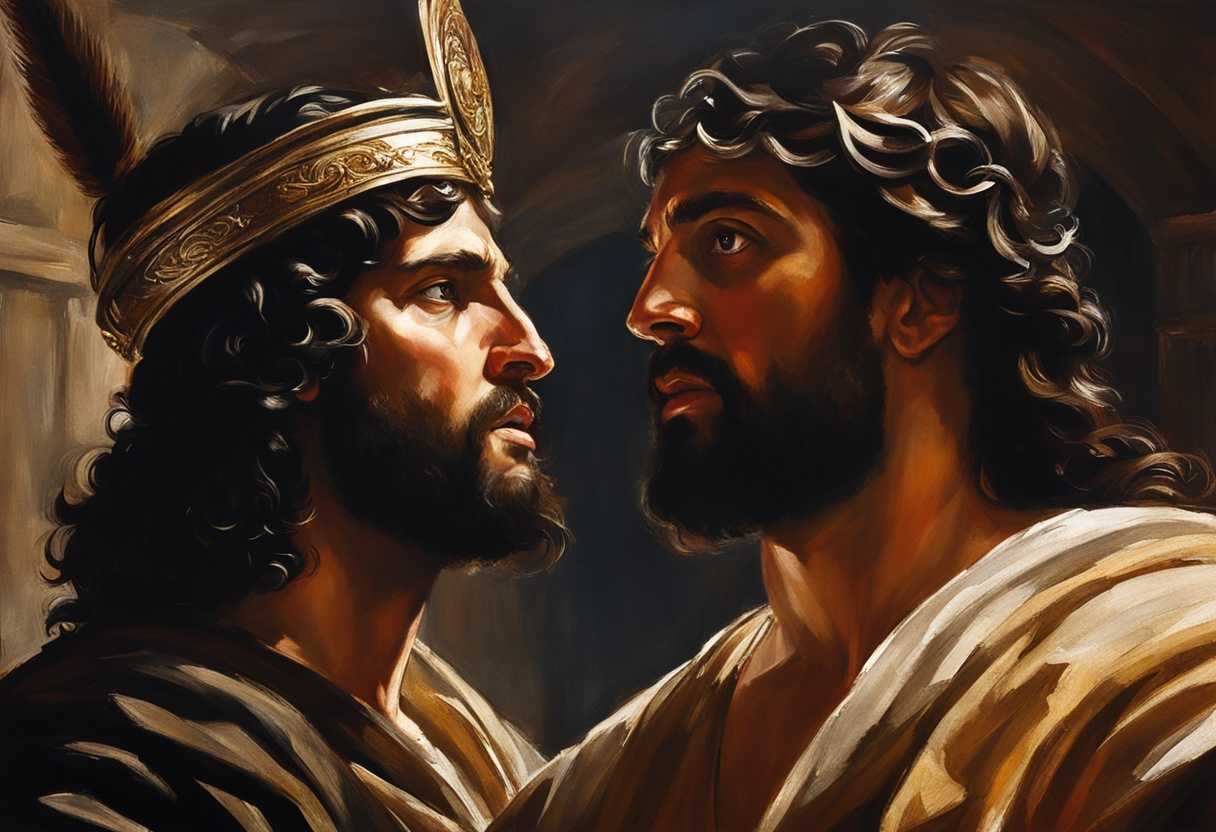
Setting the Scene for Matthew 27:17
The scene in Matthew 27:17 takes place in Jerusalem during the time of the Passover festival. The Roman governor, Pontius Pilate, is presiding over the trial of Jesus Christ. The crowd gathered outside Pilate’s residence is in a state of unrest, with emotions running high. The religious leaders, including the chief priests and elders, have stirred up the people to demand the release of a prisoner named Barabbas instead of Jesus.
Pilate, seated on his judgment seat, is facing Jesus, who stands before him, calm and composed despite the chaos around Him. The atmosphere is tense, with the crowd shouting and clamoring for Barabbas to be set free. Pilate, aware of Jesus’ innocence, is trying to find a way to release Him without inciting a riot. The soldiers, the religious leaders, and the crowd all play a part in this pivotal moment, each with their own motivations and agendas.
The setting is a mix of Roman authority, Jewish religious fervor, and the presence of the Son of God in human form. The clash of these different elements creates a dramatic scene that will ultimately lead to Jesus being sentenced to death on the cross.
What is Matthew 27:17 about?
This verse highlights the pivotal moment when Pontius Pilate, the Roman governor, presents the crowd with a choice to release either Barabbas, a notorious criminal, or Jesus, who was innocent and known for his teachings of love and peace. Their decision reveals the true nature of the people’s hearts in this moment. It forces them to confront their values, beliefs, and priorities.
Imagine being in that crowd, faced with such a consequential decision. What would your choice reveal about your character and faith? This verse challenges us to reflect on our own moral compass and how we respond when faced with difficult choices. It prompts us to consider whether we prioritize worldly values or hold steadfast to our principles of justice and righteousness. This verse ultimately serves as a powerful reminder of the importance of staying true to our beliefs, even in the face of external pressures and adversity.
Understanding what Matthew 27:17 really means
In the midst of the tumultuous events surrounding Jesus’ trial before Pontius Pilate, a pivotal moment unfolds in Matthew 27:17. The scene is set during the sacred Passover festival, a time of significance and symbolism for the Jewish people. Pontius Pilate, the Roman governor, presents the crowd with a choice that echoes far beyond that moment in history. “Whom do you want me to release for you?” This seemingly simple question carries profound implications, forcing the crowd to confront the essence of good and evil, innocence and guilt.
As the crowd stands before Pilate, the weight of their decision hangs in the balance between two starkly contrasting figures. On one side stands Jesus, known as the Christ, the promised Messiah whose very presence challenges the status quo. On the other side looms Barabbas, a notorious prisoner whose name, ironically, means “son of the father.” The irony is palpable as the true Son of the Father, Jesus, is placed in opposition to a criminal, setting the stage for a choice that transcends mere human judgment.
The echoes of this moment reverberate through related passages in the Bible, underscoring the profound rejection Jesus faced. In John 18:40, the crowd’s preference for Barabbas over Jesus symbolizes the tragic reality of humanity’s tendency to reject the divine in favor of the flawed and temporal. Isaiah 53:3’s prophecy of Jesus being despised and rejected finds its fulfillment in this pivotal moment, highlighting the depth of Jesus’ suffering and the weight of humanity’s choice. Acts 3:14 further emphasizes the gravity of the crowd’s decision, contrasting the Holy and Righteous One with a murderer, revealing the stark contrast between divine purity and human sinfulness.
The relevance of this verse extends beyond its historical context, challenging each of us to consider the choices we make in our daily lives. Just as the crowd faced a momentous decision, we too are confronted with choices that define our values and shape our character. In a world filled with competing voices and conflicting priorities, the question posed to the crowd echoes in our hearts: Whom do we choose to follow?
Consider a modern parallel where a community must decide between supporting a selfless volunteer dedicated to serving others and a charismatic yet corrupt leader promising easy solutions. The community’s choice reflects not only their immediate desires but also their deeper values and priorities. In a similar vein, our daily decisions reflect whether we prioritize the teachings of Christ or succumb to the allure of worldly temptations.
As we meditate on this verse, we are prompted to engage in introspection and self-examination. Are we, like the crowd, swayed by societal pressures and popular opinions, or do we stand firm in our commitment to follow Christ? The choice between Jesus and Barabbas is not merely a historical event but a timeless reminder of the cost of discipleship and the enduring relevance of faith in the face of adversity.
In conclusion, Matthew 27:17 beckons us to consider the weight of our decisions and the eternal significance of our choices. By aligning our lives with the teachings of Jesus and embracing the challenges of discipleship, we embody the enduring message of this verse: to choose Christ above all else, even when the world offers seemingly easier paths. Let us heed this call to conscious, faith-driven decision-making, recognizing that our choices today shape not only our present but also our eternal destiny.
What does it mean to reject or accept Jesus?
To accept Jesus means to acknowledge Him as the Son of God, the Savior, and to believe in His teachings and message of salvation. It involves surrendering one’s life to Him, following His commandments, and allowing Him to be the Lord of one’s life. Acceptance of Jesus also entails having a personal relationship with Him, seeking His guidance, and living a life that reflects His love and teachings.
On the other hand, to reject Jesus means to deny His divinity, teachings, and sacrificial death for the redemption of humanity. It involves refusing to believe in Him as the Messiah and choosing to live a life separate from His commandments and principles. Rejecting Jesus also means rejecting the free gift of salvation that He offers to all who believe in Him, and ultimately missing out on the opportunity for eternal life and reconciliation with God. Each person must make a fundamental choice to accept or reject Jesus. It is a decision that has eternal implications and defines one’s relationship with God and their destiny in the afterlife.
Application
Think about Matthew 27:17. Pilate asked the crowd, “Whom do you want me to release: Barabbas, or Jesus who is called Christ?” This isn’t just about history – it’s about you, right now. Are you going to be like the crowd, swayed by what’s popular and easy, or will you stand up for what’s right and choose Jesus Christ? In your busy life, full of work and family, don’t let this choice be just another task on your list. Take a stand and make it count. Where do you stand in this choice today?

Reverend Michael Johnson is an experienced Church Minister with a profound expertise in spirituality and guidance. With a serene presence and a compassionate heart, he has faithfully served his congregation for over 20 years, leading them on a spiritual journey towards inner peace and enlightenment. Reverend Johnson’s extensive knowledge of religious philosophies and profound understanding of human nature have made him a trusted confidant and mentor to many, as he seamlessly weaves his profound wisdom into life teachings. Reverend Johnson’s calming demeanor and empathetic nature continue to uplift and heal souls, nurturing a sense of unity and tranquility within his community.