
Matthew 27:21 is about the crowd, when given the choice between releasing Jesus or Barabbas, being manipulated by the chief priests and elders to choose Barabbas instead of Jesus.
21 The governor again said to them, “Which of the two do you want me to release for you?” And they said, “Barabbas.”
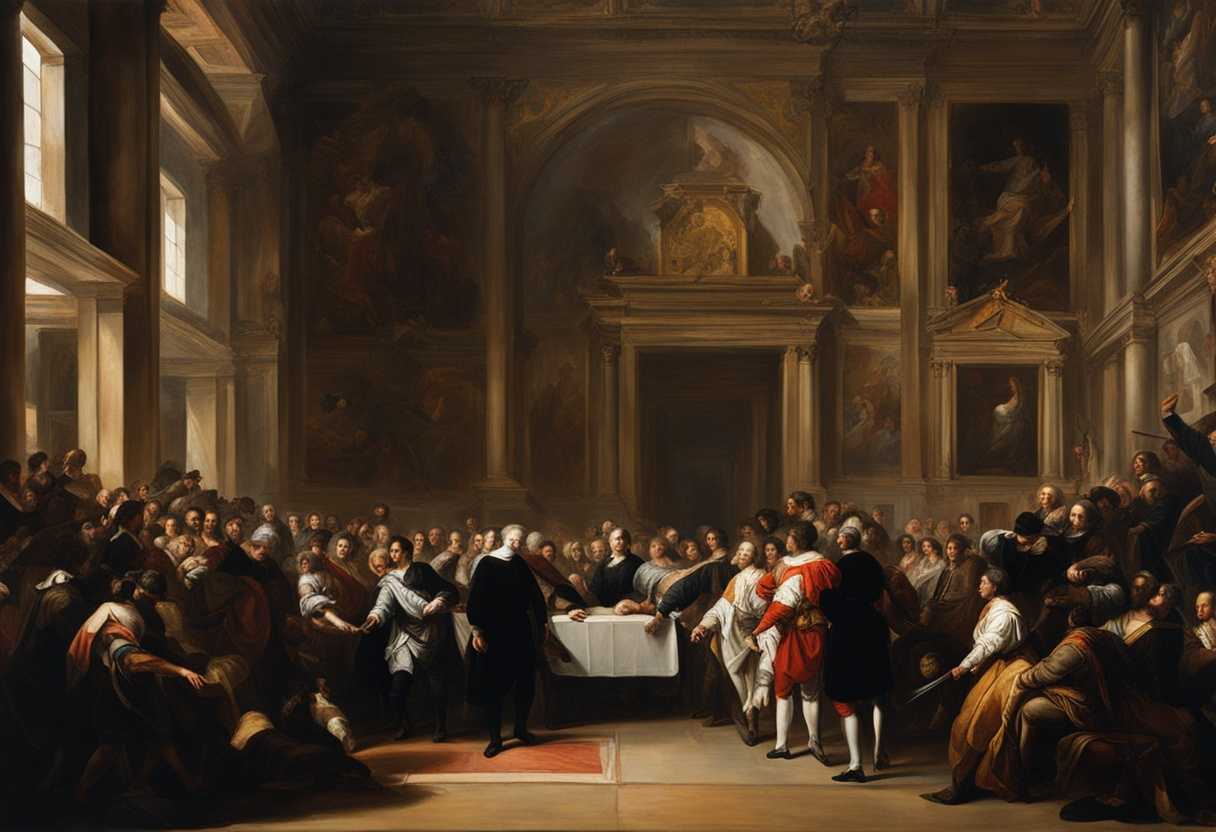
Setting the Scene for Matthew 27:21
In Matthew chapter 27, we find ourselves in the midst of a tumultuous scene in Jerusalem during the time of Passover. The crowd has gathered in front of Pontius Pilate, the Roman governor, who is presiding over the trial of Jesus of Nazareth. The atmosphere is charged with tension as the religious leaders, including the high priests and Pharisees, have stirred up the crowd to demand the release of Barabbas, a notorious criminal, instead of Jesus.
The crowd is a mix of people from all walks of life – some are supporters of Jesus who have followed him and witnessed his teachings and miracles, while others are swayed by the manipulation of the religious leaders. Pilate, caught in the middle of this volatile situation, is trying to appease the crowd and maintain order in the city. The narrow streets of Jerusalem are bustling with activity as onlookers gather to witness the unfolding drama, while Roman soldiers stand guard to prevent any potential riots.
As the tension mounts and the crowd grows more agitated, Pilate poses the crucial question to the people: “Whom do you want me to release to you: Barabbas, or Jesus who is called the Messiah?” The fate of Jesus hangs in the balance as the crowd’s response will determine the course of events that will lead to his crucifixion.
What is Matthew 27:21 about?
This powerful verse captures a pivotal moment in the crucifixion story, where Pontius Pilate presents the crowd with a choice between releasing Jesus, who was innocent, and Barabbas, a known criminal. Pilate’s question forces the crowd to confront their own beliefs and values. It shines a light on the moral dilemma they faced – to choose between a righteous man who preached love and forgiveness, or a violent offender whose actions caused harm and destruction. This verse prompts us to consider the weight of our own choices and the moral implications they carry as we reflect on it. What guides our decisions in moments of moral dilemma? Do we prioritize justice and truth, or do we succumb to societal pressures and popular opinions? The crowd’s decision to choose Barabbas over Jesus serves as a cautionary tale, reminding us of the consequences of giving in to fear, ignorance, and mob mentality. We often face choices in our own lives that test our values and principles. Just like the crowd faced by Pilate, we must be courageous in standing up for what is right, even when it is unpopular or challenging. This verse challenges us to reflect on the power of our choices and the importance of upholding justice, compassion, and truth, even in the face of opposition.
Understanding what Matthew 27:21 really means
In the midst of the trial of Jesus before Pontius Pilate, a pivotal moment unfolds in Matthew 27:21. Picture the scene: Pilate, the Roman governor, presents the crowd with a choice – to release either Jesus, the innocent and righteous one, or Barabbas, a notorious criminal. This decision rests in the hands of the people, a choice with profound implications. The crowd, swayed by the manipulation of religious leaders and caught in the fervor of the moment, cries out for Barabbas to be set free, sealing Jesus’ fate on the path to the cross.
This narrative echoes through related passages in the Bible, emphasizing the rejection of Jesus by His own people. John 18:40 and Acts 3:14 further illuminate the gravity of this choice, highlighting the stark contrast between the Holy One and a murderer, chosen by the crowd. Isaiah 53:3’s prophecy of the Messiah being despised and rejected finds its fulfillment in this heartbreaking moment of decision.
The relevance of this verse extends beyond its historical context, speaking to the timeless themes of choice and consequence. Just as the crowd faced a decision with eternal ramifications, we too encounter choices that reflect our values and beliefs. It challenges us to exhibit moral courage, standing firm in our convictions even when faced with opposition or adversity. This reflection prompts us to examine the societal pressures and influences that can lead to unjust decisions, urging us to strive for justice and righteousness in our own lives.
Consider a contemporary parallel to this biblical account: a community torn between supporting a whistleblower exposing corruption or siding with a popular figure entrenched in the corrupt system. The choice made in such a scenario reveals the true character and values of the community, echoing the crowd’s decision between Jesus and Barabbas.
In dissecting the phrases within Matthew 27:21, we uncover layers of meaning and significance. Pilate’s calculated question places the weight of choice squarely on the shoulders of the crowd, highlighting the power and consequence of collective decision-making. The crowd’s resounding cry for Barabbas symbolizes the rejection of divine truth and righteousness in favor of worldly desires, illustrating the tragic irony of the situation and the fulfillment of prophecy.
As we delve deeper into the implications of this verse, we confront Pilate’s attempt to evade responsibility, the crowd’s misguided choice, and the profound fulfillment of prophetic scriptures. This moment encapsulates the gravity of our decisions, the call for moral fortitude in the face of adversity, and the redemptive sacrifice of Jesus for all humanity. Reflecting on Matthew 27:21 compels us to consider the weight of our choices, the courage to stand for what is right, and the enduring impact of Jesus’ sacrifice on our lives.
What does it mean to choose Jesus as our savior?
Choosing Jesus as our savior means acknowledging Him as the one who saves us from our sins through His sacrifice on the cross. It involves putting our trust and faith in Him alone for our salvation. We accept the gift of grace and forgiveness that Jesus offers us by choosing Him as our savior, knowing that He is the only way to a restored relationship with God.
It also means committing to following and obeying Him, allowing His teachings and example to guide our thoughts, words, and actions. Choosing Jesus as our savior requires a personal decision and a response to His love and sacrifice for us. It involves surrendering our lives to Him and allowing Him to transform us from the inside out, leading us to live a life that honors and glorifies Him. Choosing Jesus as our savior brings eternal hope, peace, and joy to our hearts, ultimately changing our lives.
Application
In the busy arena of modern life, we are confronted daily with choices that shape our path. Just as we navigate the challenges of work and family, our decisions can impact our spiritual journey. Let us embrace our inner strength and make choices that align with our beliefs. Will you dare to stand firm in your convictions and choose love and compassion, even in the face of adversity?

Reverend Michael Johnson is an experienced Church Minister with a profound expertise in spirituality and guidance. With a serene presence and a compassionate heart, he has faithfully served his congregation for over 20 years, leading them on a spiritual journey towards inner peace and enlightenment. Reverend Johnson’s extensive knowledge of religious philosophies and profound understanding of human nature have made him a trusted confidant and mentor to many, as he seamlessly weaves his profound wisdom into life teachings. Reverend Johnson’s calming demeanor and empathetic nature continue to uplift and heal souls, nurturing a sense of unity and tranquility within his community.