
John 9:21 is about the doubt and disbelief of the Pharisees regarding the healing of the man born blind, highlighting the spiritual blindness that comes from rigid adherence to rules and traditions.
21 But how he now sees we do not know, nor do we know who opened his eyes. Ask him; he is of age. He will speak for himself.”
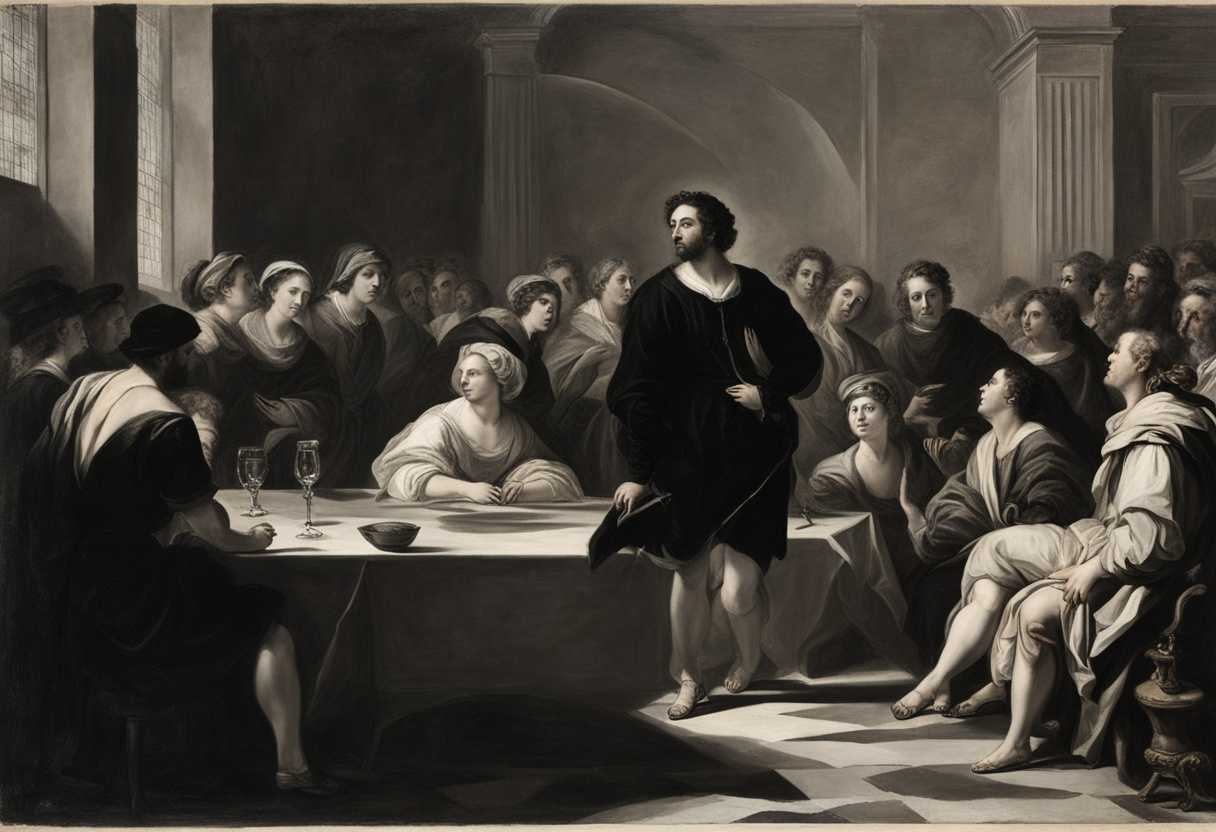
Setting the Scene for John 9:21
In John chapter 9, we find Jesus walking with his disciples when they come across a man who was blind from birth. The disciples, curious about the cause of the man’s condition, ask Jesus, “Rabbi, who sinned, this man or his parents, that he was born blind?” Jesus responds that neither the man nor his parents sinned, but that the man’s blindness was an opportunity for the works of God to be displayed in him.
The scene is set on a dusty road in Jerusalem, with the sun beating down on the group as they walk. The man, who has been blind since birth, sits by the side of the road begging for alms. His clothes are tattered, and his face bears the marks of a hard life. Jesus, with his disciples in tow, approaches the man, and the disciples’ curiosity about the man’s condition sparks a conversation about sin and suffering.
As Jesus speaks to the disciples about the man’s blindness, the man listens intently, his ears perking up at the mention of his condition. Little does he know that his encounter with Jesus will change his life forever, as Jesus proceeds to heal him of his blindness, demonstrating the power and compassion of God in a miraculous way.
What is John 9:21 about?
The phrase “He is of age; ask him” in this verse from the Gospel of John reflects courage, independence, and ownership of one’s story and experiences. It signifies the blind man’s transformation from a passive recipient of his healing to a confident individual willing to speak for himself. The words affirm the blind man’s autonomy and ability to articulate his own truth, even in the face of doubt and skepticism from others.
Have you ever felt marginalized or doubted by those around you? This verse serves as a reminder that you have the power to claim your voice and stand up for your beliefs, experiences, and identity. Just like the blind man in this story, you have the agency to speak your truth and assert your self-worth, even when others may question or undermine you. It is a call to embrace your individuality, trust in your own journey, and confidently express your thoughts and convictions to the world. So, when faced with doubt or scrutiny, remember the empowering message of “He is of age; ask him” and let your voice be heard with confidence and conviction.
Understanding what John 9:21 really means
In the narrative of Jesus healing a man born blind, we encounter a pivotal moment where the Pharisees question the man’s parents about the miraculous event. The parents, cautious in their response, indicate that their son is of age, emphasizing his legal adulthood and ability to speak for himself. This notion of being “of age” underscores the significance of personal responsibility and the capacity to articulate one’s own experiences and beliefs. It highlights the autonomy and accountability that come with maturity, urging individuals to take ownership of their testimonies.
The phrase “Ask him” further elucidates the parents’ reluctance to engage further, possibly out of fear of reprisal from the religious authorities. It underscores the importance of direct testimony and personal encounter, emphasizing the authenticity and power of firsthand experiences. This reluctance to intervene speaks to the complexities of navigating societal expectations and religious pressures, prompting reflection on the challenges individuals face in standing by their convictions.
In related passages, such as John 9:23, we learn that the parents’ fear of the Jewish leaders stemmed from the consequences of acknowledging Jesus as the Messiah, highlighting the risks associated with bearing witness to one’s faith. John 9:25 amplifies the healed man’s resolute declaration, “I was blind but now I see,” emphasizing the undeniable impact of personal testimony and the transformative nature of encountering Jesus. Acts 4:19-20 further reinforces the theme of unwavering testimony, as Peter and John boldly proclaim their inability to stay silent about what they have witnessed, despite external pressures.
The relevance of this verse extends to contemporary contexts, where individuals often grapple with societal pressures to conform and compromise their beliefs. It serves as a reminder of the courage required to speak one’s truth and uphold personal convictions in the face of opposition. Just as the healed man and Peter and John stood firm in their testimonies, we are encouraged to embrace our experiences and beliefs authentically, regardless of external influences.
Consider a scenario where a young woman undergoes a profound spiritual transformation but faces skepticism from those around her. Despite the pressure to downplay her experiences, she can draw strength from the man in the story and confidently share her testimony, recognizing the validity and impact of her personal encounter. Similarly, a friend’s unwavering faith in the face of ridicule and interrogation serves as a testament to the resilience and power of personal testimony. His steadfastness not only deepened his own faith but also inspired others to explore their spiritual journeys with courage and conviction.
In conclusion, John 9:21 and its surrounding narrative underscore the significance of personal testimony and the imperative of standing firm in one’s beliefs. It prompts us to embrace personal responsibility, speak our truth authentically, and uphold our convictions, even amidst adversity. This verse serves as a timeless reminder of the transformative power of firsthand encounters with faith and the resilience required to bear witness to our experiences.
How can we have true spiritual sight?
True spiritual sight comes from recognizing and accepting the reality of our own blindness and dependence on God. It involves acknowledging our limitations and surrendering to divine guidance. When we humbly admit our need for spiritual enlightenment, we open ourselves to receive the true sight that comes from God.
This verse reminds us that true spiritual sight is a gift that can only be received through faith and obedience. It requires a willingness to trust in God’s truth even when it goes against our own understanding or the expectations of others. By embracing a posture of faith and obedience, we can see with clarity and discernment the spiritual realities that shape our lives and the world around us.
Application
In the hustle of work and the warmth of family, don’t forget to openly share your story of faith. Your experiences and God’s work in your life are meant to be shared, not hidden away. Be a beacon of hope and truth in this busy world. Will you stand up and proclaim God’s love and power today?

Reverend Michael Johnson is an experienced Church Minister with a profound expertise in spirituality and guidance. With a serene presence and a compassionate heart, he has faithfully served his congregation for over 20 years, leading them on a spiritual journey towards inner peace and enlightenment. Reverend Johnson’s extensive knowledge of religious philosophies and profound understanding of human nature have made him a trusted confidant and mentor to many, as he seamlessly weaves his profound wisdom into life teachings. Reverend Johnson’s calming demeanor and empathetic nature continue to uplift and heal souls, nurturing a sense of unity and tranquility within his community.