
1 As he passed by, he saw a man blind from birth.
2 And his disciples asked him, “Rabbi, who sinned, this man or his parents, that he was born blind?”
3 Jesus answered, “It was not that this man sinned, or his parents, but that the works of God might be displayed in him.
4 We must work the works of him who sent me while it is day; night is coming, when no one can work.
5 As long as I am in the world, I am the light of the world.
6 Having said these things, he spit on the ground and made mud with the saliva. Then he anointed the man’s eyes with the mud.
7 and said to him, “Go, wash in the pool of Siloam” (which means Sent). So he went and washed and came back seeing.
8 The neighbors and those who had seen him before as a beggar were saying, “Is this not the man who used to sit and beg?”
9 As he passed by, he saw a man blind from birth.
10 So they said to him, “How then were your eyes opened?”
11 He answered, “The man called Jesus made mud and anointed my eyes and said to me, ‘Go to Siloam and wash.’ So I went and washed and received my sight.”
12 They said to him, “Where is he?” He said, “I do not know.”
13 They brought to the Pharisees the man who had formerly been blind.
14 Now it was a Sabbath day when Jesus made the mud and opened his eyes.
15 The Pharisees also asked him how he had received his sight. He said to them, “He put mud on my eyes, and I washed, and I see.”
16 Some of the Pharisees said, “This man is not from God, for he does not keep the Sabbath.” But others said, “How can a man who is a sinner do such signs?” And there was a division among them.
17 So they said again to the blind man, “What do you say about him, since he has opened your eyes?” He said, “He is a prophet.”
18 The Jews did not believe that he had been blind and had received his sight, until they called the parents of the man who had received his sight.
19 And they asked them, “Is this your son, who you say was born blind? How then does he now see?”
20 His parents answered, “We know that this is our son and that he was born blind,
21 But how he now sees we do not know, nor do we know who opened his eyes. Ask him; he is of age. He will speak for himself.”
22 His parents said these things because they feared the Jews, for the Jews had already agreed that if anyone should confess Jesus to be Christ, he was to be put out of the synagogue.
23 Therefore his parents said, “He is of age; ask him.”
24 So for the second time they called the man who had been blind and said to him, “Give glory to God. We know that this man is a sinner.”
25 He answered, “Whether he is a sinner I do not know. One thing I do know, that though I was blind, now I see.”
26 He answered, “I have told you already, and you would not listen. Why do you want to hear it again? Do you also want to become his disciples?”
27 He answered them, “I have told you already, and you would not listen. Why do you want to hear it again? Do you also want to become his disciples?”
28 And they reviled him, saying, “You are his disciple, but we are disciples of Moses.
29 We know that God has spoken to Moses, but as for this man, we do not know where he comes from.”
30 The man answered, “Why, this is an amazing thing! You do not know where he comes from, and yet he opened my eyes.
31 We know that God does not listen to sinners, but if anyone is a worshiper of God and does his will, God listens to him.
32 Never since the world began has it been heard that anyone opened the eyes of a man born blind.
33 If this man were not from God, he could do nothing.”
34 They answered him, “You were born in utter sin, and would you teach us?” And they cast him out.
35 Jesus heard that they had cast him out, and having found him he said, “Do you believe in the Son of Man?”
36 He answered, “And who is he, sir, that I may believe in him?”
37 Jesus said to him, “You have seen him, and it is he who is speaking to you.”
38 He said, “Lord, I believe,” and he worshiped him.
39 Jesus said, “For judgment I came into this world, that those who do not see may see, and those who see may become blind.”
40 Some of the Pharisees near him heard these things, and said to him, “Are we also blind?”
41 Jesus said to them, “If you were blind, you would have no guilt; but now that you say, ‘We see,’ your guilt remains.
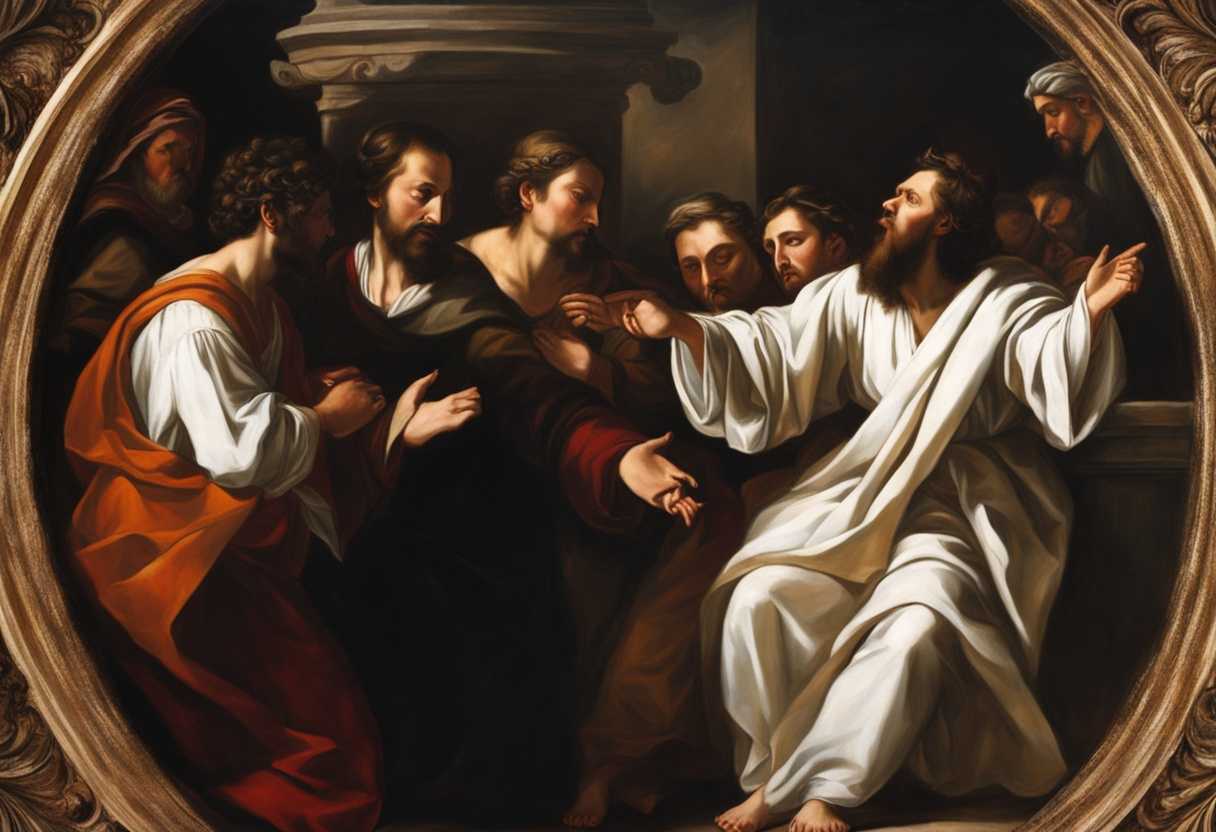
The True Meaning of John 9
This passage from the Gospel of John provides a powerful account of Jesus healing a man born blind, revealing the spiritual blindness of the Pharisees, and sparking a debate about the nature of sin and the identity of the Messiah.
The author of this gospel is traditionally believed to be John, one of the twelve disciples of Jesus. John, as an eyewitness to the ministry of Christ, offers a unique perspective that complements the synoptic gospels of Matthew, Mark, and Luke. Jesus demonstrates his divine authority and compassion in this chapter, while also confronting the religious leaders who refuse to acknowledge his true identity.
The events that unfold in this passage have far-reaching implications, as the healing of the blind man not only restores his physical sight but also opens his eyes to the truth about Jesus. The Pharisees, on the other hand, become increasingly hardened in their rejection of Jesus, even going so far as to excommunicate the man who was healed. This episode foreshadows the growing conflict between Jesus and the religious establishment, which will ultimately lead to his crucifixion and resurrection.
John 9:1-7
A powerful story that centers around the healing of a man who was born blind is encountered in John 9:1-7. This passage begins with Jesus and His disciples encountering this blind man on their journey. The disciples ask Jesus a question that reflects a common belief of the time – that illness or disability was a punishment for sin, either the person’s own sin or the sin of their parents. Jesus’s response challenges this belief by stating that the man’s condition was not a result of sin, but rather an opportunity for God’s work to be displayed through him. This is a significant departure from the prevalent understanding at the time and a key message regarding the nature of suffering and God’s sovereignty. Jesus takes action to heal the blind man as the narrative progresses. He spits on the ground and creates mud with his saliva, which He then applies to the man’s eyes. This unconventional method of healing underscores Jesus’s divine authority and power to heal in ways that defy human understanding. The man is instructed to go and wash in the pool of Siloam, and upon obeying, he receives his sight. The act of washing in the pool can be seen as a symbol of purification and new beginnings, emphasizing the transformative nature of Jesus’s miracles.
The story of the blind man in John 9 serves as a metaphor for spiritual blindness and the revelation of truth through Christ. The man’s physical blindness mirrors the spiritual blindness of the religious leaders who fail to recognize Jesus’s authority and seek to undermine the miracle. This leads to a series of interactions where the man testifies to the healing power of Jesus, despite facing skepticism and persecution from the religious authorities. Through this ordeal, the man grows in his understanding and faith, culminating in a profound declaration of belief in Jesus as the Son of Man. Themes of spiritual enlightenment, divine intervention, faith, and the opposition faced by those who bear witness to the truth are illustrated in this passage in John 9. It challenges traditional beliefs about suffering and reveals Jesus as the light of the world who brings sight to the blind, both physically and spiritually. The blind man’s journey from darkness to light serves as a powerful reminder of the transformative power of encountering Christ and the courage required to stand firm in the face of adversity. This story resonates throughout the Bible, echoing themes of healing, belief, and the fulfillment of prophecy found in passages such as Isaiah 35:5, where the blind will see, and Isaiah 42:6-7, where the Messiah is described as a light to the nations, opening the eyes of the blind.
John 9:8-12
The detailed account of the interaction between the man who was blind from birth and those around him after he was healed by Jesus is seen in John 9:8-12. The passage begins with people in the neighborhood witnessing the transformation of the blind man into one who could now see. Their reaction was one of amazement and confusion. They couldn’t believe that this man, who had been blind his whole life, could now see. This miraculous healing by Jesus caused a stir among the people, leading them to question and doubt the authenticity of this transformation.
The man who was healed, however, confidently affirmed that he was indeed the same person who used to sit and beg while blind. His testimony about Jesus was simple yet powerful. He declared that a man called Jesus had made mud, anointed his eyes, and instructed him to wash in the pool of Siloam. Following these instructions had resulted in his sight being restored. The man did not fully understand who Jesus was at this point, referring to Him as ‘the man called Jesus,’ but he recognized and acknowledged Him as the source of his healing.
This passage carries a timeless message about the transformative power of Jesus. Just as Jesus physically restored the blind man’s sight, He can also bring spiritual and emotional healing to our lives. The blind man’s story echoes the theme of spiritual blindness in the Bible. Throughout the Scriptures, there are many instances where people are described as spiritually blind, unable to see the truth or recognize Jesus for who He truly is. This healing serves as a metaphor for the spiritual enlightenment that Jesus brings into the lives of those who believe in Him.
The skepticism and questioning of the witnesses in this passage reflect the doubt and disbelief that often accompany encounters with the divine. Despite witnessing the miraculous healing with their own eyes, some still struggled to accept the reality of what had happened before them. This reaction serves as a reminder of the importance of faith and belief in the face of uncertainty and skepticism. It also highlights the tendency of human nature to doubt that which is beyond our comprehension or understanding. This passage is significant in the broader context of the Gospel of John because it is one of the many miracles Jesus performed to reveal His identity as the Son of God. The healing of the blind man serves as a sign pointing to Jesus’ divinity and his mission to bring light into the world. It also foreshadows the spiritual blindness of the Pharisees and religious leaders who, despite witnessing such miracles, refused to see Jesus for who He truly was. This theme of blindness and enlightenment runs throughout John’s Gospel, emphasizing the need for spiritual sight to recognize and follow Jesus. John 9:8-12 presents a powerful testimony to the transformative power of Jesus, the importance of faith in the midst of doubt, and the theme of spiritual blindness and enlightenment. Through the healing of the blind man, we are reminded of Jesus’ ability to bring light into the darkest areas of our lives and to open our eyes to see Him for who He truly is – the Son of God and the source of all healing and salvation.
John 9:13-17
The verse in John 9:13-17 breaks down into two main sections: the Pharisees questioning the formerly blind man and the man’s response to their inquiries. The Pharisees in the section question the man, showing skepticism and disbelief towards the miracle Jesus performed by healing the man who was born blind. This reaction is significant as it highlights the unbelief and stubbornness of the religious leaders of that time. Despite witnessing a remarkable miracle, instead of acknowledging the power of Jesus and giving glory to God, the Pharisees chose to question the validity of the healing and the identity of the healer. This response reveals a heart hardened by pride and unwilling to accept the truth that was right in front of them.
The man, who had been blind but now could see, responds to the Pharisees with humility and a simple declaration of the facts. He does not try to argue with the Pharisees or convince them of the truth. He merely points out the facts of his healing and leaves it to them to draw their own conclusions. His straightforward and honest response contrasts sharply with the Pharisees’ skepticism and leads to the Pharisees’ further questioning of him.
This passage teaches us about the importance of humility in receiving God’s work in our lives. The man who was blind did not try to take credit for his healing or boast about his newfound sight. He simply acknowledged the power of Jesus in his life. This humility stands in stark contrast to the prideful attitude of the Pharisees, who were more concerned with upholding their own authority and beliefs rather than recognizing the work of God. Jesus once again demonstrates His power and compassion by healing the blind man in this story. This miracle not only physically restored the man’s sight but also revealed the spiritual blindness of the Pharisees. It serves as a poignant reminder that sometimes those who are physically able to see can be spiritually blind, while those considered outcasts or unworthy by society can have profound spiritual insight and understanding.
The blind man’s courage to stand up to the religious authorities and testify to what Jesus had done for him is a powerful example of faith and boldness in the face of opposition. His simple yet profound declaration, “One thing I do know. I was blind but now I see!” (John 9:25), echoes the theme of spiritual enlightenment and transformation that is central to the Gospel message. This passage highlights the themes of spiritual blindness, humility, faith, and the transformative power of encountering Jesus. It challenges us to examine our own spiritual sight and readiness to acknowledge the work of God in our lives, even when it may go against the expectations or norms of society.
John 9:18-23
The Pharisees interrogate the parents of the man born blind who was healed by Jesus in John 9:18-23. This section can be broken down into two main parts: the Pharisees’ disbelief in the man’s testimony and their questioning of his parents.
Firstly, the Pharisees were skeptical of the man’s testimony about how he was healed. They refused to believe that a sinner like Jesus could perform such a miracle. This skepticism reveals their pride and self-righteousness, as they were more concerned with maintaining their authority and reputation than acknowledging the power of God at work through Jesus.
Secondly, the Pharisees turned to the man’s parents for answers. They asked if he was truly born blind and how he received his sight. The parents confirmed that he was indeed their son and was born blind, but out of fear of being excommunicated from the synagogue, they avoided giving a direct answer about how he was healed. Their fear of the Pharisees’ authority led them to distance themselves from their son’s miraculous healing.
This passage in John 9 emphasizes the theme of spiritual blindness and the conflict between religious authorities and the truth of God’s power. The Pharisees represent those who are spiritually blind, unable to see the truth even when it is right in front of them. The man born blind symbolizes those who are open to receiving the light of Christ, leading to spiritual sight and understanding. This interaction between the Pharisees, the healed man, and his parents serves as a reminder of the importance of standing firm in faith, even when faced with opposition and persecution. The man’s courage to testify about his miraculous healing, despite the Pharisees’ disbelief and threats, highlights the strength that comes from a genuine encounter with Jesus. The theme of blindness in the broader context of the Bible is a recurring motif that symbolizes not only physical sight but also spiritual understanding. Jesus declares in John 9:39-41 that He came into the world for judgment so that those who are blind may see and those who see may become blind, highlighting the transformative power of His teachings and the division it brings among people. John 9:18-23 ultimately challenges us to examine our own spiritual vision and openness to the truth of God’s work in our lives, even when it goes against the expectations and norms of society. It encourages us to boldly testify to the goodness and power of God, trusting in His provision and guidance, regardless of the pressures and doubts that may come from those around us.
John 9:24-34
The man who was blind from birth, the religious leaders (Pharisees), and Jesus have a powerful and dramatic interaction in John 9:24-34. The Pharisees were known for their strict adherence to the Jewish law and their skepticism towards Jesus, whom they viewed as a threat to their authority.
The Pharisees called the man who was blind and now healed to question him about his healing. They were convinced that Jesus was a sinner because He had healed the blind man on the Sabbath, breaking their interpretation of the Law. The man’s sight restoration was undeniable, yet the Pharisees were so focused on their legalism and power that they refused to acknowledge the miraculous nature of the healing.
The man who was formerly blind responded with deep insight and courage, stating that Jesus could not have performed such a miracle if He were not from God. This response challenged the Pharisees’ hardened hearts and forced them to reevaluate their understanding of who Jesus was. The man’s faith and testimony were so bold that the Pharisees could not dismiss him easily.
The Pharisees, unwilling to accept the reality of Jesus’ identity and power, resort to insulting the man and questioning his legitimacy. They were so blinded by their pride and arrogance that they could not see the truth standing right in front of them. The formerly blind man’s spiritual eyes were opened along with his physical eyes, allowing him to recognize Jesus as the Son of God.
This passage teaches us about the dangers of spiritual blindness caused by pride and legalism. The Pharisees were so consumed with upholding their traditions and authority that they missed the Messiah when He was right in front of them. The man who was blind serves as a powerful example of humble faith and courage in the face of opposition. His testimony challenges us to not only see with our physical eyes but with our hearts and spirits as well. This story echoes themes of redemption, healing, and the revelation of God’s glory through Jesus Christ in the broader context of the Bible. Just as Jesus physically healed the blind man, He offers spiritual healing and restoration to all who believe in Him. This miracle also fulfills the prophecy in Isaiah 35:5 of the Messiah opening the eyes of the blind, proving Jesus’ identity as the long-awaited Savior. The confrontation with the Pharisees foreshadows the growing conflict between Jesus and the religious leaders that would ultimately lead to His crucifixion and resurrection, highlighting the spiritual battle between darkness and light.
John 9:35-41
The section in John 9:35-41 can be broken down into a few key parts. Verse 35: “Jesus heard that they had thrown him out, and when he found him, he said, ‘Do you believe in the Son of Man? Jesus sought out the man who was blind from birth after the religious leaders had thrown him out. Jesus poses a question to him: “Do you believe in the Son of Man?” This question is significant because it points to Jesus’ identity and the man’s faith in Him as the Messiah. Jesus is referring to the prophecy in the Book of Daniel where the Son of Man is a divine figure who will be given dominion and an everlasting kingdom (Daniel 7:13-14) by identifying Himself as the Son of Man.
- Verse 36: “Who is he, sir?’ the man asked. ‘Tell me so that I may believe in him.’”
The man born blind responds with a question, showing his eagerness to believe in the Son of Man that Jesus is referring to. This eagerness is a stark contrast to the stubbornness and disbelief exhibited by the Pharisees, who had closed hearts and minds despite witnessing the miraculous healing of the blind man (John 9:13-34).
-
Verse 37: “Jesus said, ‘You have now seen him; in fact, he is the one speaking with you. Jesus reveals His true identity to the man born blind in this verse. Jesus confirms his presence in the Messiah by affirming that he has now seen the Son of Man and that the Son of Man is speaking to him. This encounter serves as a powerful moment of revelation and transformation for the formerly blind man, as he not only receives physical sight but also spiritual insight into the identity of Jesus.
-
Verses 39-41: “Jesus said, ‘For judgment I have come into this world, so that the blind will see and those who see will become blind.’ Some Pharisees who were with him heard him say this and asked, ‘What? Are we blind too?’ Jesus said, ‘If you were blind, you would not be guilty of sin; but now that you claim you can see, your guilt remains.’”
These verses conclude the passage with Jesus addressing the Pharisees who were present. Jesus uses the physical healing of the blind man to illustrate a deeper spiritual truth – those who recognize their need for spiritual sight and acknowledge their blindness are the ones who truly see (understand and accept Jesus), while those who claim to see (like the Pharisees) and yet reject Him remain spiritually blind and guilty of sin. Jesus exposes the self-righteousness and spiritual blindness of the Pharisees, highlighting the importance of humility, openness, and faith in recognizing and receiving the truth of who He is.
This passage in John 9 encapsulates the themes of spiritual blindness, physical and spiritual sight, faith, revelation, and judgment. It emphasizes the transformative power of encountering Jesus, both in physical healing and in spiritual understanding. It also serves as a reminder of the importance of humility, openness, and faith in truly seeing and knowing Jesus for who He is, the Son of Man and the Messiah.
After John 9
Jesus miraculously healed a man who was born blind in this chapter. The Pharisees were divided in their opinions about this miracle, some refusing to believe it was from God. But the man who was healed stood firm in his testimony, declaring Jesus as a prophet. This event challenged the religious leaders’ understanding of God’s power and authority. God’s ways are higher than our ways and His power knows no limits as we reflect on this chapter. Let us open ourselves to the unexpected ways in which God may work in our lives, even if it challenges our beliefs and understanding. Jesus will continue to reveal His divine nature and challenge the norms of society in the next chapter. Let us remain open and receptive to His teachings, ready to be transformed by His love and grace.

Reverend Michael Johnson is an experienced Church Minister with a profound expertise in spirituality and guidance. With a serene presence and a compassionate heart, he has faithfully served his congregation for over 20 years, leading them on a spiritual journey towards inner peace and enlightenment. Reverend Johnson’s extensive knowledge of religious philosophies and profound understanding of human nature have made him a trusted confidant and mentor to many, as he seamlessly weaves his profound wisdom into life teachings. Reverend Johnson’s calming demeanor and empathetic nature continue to uplift and heal souls, nurturing a sense of unity and tranquility within his community.