
John 9:1-7 is about Jesus healing a blind man to demonstrate that physical blindness is not a punishment for sin, but an opportunity for God’s work to be revealed in the world.
2 And his disciples asked him, “Rabbi, who sinned, this man or his parents, that he was born blind?”
2 And his disciples asked him, “Rabbi, who sinned, this man or his parents, that he was born blind?”
3 Jesus answered, “It was not that this man sinned, or his parents, but that the works of God might be displayed in him.
4 We must work the works of him who sent me while it is day; night is coming, when no one can work.
5 As long as I am in the world, I am the light of the world.”
6 Having said these things, he spit on the ground and made mud with the saliva. Then he anointed the man’s eyes with the mud.
7 and said to him, “Go, wash in the pool of Siloam” (which means Sent). So he went and washed and came back seeing.
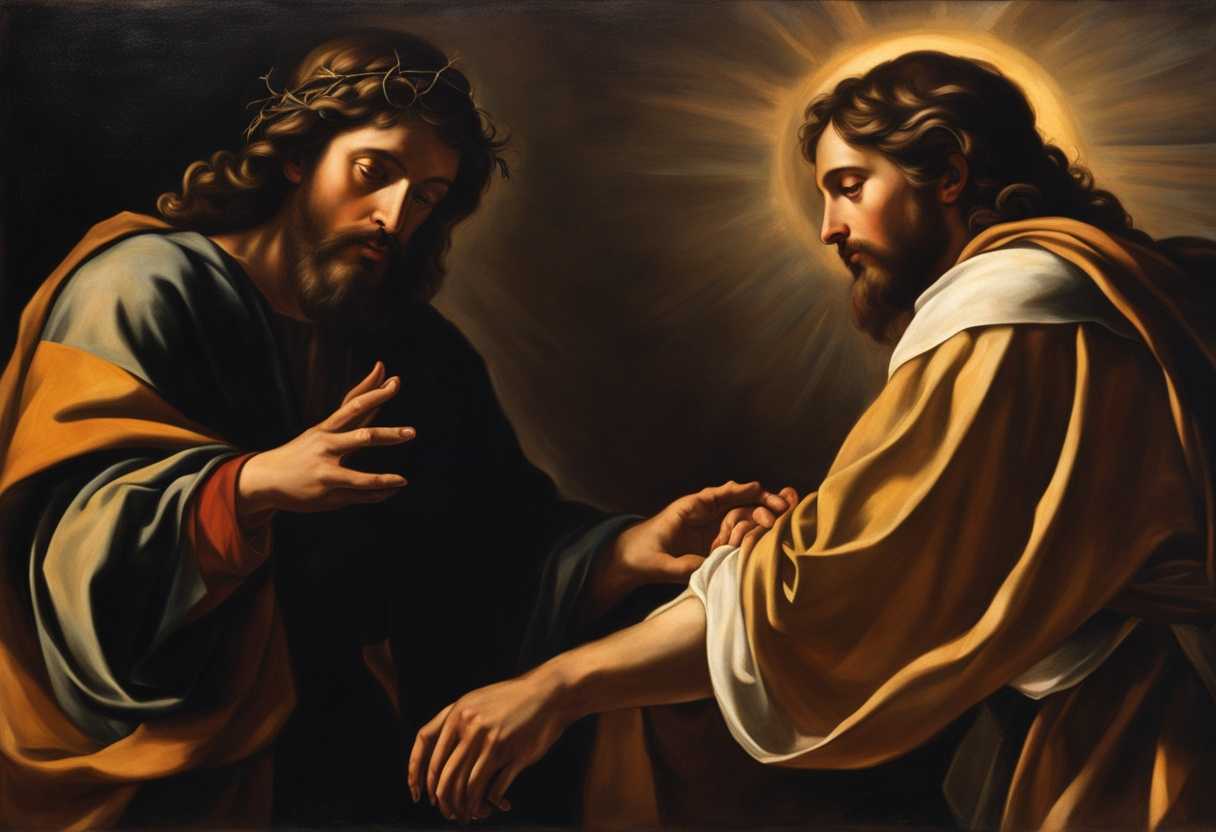
Setting the Scene for John 9:1-7
In John chapter 9, we find Jesus and his disciples walking along a dusty road in Jerusalem. As they pass by, they notice a man who has been blind from birth sitting by the roadside, begging for alms. The man’s name is not mentioned in the passage, but his presence is significant as he becomes the central figure in this miraculous event.
The disciples, curious about the man’s condition, ask Jesus, “Rabbi, who sinned, this man or his parents, that he was born blind?” Jesus responds that neither the man nor his parents sinned, but that the works of God might be displayed in him. With these words, Jesus stoops down, spits on the ground, makes mud with his saliva, and spreads it on the blind man’s eyes. He then instructs the man to go and wash in the pool of Siloam. As the blind man follows Jesus’ command, he is miraculously healed and gains his sight for the first time in his life.
The scene is filled with a mix of emotions – curiosity from the disciples, hope from the blind man, and awe from the bystanders witnessing this incredible miracle. The dusty road, the bustling streets of Jerusalem, and the pool of Siloam all serve as the backdrop for this powerful moment of healing and revelation, showcasing Jesus’ compassion and divine power.
What is John 9:1-7 about?
This verse exemplifies the miraculous power of Jesus and his compassion for those who are suffering. Jesus not only shows his ability to perform miracles but also his deep empathy for individuals facing challenges and hardships by healing a man who was born blind. This act of healing goes beyond physical restoration; it symbolizes the spiritual enlightenment that comes from encountering Jesus and experiencing his love and grace.
Have you ever thought about the profound significance of Jesus choosing to heal a man born blind? It speaks volumes about his unconditional love and willingness to bring light into the darkest corners of our lives. Reflect on this verse not only for the physical healing that took place but also for the spiritual transformation that occurred. Let it remind you that no obstacle is too great for Jesus to overcome and that his compassion knows no bounds.
Understanding what John 9:1-7 really means
The story in John 9:1-7 recounts a profound moment where Jesus heals a man who was born blind. This miraculous event showcases not only Jesus’ divine authority but also His deep compassion for those in need. As the disciples inquire about the cause of the man’s blindness, we glimpse into the prevalent belief of that time that suffering was a direct consequence of sin.
Jesus’ response challenges this notion by stating, “Neither this man nor his parents sinned,” highlighting that suffering is not always a punishment for personal wrongdoing. Instead, Jesus reveals that the man’s condition serves as an opportunity for God’s power and glory to be manifested. Through the command to “Go, wash in the Pool of Siloam,” Jesus requires the man to demonstrate faith and obedience, symbolizing trust in His word.
In declaring, “I am the light of the world,” Jesus not only proclaims His divine role but also signifies that He brings spiritual enlightenment and salvation to all. This act of healing the blind man echoes prophecies such as Isaiah 42:7, which foretold the Messiah’s mission to open the eyes of the blind and bring freedom to the captives.
Today, this passage remains relevant as it offers insights into the nature of suffering, faith, and obedience. It teaches us that challenges can be opportunities for God’s work to be displayed in our lives and calls us to trust and obey Him, even when we do not fully comprehend His ways. In a world often shrouded in darkness and confusion, Jesus stands as the beacon of light, offering guidance and hope to all who seek Him.
Consider individuals who have faced adversity and found strength in their faith amidst trials. Just as the blind man’s healing showcased God’s power, our own struggles can become testimonies to His presence and might. This narrative prompts us to look beyond our immediate circumstances, trusting in Jesus, the light of the world, and believing that our lives can reflect God’s glory through unwavering faith and obedience.
How can we see beyond physical appearances accurately?
We must understand that true perception goes beyond what meets the eye in order to see beyond physical appearances accurately. It involves looking deeper at a person’s character, intentions, and inner qualities rather than solely focusing on outward appearances. This can be achieved by practicing empathy, compassion, and understanding towards others. We are able to see people for who they truly are, beyond any superficial judgments, by cultivating a mindset that values qualities of the heart over external features.
Furthermore, seeing beyond physical appearances accurately requires us to look at situations with a discerning and open mind. It involves recognizing that everyone has their own unique struggles, experiences, and stories that shape who they are. We can gain a more accurate and compassionate perspective by taking the time to understand someone’s background and circumstances. This allows us to see the beauty and worth in every individual, regardless of their external presentation. When we can see beyond physical appearances accurately, we are ultimately able to connect with others on a deeper level and appreciate the diversity and complexity of humanity. We can break through superficial judgments and truly see the essence of a person by focusing on developing our spiritual perception and looking at people with a compassionate and understanding gaze.
Application
Just as you juggle deadlines and family time, think about how you can spread kindness and hope. Jesus brought healing, and you can too, by supporting those in need. Be the beacon of love in someone’s storm. Don’t ignore the struggles around you; step in with compassion and action. How will you light up someone’s life today?

Reverend Michael Johnson is an experienced Church Minister with a profound expertise in spirituality and guidance. With a serene presence and a compassionate heart, he has faithfully served his congregation for over 20 years, leading them on a spiritual journey towards inner peace and enlightenment. Reverend Johnson’s extensive knowledge of religious philosophies and profound understanding of human nature have made him a trusted confidant and mentor to many, as he seamlessly weaves his profound wisdom into life teachings. Reverend Johnson’s calming demeanor and empathetic nature continue to uplift and heal souls, nurturing a sense of unity and tranquility within his community.