
Matthew 27:24-25 is about the moment when Pontius Pilate publicly washed his hands to absolve himself of responsibility for Jesus’ crucifixion, illustrating the crowd’s collective guilt for Jesus’ death by saying, “His blood is on us and on our children.”
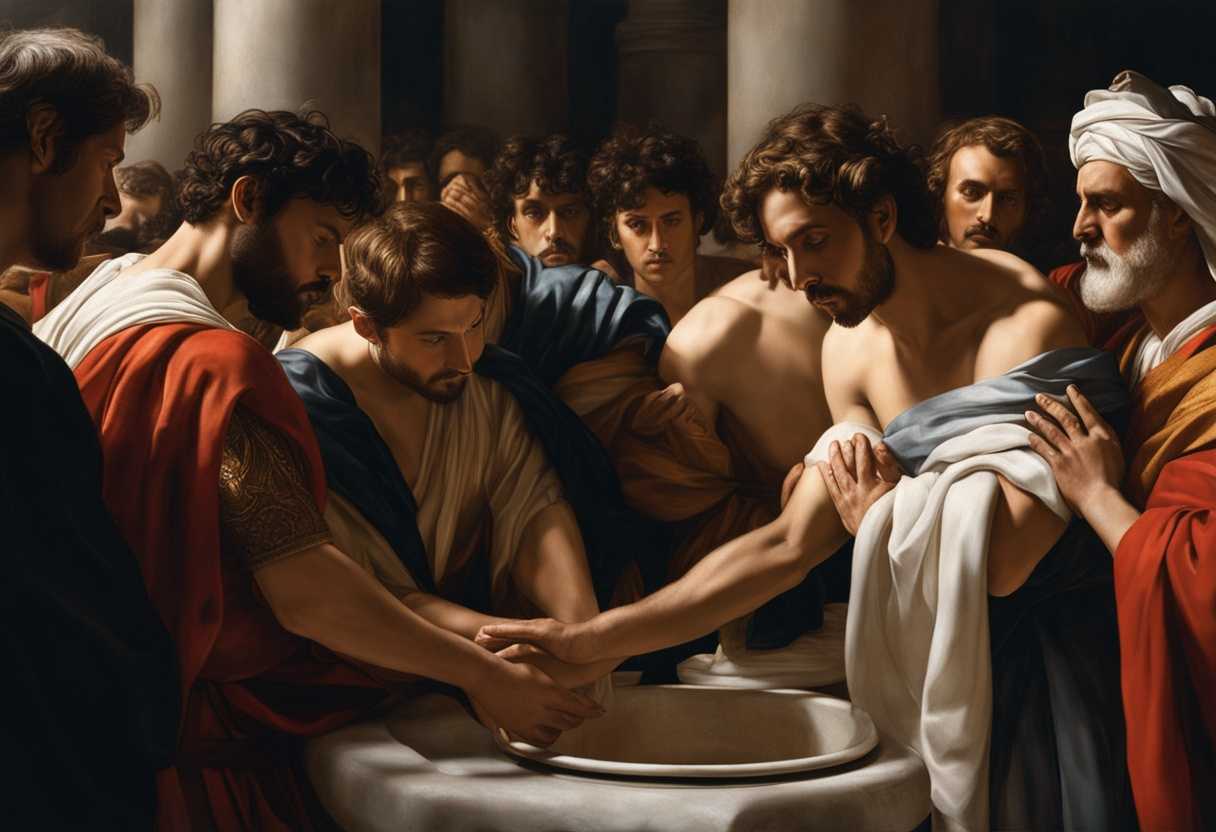
24 So when Pilate saw that he was gaining nothing, but rather that a riot was beginning, he took water and washed his hands before the crowd, saying, “I am innocent of this man’s blood; see to it yourselves.”
25 And all the people answered, “His blood be on us and on our children!”
Setting the Scene for Matthew 27:24-25
The scene in Matthew 27:24-25 takes place in Jerusalem during the time of Jesus’ trial before Pontius Pilate. The crowd gathered outside Pilate’s residence is in a state of frenzy, demanding the crucifixion of Jesus. Pilate, the Roman governor, is seated on his judgment seat, trying to navigate the volatile situation. The religious leaders, including the chief priests and elders, are present, fueling the crowd’s anger and pushing for Jesus’ death.
The crowd, made up of a mix of locals and pilgrims in Jerusalem for the Passover festival, has been swayed by the religious leaders to call for Jesus’ crucifixion. The atmosphere is tense, with emotions running high as accusations are hurled at Jesus. Pilate, caught between the demands of the crowd and his own doubts about Jesus’ guilt, tries to wash his hands of the situation, symbolically absolving himself of responsibility for Jesus’ fate.
The setting is chaotic, with the clamor of the crowd echoing off the stone walls of Pilate’s residence. The dusty streets of Jerusalem are filled with onlookers, soldiers, and those caught up in the drama unfolding before them. The weight of the decision to crucify Jesus hangs heavy in the air, as Pilate succumbs to the pressure and condemns Jesus to death on the cross.
What is Matthew 27:24-25 about?
We witness a pivotal moment in the story of Jesus’ crucifixion in this verse. Pontius Pilate, the Roman governor, symbolically washes his hands to show that he is innocent of Jesus’ death and places the responsibility on the crowd. Pilate’s action represents a form of moral abdication, trying to distance himself from the decision to execute Jesus. On the other hand, the crowd accepts the blame by declaring, “His blood be on us and on our children.” This moment highlights the complexity of human nature and the dynamics of power, responsibility, and guilt. Reflecting on this verse prompts us to contemplate deeper questions about personal accountability and the consequences of our actions. How often do we try to distance ourselves from the outcomes of our decisions? And can we truly absolve ourselves of responsibility by shifting blame onto others? This verse serves as a powerful reminder of the importance of taking ownership of our choices and recognizing the impact they have on others. It challenges us to reflect on our own role in the events unfolding around us and to consider how we can make more ethical and responsible decisions in our own lives.
Understanding what Matthew 27:24-25 really means
In the midst of the intense trial of Jesus before Pontius Pilate, we encounter a pivotal moment in Matthew 27:24-25. Pilate, the Roman governor, finds himself at a crossroads, torn between releasing Jesus or condemning Him to crucifixion. The pressure from the crowd, swayed by the chief priests and elders, reaches a crescendo as they vehemently demand Jesus’ death. In a bid to distance himself from the guilt of this decision, Pilate declares, “I am innocent of this man’s blood.” This statement reveals Pilate’s attempt to absolve himself of responsibility for the fate of Jesus, showcasing the internal struggle he faces in making a just decision.
However, the crowd’s chilling response echoes through the ages, “His blood be on us and on our children!” This collective acceptance of responsibility for Jesus’ crucifixion raises profound questions about the nature of guilt and accountability. It forces us to confront the weight of our actions and the repercussions they may have on future generations. The gravity of these words underscores the enduring impact of choices made in the heat of the moment, resonating with themes of collective guilt and the far-reaching consequences of our decisions.
As we delve deeper into the implications of these verses, we are confronted with timeless truths that transcend the historical setting. The moral responsibility highlighted in this passage challenges us to reflect on our own actions in the face of injustice. It prompts us to consider how we navigate ethical dilemmas and uphold our values, even in the face of societal pressure. Pilate’s struggle serves as a poignant reminder of the complexities of decision-making under duress, urging us to uphold integrity and moral courage in the face of adversity.
Drawing parallels to contemporary scenarios, we can envision a CEO pressured to compromise ethical standards for financial gain, mirroring Pilate’s predicament. This modern-day illustration underscores the enduring relevance of the moral quandaries we encounter and the importance of standing firm in our convictions. By contemplating the challenges faced by Pilate, we are prompted to introspect on our own responses to moral dilemmas and the choices we make when confronted with conflicting interests.
In light of these reflections, we are called to examine our individual and collective roles in shaping a more just and compassionate society. The narrative of Jesus’ trial invites us to contemplate the themes of redemption and forgiveness, emphasizing the transformative power of grace in the face of guilt and wrongdoing. Through personal reflection and communal introspection, we can strive towards a path of renewal and reconciliation, guided by the profound message of redemption embodied in Jesus’ sacrificial death. As we navigate the complexities of moral decision-making and grapple with the consequences of our actions, may we find solace in the promise of redemption and the possibility of collective healing and restoration.
How do we handle the weight of responsibility?
The weight of responsibility can be overwhelming, especially when faced with difficult decisions or situations that have serious consequences. Pontius Pilate succumbed to the pressure of the crowd in the Bible verse from Matthew 27 and washed his hands of the responsibility for Jesus’ fate. This illustrates a common coping mechanism people use when they feel overwhelmed by the weight of responsibility – they may try to distance themselves from the situation or shift the blame onto others.
However, as shown in the verse, avoiding responsibility does not alleviate the burden but rather compounds it. We must ultimately face our responsibilities head-on and make decisions with integrity and wisdom, even when the consequences are challenging. We can navigate the weight of responsibility with courage and conviction by taking ownership of our actions and choices. This verse serves as a reminder to handle responsibility thoughtfully and conscientiously, acknowledging the impact of our decisions on ourselves and others.
Application
In the hustle of work and family, it’s easy to compromise our values under pressure. But reflecting on Matthew 27:24-25, let’s remember the cost of ignoring our conscience for the crowd’s approval. Imagine standing strong like a sturdy oak in a storm, unbending to the winds of peer pressure. Will you stand firm in your beliefs, no matter what the world says?

Reverend Michael Johnson is an experienced Church Minister with a profound expertise in spirituality and guidance. With a serene presence and a compassionate heart, he has faithfully served his congregation for over 20 years, leading them on a spiritual journey towards inner peace and enlightenment. Reverend Johnson’s extensive knowledge of religious philosophies and profound understanding of human nature have made him a trusted confidant and mentor to many, as he seamlessly weaves his profound wisdom into life teachings. Reverend Johnson’s calming demeanor and empathetic nature continue to uplift and heal souls, nurturing a sense of unity and tranquility within his community.