
Matthew 27:26 is about the Roman governor Pilate succumbing to pressure and ultimately condemning Jesus to be flogged and crucified, highlighting the theme of political manipulation and injustice.
26 Then he released for them Barabbas, and having scourged Jesus, delivered him to be crucified.
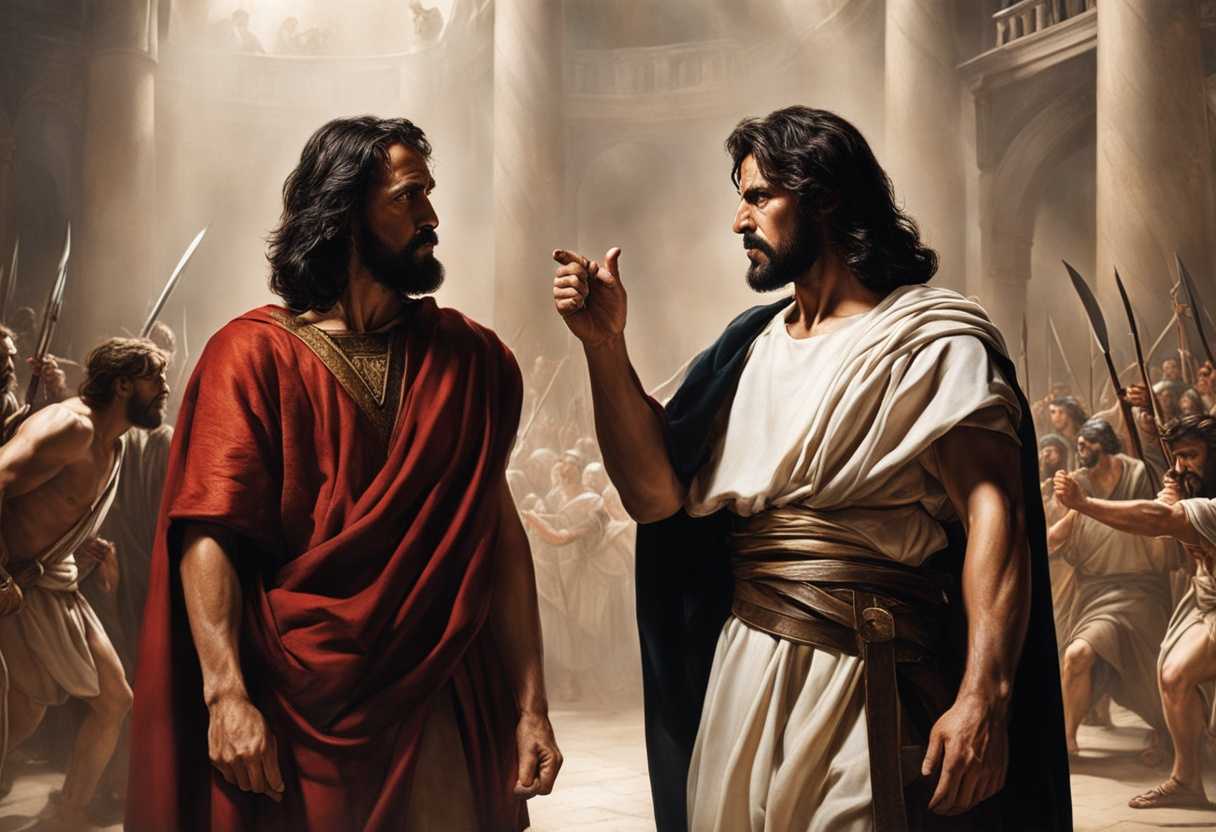
Setting the Scene for Matthew 27:26
The scene in Matthew 27:26 takes place in Jerusalem, specifically at the Praetorium, the residence of the Roman governor Pontius Pilate. The room is dimly lit, with torches flickering against the stone walls. The air is heavy with tension as a crowd has gathered outside, their murmurs audible through the open windows.
Inside the Praetorium, Pontius Pilate sits on his judgment seat, flanked by Roman soldiers. Standing before him is Jesus of Nazareth, a humble and gentle man who has been brought before Pilate by the chief priests and elders of the Jewish people. They accuse Jesus of claiming to be the King of the Jews, a charge that could be seen as a challenge to Roman authority.
Also present in the room are the chief priests and elders, their faces twisted with anger and disdain towards Jesus. The atmosphere is charged with hostility as Pilate questions Jesus, trying to determine whether he poses a threat to Roman rule. The fate of Jesus hangs in the balance as the tension in the room reaches its peak.
What is Matthew 27:26 about?
Jesus faces immense suffering and is ultimately sentenced to death in this verse, portraying a solemn moment in the biblical narrative. The scourging and handing over of Jesus to be crucified by Pilate highlight the immense sacrifice Jesus made for humanity. This act signifies the ultimate display of love and selflessness, as Jesus willingly endured suffering and death in order to bring salvation to all.
Reflecting on this verse, we cannot help but marvel at the depth of Jesus’ love and the extent to which he was willing to go to fulfill his divine purpose. The act of being scourged and crucified was a pivotal moment that ultimately led to the redemption of mankind. It prompts us to contemplate the significance of Jesus’ sacrifice and the profound impact it has on our faith and salvation. Jesus demonstrated incredible love through his suffering and death as we meditate on this verse, inspiring us to live our lives in gratitude and reverence for his sacrifice.
Understanding what Matthew 27:26 really means
The verse Matthew 27:26 is a poignant moment in the Passion narrative, where Pontius Pilate, the Roman governor, makes a fateful decision. In this pivotal scene, Pilate releases Barabbas, a notorious criminal, to the crowd, while ordering Jesus to be flogged and crucified. This event sets the stage for the crucifixion and resurrection of Jesus, central to the Christian faith. The gravity of Pilate’s actions and the injustice of the situation underscore themes of sacrifice, redemption, and the ultimate price paid for humanity’s salvation.
Drawing parallels with Old Testament prophecies, such as Isaiah 53:5, we see the fulfillment of the suffering of the Messiah in Jesus’ ordeal. John 19:1 further emphasizes the brutality of Jesus’ flogging, highlighting the physical and emotional torment he endured. The New Testament passage in 1 Peter 2:24 reflects on the redemptive purpose of Jesus’ suffering, emphasizing the healing and forgiveness made possible through his sacrifice.
The relevance of this verse extends to contemporary times, resonating with themes of injustice and the enduring need for redemption. In a world marked by suffering and inequity, the story of Jesus’ unjust treatment offers hope and a call to faith. It prompts believers to reflect on the grace they have received and challenges them to embody that grace in their interactions with others.
Consider a modern-day scenario where an innocent person faces wrongful accusations while a guilty party goes free. This injustice mirrors the situation faced by Jesus, evoking a sense of outrage and empathy. Personal anecdotes, like that of a man wrongfully dismissed from work finding solace in Jesus’ suffering, illustrate how the story of the crucifixion can offer solace and perspective in times of personal hardship.
Key phrases in Matthew 27:26, such as “released Barabbas to them,” “had Jesus flogged,” and “handed him over to be crucified,” carry profound significance. They symbolize the moral failure of the crowd, the brutality of Jesus’ suffering, and the ultimate act of love and sacrifice. Through these phrases, we glimpse the depth of Jesus’ love and the extent of his willingness to endure suffering for the sake of humanity’s redemption.
By delving into the layers of meaning within this verse, readers can grasp the profound implications of Jesus’ suffering and the sacrificial love that underpins the Christian faith. It invites contemplation on the injustices of the world, the redemptive power of Christ’s sacrifice, and the call to embody that same sacrificial love in our lives.
How do we display compassion for those who’ve wronged us?
One way we can display compassion for those who have wronged us is by understanding the motives and circumstances that led them to hurt us. We can start to comprehend their actions in a more compassionate light by showing empathy towards their struggles and challenges. This understanding can foster forgiveness and open the door for healing in our own hearts.
Another way to display compassion is through the act of forgiveness. We show compassion to those who have wronged us by choosing to release feelings of anger and resentment, giving them the opportunity to seek redemption and make amends. Forgiveness not only benefits the one who has wronged us but also allows us to find peace and freedom from carrying the burden of unresolved pain. Displaying compassion towards those who have wronged us is ultimately a powerful act of grace and mercy. It reflects the divine love and forgiveness that we have received, inspiring others to seek reconciliation and transformation. Choosing compassion over revenge or bitterness can lead to healing and restoration for both parties involved, allowing for a more peaceful and harmonious existence.
Application
Think of Matthew 27:26 as a wake-up call for your daily grind. Jesus gave everything for us. Let’s hustle for His teachings, show up with love, and make our lives a testament to His glory. Will you clock in every day and carry your cross, stepping where He stepped?

Reverend Michael Johnson is an experienced Church Minister with a profound expertise in spirituality and guidance. With a serene presence and a compassionate heart, he has faithfully served his congregation for over 20 years, leading them on a spiritual journey towards inner peace and enlightenment. Reverend Johnson’s extensive knowledge of religious philosophies and profound understanding of human nature have made him a trusted confidant and mentor to many, as he seamlessly weaves his profound wisdom into life teachings. Reverend Johnson’s calming demeanor and empathetic nature continue to uplift and heal souls, nurturing a sense of unity and tranquility within his community.