
is about the dehumanization and cruelty inflicted upon Jesus by the Roman soldiers, symbolizing the unjust suffering of the innocent.
27 Then the soldiers of the governor took Jesus into the governor’s headquarters, and they gathered the whole battalion before him.
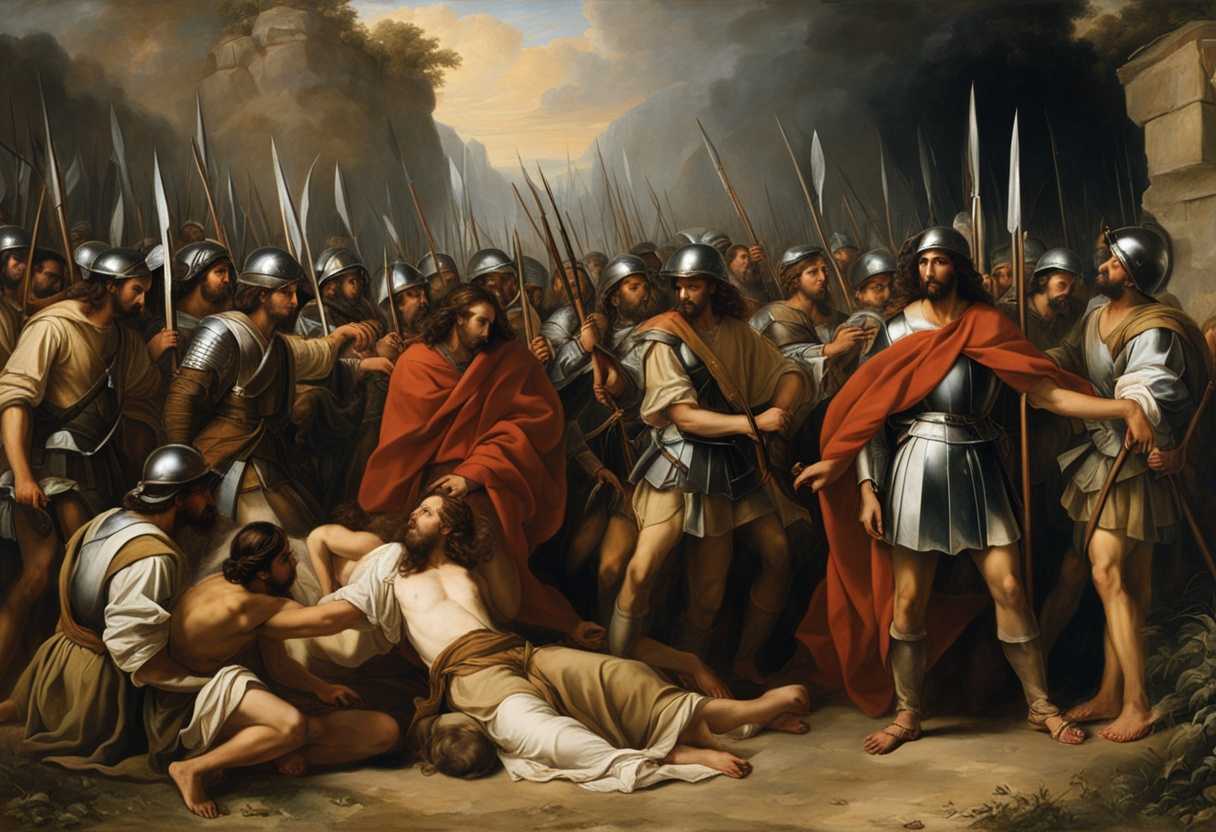
Setting the Scene for Matthew 27:27
In Matthew chapter 27, we find Jesus standing before Pontius Pilate, the Roman governor of Judea. The scene is set in the Praetorium, the official residence of the governor in Jerusalem. Pilate is seated on his judgment seat, surrounded by his soldiers and advisors. The atmosphere is tense as the Jewish religious leaders have brought Jesus to Pilate, accusing him of claiming to be the King of the Jews and inciting rebellion against Rome.
The soldiers, known for their brutality, are ordered to take Jesus into the Praetorium. They strip him of his clothes and put a scarlet robe on him, a mock symbol of royalty. They twist together a crown of thorns and place it on his head, and a reed in his right hand as a scepter. Mocking him, they kneel before him, saying, “Hail, King of the Jews!” The soldiers then spit on him and strike him on the head with the reed. The cruelty and humiliation inflicted upon Jesus in this moment foreshadow the suffering he is about to endure on the cross.
What is Matthew 27:27 about?
Can you imagine the pain and humiliation Jesus must have felt as soldiers jeered and mistreated Him before His crucifixion? This verse speaks to the fulfillment of prophecies foretelling the suffering that Jesus would endure for the redemption of our sins. Despite knowing the agony that awaited Him, Jesus willingly bore the mockery and abuse, demonstrating his unconditional love and sacrifice for us.
The soldiers’ actions not only highlight the depth of Jesus’ suffering, but also serve as a stark reminder of the cruelty and ignorance that can exist in human hearts. Jesus endured such mistreatment without retaliation, showing immense strength and grace in the face of injustice. This verse serves as a powerful testament to the lengths to which Jesus was willing to go in order to offer us salvation and forgiveness. It prompts us to reflect on our own actions and attitudes towards others, urging us to embody the same love and forgiveness that Jesus exemplified throughout His life and during His ultimate sacrifice on the cross.
Understanding what Matthew 27:27 really means
In the poignant narrative of Matthew 27:27, we are transported to a pivotal moment in the Passion story, where Jesus is handed over to Roman soldiers for mockery and torture. This scene unfolds against the backdrop of immense suffering and rejection, echoing the prophetic words of Isaiah 53:3, which foretold the anguish that Jesus would endure. The parallel in Philippians 2:8 underscores Jesus’ humility and obedience, even unto death on the cross, emphasizing the profound sacrifice He willingly embraced.
As we delve into the historical and cultural context of Roman soldiers and their treatment of prisoners, we gain a deeper appreciation for the gravity of the events described. The setting of the Praetorium, the governor’s headquarters, symbolizes the seat of political and military power, underscoring the authority of those who subjected Jesus to ridicule and abuse. The collective mockery by the entire company of soldiers highlights the isolation and humiliation Jesus faced, painting a vivid picture of the cruelty inflicted upon Him.
The stripping of Jesus and the placement of a scarlet robe upon Him serve as poignant symbols of humiliation and mockery. The act of stripping Him of His clothes was a degrading gesture, while the scarlet robe, a twisted symbol of kingship, aimed to deride His claim to royalty. These details invite us to contemplate the depth of Jesus’ suffering and the indignities He endured for the sake of humanity.
In contemplating the relevance of this verse to contemporary society, we are reminded of the enduring message of Jesus’ sacrifice and love. In a world marred by suffering and injustice, the call to empathy and compassion resonates strongly. Just as Jesus bore the weight of mockery and pain, we are encouraged to stand in solidarity with those who face mistreatment and injustice, embodying the values of compassion and justice in our own lives.
Consider a modern-day parallel to Jesus’ courage and sacrifice in the story of a whistleblower who risks everything to expose corruption. This individual faces ridicule, threats, and harm for the greater good, mirroring Jesus’ unwavering commitment to truth and justice. By reflecting on such examples, we are challenged to emulate Jesus’ courage, humility, and sacrificial love in our interactions with others.
As we meditate on the profound implications of Matthew 27:27, we are invited to deepen our understanding of Jesus’ sacrificial love and the transformative power of empathy and courage. May this reflection inspire us to embody these virtues in our daily lives, standing up for justice, extending compassion to the marginalized, and embracing humility in our interactions with others.
What does it mean to truly follow Jesus Christ?
To truly follow Jesus Christ means to emulate His teachings and example in our everyday lives. It involves prioritizing love, compassion, and forgiveness as core values in our interactions with others. Following Jesus means actively engaging in acts of service and kindness, just as He selflessly sacrificed Himself for the greater good. This requires us to go beyond mere words and professing beliefs, and instead, manifest our faith through intentional actions that reflect the character of Jesus.
The commitment to follow Jesus involves a transformation in our hearts and minds, leading us to live a life that is aligned with His will. It requires surrendering our own desires and submitting to God’s plan for our lives. Following Jesus entails a deeper relationship with Him, characterized by prayer, obedience, and continual growth in faith. It means trusting in His guidance and allowing His teachings to shape our decisions and perspectives, even when it may be challenging or counter-cultural. To follow Jesus is to walk in His footsteps, seeking to bring His light and love to a world in need of hope and salvation.
Application
Think of your hardest day at work, the moments when you felt unappreciated and alone. Jesus faced far worse for us—mockery, humiliation, and suffering. This sacrifice wasn’t just to be remembered, but to inspire action. Will you harness that powerful sacrifice to drive your daily choices, to live out His love at home and in your community? Will you let His example push you to be more, to do more, for others?

Reverend Michael Johnson is an experienced Church Minister with a profound expertise in spirituality and guidance. With a serene presence and a compassionate heart, he has faithfully served his congregation for over 20 years, leading them on a spiritual journey towards inner peace and enlightenment. Reverend Johnson’s extensive knowledge of religious philosophies and profound understanding of human nature have made him a trusted confidant and mentor to many, as he seamlessly weaves his profound wisdom into life teachings. Reverend Johnson’s calming demeanor and empathetic nature continue to uplift and heal souls, nurturing a sense of unity and tranquility within his community.