
Matthew 27:28-30 is about the mocking and humiliation that Jesus endured at the hands of the Roman soldiers before his crucifixion, symbolizing the rejection and ridicule he faced as the King of the Jews.
28 And they stripped him and put a scarlet robe on him,
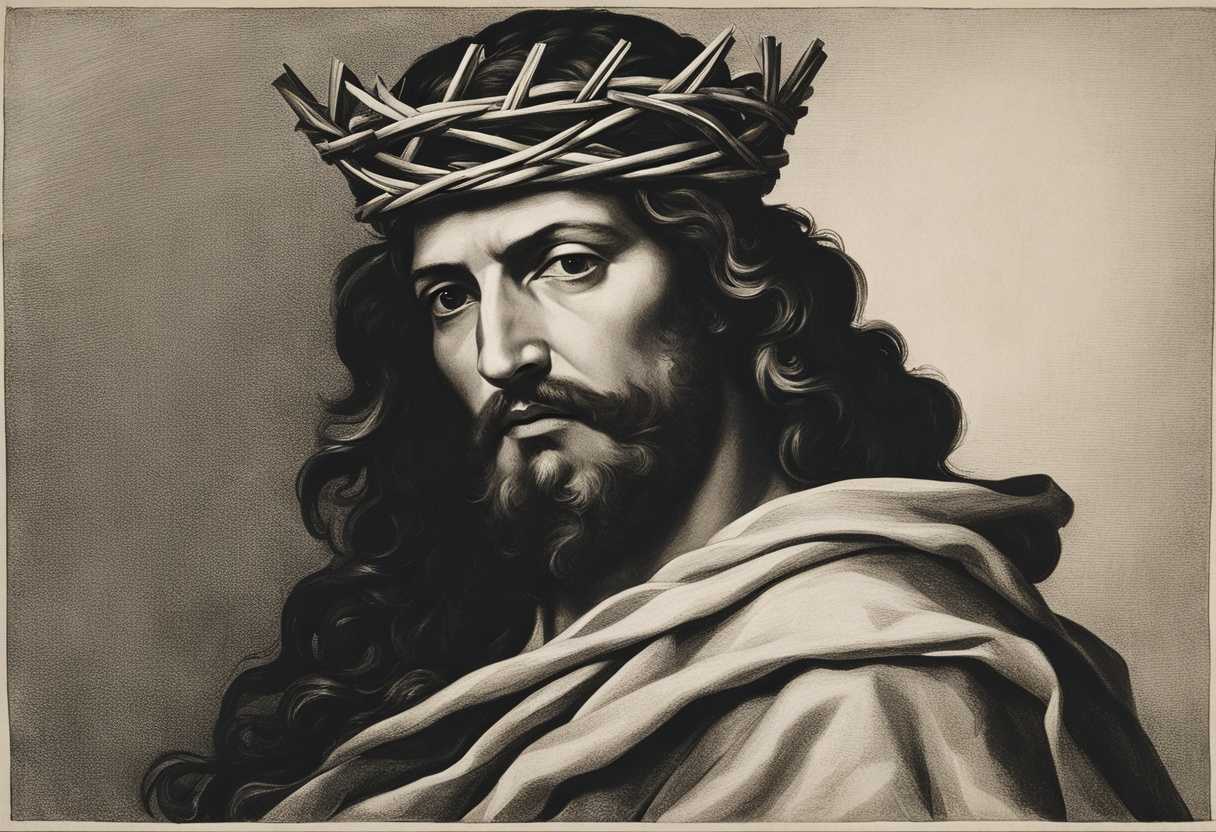
29 and twisting together a crown of thorns, they put it on his head and put a reed in his right hand. And kneeling before him, they mocked him, saying, “Hail, King of the Jews!”
30 And they spit on him and took the reed and struck him on the head.
Setting the Scene for Matthew 27:28-30
The scene described in Matthew 27:28-30 takes place in Jerusalem, specifically in the Praetorium, the residence of the Roman governor Pontius Pilate. The room is dimly lit, with torches flickering against the stone walls, casting eerie shadows. The air is heavy with tension as a crowd of Roman soldiers gathers around a figure standing in the center of the room.
The figure is Jesus of Nazareth, who has been brought before Pilate by the chief priests and elders of the Jewish people. They accuse him of claiming to be the King of the Jews, a charge that could be seen as a challenge to Roman authority. Pilate, a weary and conflicted man, questions Jesus, trying to determine the truth of the accusations against him.
As the interrogation continues, the soldiers, perhaps out of mockery or cruelty, begin to dress Jesus in a scarlet robe and weave a crown of thorns to place on his head. They taunt him, bowing before him in a sarcastic display of mock homage. The atmosphere is charged with hostility and disdain, as the powerful Roman soldiers revel in their ability to humiliate this seemingly powerless man before them.
What is Matthew 27:28-30 about?
This verse depicts a painful and cruel moment during Jesus’s crucifixion, where the soldiers mocked Him by dressing Him in a scarlet robe and placing a crown of thorns on His head. This act was meant to humiliate and degrade Jesus, showcasing the cruelty and contempt that He faced during His final hours. The soldiers’ actions reveal the depths of human cruelty and the lack of understanding or compassion they had for Jesus, who was suffering for the sins of humanity.
Reflecting on this verse can prompt us to consider the power of empathy and compassion in our own lives. It challenges us to think about how we treat others, especially those in vulnerable or marginalized positions. It also highlights the importance of standing up against injustice and cruelty, even when it may be easier to turn a blind eye. Contemplating this verse can deepen our understanding of Jesus’s suffering and sacrifice, renewing our commitment to embodying love, kindness, and empathy in our interactions with others.
Understanding what Matthew 27:28-30 really means
In Matthew 27:28-30, we witness a poignant moment in Jesus’ journey to the cross, where Roman soldiers subjected Him to cruel mockery and humiliation. Stripping Him of His clothes, they dressed Him in a scarlet robe, a symbol of royalty meant to deride His claim as King. The twisted crown of thorns pressed onto His head was a painful parody of a royal crown, emphasizing the mockery of His kingship. Placing a staff in His hand, mimicking a scepter, further ridiculed His authority as the soldiers knelt before Him in mockery, sarcastically hailing Him as the “king of the Jews.”
These actions were not merely physical torment but a deliberate assault on Jesus’ identity and mission. The soldiers’ scornful gestures and words aimed to belittle His claim to kingship and undermine His message of love and salvation. As we reflect on these key phrases and their meanings, we are confronted with the depth of Jesus’ suffering and the extent of His love for humanity. The humiliation He endured was not in vain but a testament to His sacrificial love for us all.
The relevance of these verses extends beyond the historical event to our present lives. In a world where many face ridicule, rejection, and suffering, Jesus’ experience offers solace and solidarity. He understands our pain intimately, having walked a path of humiliation and suffering Himself. His endurance in the face of mockery serves as a source of inspiration and hope for those enduring similar trials today.
Drawing parallels to Isaiah 53:3, Philippians 2:8, and Hebrews 12:2, we see the prophesied suffering, humility, and ultimate victory of Jesus. His willingness to endure the cross, scorning its shame, exemplifies His unwavering commitment to His mission and the joy set before Him. This enduring victory serves as a beacon of hope for all who face trials and tribulations, reminding us that through perseverance and faith, we can overcome.
Consider a person facing unjust ridicule or bullying, feeling isolated and humiliated. Reflecting on Jesus’ own experience of mockery and suffering can offer them comfort and strength. Just as Jesus emerged victorious, so too can they find resilience and hope in the midst of their struggles. The mockery Jesus endured was not the end but a stepping stone to His ultimate triumph, a reminder that in our own trials, we can find courage and perseverance through His example.
In conclusion, the mockery and suffering Jesus endured were integral to His redemptive mission. These verses challenge us to reflect on His sacrifice, drawing strength from His endurance and victory. As we navigate our own trials and tribulations, may we respond with grace and perseverance, knowing that Jesus has gone before us, paving the way to triumph. Let us find inspiration in His example and find hope in His enduring love for us all.
How can we show compassion and empathy towards others?
Showing compassion and empathy towards others involves putting ourselves in their shoes, seeking to understand their struggles and emotions. We can demonstrate kindness by offering a listening ear, a helping hand, or simply being present for someone in need. Even a small act of compassion, like a gesture of support or a gentle word, can make a significant difference in someone’s life.
Compassion also involves showing genuine concern for others’ well-being. It means looking beyond our own interests and being willing to lend a hand to someone who is hurting or in distress. We acknowledge the humanity of others and show that we care about their experiences and feelings by showing empathy. Through acts of kindness and understanding, we convey love and compassion to those around us, creating a sense of connection and support in times of difficulty.
Application
Reflect on the sacrifice Jesus made for us, and let it inspire you to spread love and kindness in your everyday interactions. Just as Jesus selflessly gave Himself for our sins, let us strive to be selfless in our relationships with others. Will you allow this message of love and sacrifice to transform your heart and actions, making the world a more compassionate place?

Reverend Michael Johnson is an experienced Church Minister with a profound expertise in spirituality and guidance. With a serene presence and a compassionate heart, he has faithfully served his congregation for over 20 years, leading them on a spiritual journey towards inner peace and enlightenment. Reverend Johnson’s extensive knowledge of religious philosophies and profound understanding of human nature have made him a trusted confidant and mentor to many, as he seamlessly weaves his profound wisdom into life teachings. Reverend Johnson’s calming demeanor and empathetic nature continue to uplift and heal souls, nurturing a sense of unity and tranquility within his community.