
Matthew 27:31 is about the mocking and humiliation of Jesus by the Roman soldiers before his crucifixion, symbolizing the rejection and mockery that believers may face for their faith.
31 And when they had mocked him, they stripped him of the robe and put his own clothes on him and led him away to crucify him.
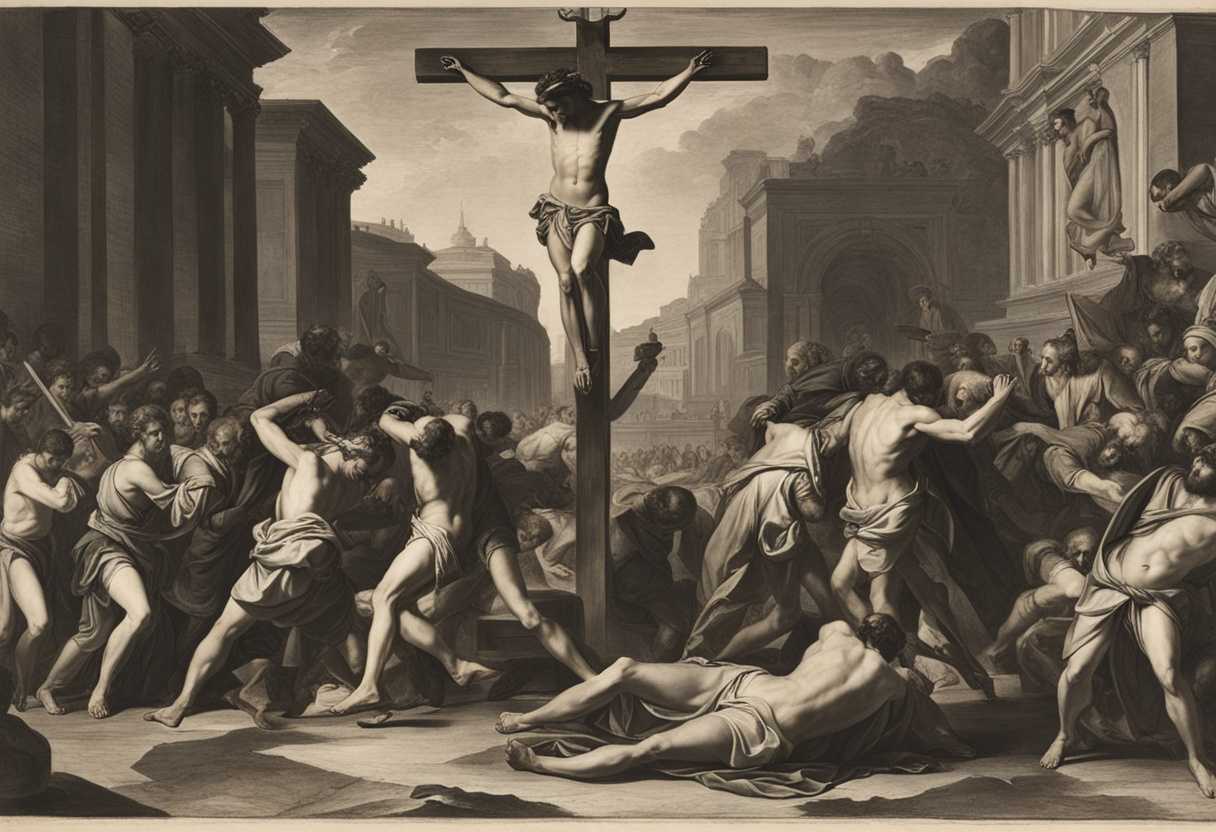
Setting the Scene for Matthew 27:31
The scene described in Matthew 27:31 takes place in Jerusalem, specifically at the Praetorium, the residence of the Roman governor Pontius Pilate. The characters present in this scene are Roman soldiers, who have taken Jesus, the central figure of the Christian faith, into custody after he was brought before Pilate by the Jewish religious leaders.
The soldiers, known for their brutality and indifference, have now gathered around Jesus, mocking him and subjecting him to cruel treatment. They place a scarlet robe on him, a symbol of mockery, and weave a crown of thorns, pressing it onto his head. The soldiers then kneel before Jesus in a sarcastic display of mock homage, saying, “Hail, King of the Jews!” Their actions are a cruel parody of the reverence and honor that should have been accorded to Jesus as the true King.
The Praetorium is a place of power and authority, where Pilate holds court and makes important decisions. The atmosphere is tense, with the Jewish leaders pressuring Pilate to condemn Jesus, and the soldiers reveling in their opportunity to mistreat him. This pivotal moment in the Passion narrative sets the stage for the events that will lead to Jesus’ crucifixion on the cross.
What is Matthew 27:31 about?
Soldiers subject Jesus to ridicule, mockery, and physical abuse before crucifying him in this verse, portraying a painful and heartbreaking moment in his life. It is a testament to the cruelty and inhumanity that Jesus endured during his final hours on Earth. Despite being the epitome of love, compassion, and forgiveness, Jesus faced immense suffering and humiliation at the hands of those around him. The harsh reality of human nature and the capacity for cruelty that exists within us confront us as we reflect on this verse. It prompts us to examine our own actions and attitudes towards others, challenging us to choose kindness, love, and compassion over mockery and cruelty. It serves as a reminder of the importance of empathy, understanding, and treating others with respect and dignity, even in the face of adversity. Jesus made a profound sacrifice for all of humanity, enduring not only physical pain but also emotional and psychological torment. His unwavering love and grace in the face of such cruelty serve as a powerful example for us all to strive towards. May we always remember this verse and be inspired to embody the love and compassion that Jesus exemplified, even in the most challenging circumstances.
Understanding what Matthew 27:31 really means
In the poignant narrative of Jesus’ crucifixion, Matthew 27:31 stands as a stark reminder of the profound sacrifice made by Christ for humanity’s redemption. The verse follows the harrowing scene where Roman soldiers, in a cruel display of mockery, strip Jesus of a royal robe and lead Him away to be crucified. This act of stripping Him of the robe symbolizes not just physical humiliation but also the stripping away of His dignity and identity, underscoring the depth of His suffering.
“After they had mocked him,” these words echo with the weight of the emotional and psychological torment inflicted upon Jesus. It wasn’t merely physical pain He endured but the crushing weight of mockery and scorn. As they “put his own clothes on him,” there is a poignant moment of returning to His true self, even as He faces the impending sacrifice. The soldiers’ actions, though meant to degrade, unwittingly highlight Jesus’ unwavering identity and purpose in the face of imminent death.
The phrase “Led him away to crucify him” resounds with the gravity of the situation. Jesus, the Son of God, willingly submits to this agonizing path to Calvary, bearing the sins of the world upon His shoulders. This act of ultimate sacrifice, driven by love and obedience, is a testament to His unwavering commitment to fulfilling the Father’s will for the salvation of humanity.
In the broader context of Scripture, this verse finds resonance in prophecies like Isaiah 53:3, portraying the suffering servant despised and rejected, a portrayal Christians see fulfilled in Jesus. Philippians 2:8 further illuminates Jesus’ humility and obedience, culminating in His sacrificial death on the cross. These passages deepen our understanding of the profound love and selflessness displayed by Christ in His journey to the crucifixion.
Today, amidst a world marred by suffering and injustice, Matthew 27:31 challenges believers to reflect on the depth of Jesus’ sacrifice and the call to emulate His love and humility. Just as Jesus endured unimaginable suffering for the sake of humanity, we are prompted to consider how we can embody selflessness and service in our own lives, even in the face of hardship and adversity.
Consider the analogy of a firefighter rushing into a burning building to save a child, driven by love and commitment to make the ultimate sacrifice. Similarly, Jesus’ journey to the cross was fueled by His profound love for humanity, a love that transcended all suffering and pain. Reflecting on such sacrificial love can inspire us to appreciate the sacrifices of others in our lives and to embody humility and service in our interactions with those around us.
As we meditate on Matthew 27:31 and its implications, may we be moved to live lives marked by compassion, humility, and sacrificial love, mirroring the example set by Christ. Let us ponder the depth of His sacrifice and allow it to shape our attitudes and actions towards others, fostering a spirit of selflessness and service in a world that yearns for the transformative power of Christ’s love.
What does true spiritual transformation require?
True spiritual transformation requires a deep inner change and a shift in perspective. It involves letting go of old ways of thinking and being, and embracing a new way of living that is aligned with higher spiritual principles. This transformation is not simply an external change in behavior, but a profound inner renewal that comes from connecting with a higher power and allowing it to guide and transform one’s heart and mind.
True spiritual transformation also requires surrendering the ego, letting go of attachments, and opening up to divine guidance. It involves releasing the need for control and trusting in a higher purpose, even when faced with challenges and difficulties. This process of transformation is ongoing and requires dedication, perseverance, and faith in the process of growth and evolution towards becoming more aligned with the divine. True spiritual transformation ultimately leads to a deep sense of peace, love, and connection with all beings. It involves embodying the qualities of compassion, forgiveness, and gratitude, and living in harmony with the divine will. Through this transformation, one can experience a profound sense of fulfillment and purpose, and contribute positively to the world around them.
Application
Think about Matthew 27:31 like the ultimate act of love, a sacrifice even more demanding than balancing work and family. Jesus took on unimaginable pain for you. How can we not respond with gratitude and strive to honor His gift in everything we do? Let’s make a daily choice to follow His example with intention and commitment. Will you step up and live a life that reflects His sacrifice?

Reverend Michael Johnson is an experienced Church Minister with a profound expertise in spirituality and guidance. With a serene presence and a compassionate heart, he has faithfully served his congregation for over 20 years, leading them on a spiritual journey towards inner peace and enlightenment. Reverend Johnson’s extensive knowledge of religious philosophies and profound understanding of human nature have made him a trusted confidant and mentor to many, as he seamlessly weaves his profound wisdom into life teachings. Reverend Johnson’s calming demeanor and empathetic nature continue to uplift and heal souls, nurturing a sense of unity and tranquility within his community.