
Matthew 27:33 is about the place called Golgotha, where Jesus was taken to be crucified, symbolizing the ultimate sacrifice for the salvation of humanity.
33 And when they came to a place called Golgotha (which means Place of a Skull),
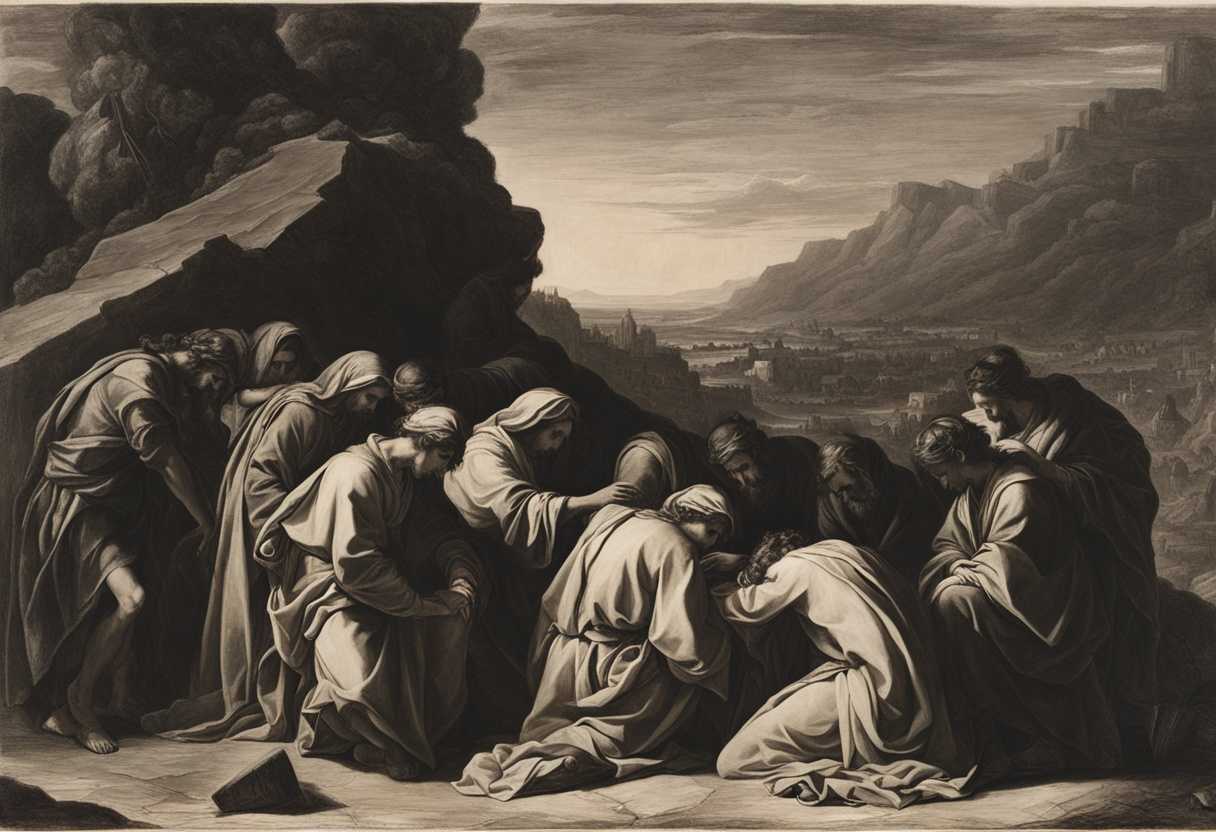
Setting the Scene for Matthew 27:33
The scene described in Matthew 27:33 takes place at Golgotha, also known as the Place of the Skull. It is a rocky hill outside the walls of Jerusalem, where executions commonly took place. The sky is overcast, and the air is heavy with the scent of blood and sweat. The ground is uneven, scattered with rocks and debris, and the sound of jeering crowds can be heard in the distance.
In this scene, we find Jesus of Nazareth, a man known for his teachings and miracles, being led to Golgotha by Roman soldiers. Alongside him are two criminals who are also sentenced to be crucified. The soldiers are rough and indifferent, pushing the condemned men forward as they struggle under the weight of their crosses. The crowd that has gathered along the roadside is a mix of onlookers, some curious, some hostile, and a few mournful.
As they reach Golgotha, the soldiers prepare to carry out the brutal act of crucifixion. The atmosphere is tense, charged with emotion as Jesus, the central figure in this scene, is nailed to the cross. The criminals, one on each side of him, also face the same fate. The scene is a stark reminder of the cruelty and injustice that can exist in the world, but also a powerful moment of sacrifice and redemption.
What is Matthew 27:33 about?
Let’s dive into the significance of this powerful and profound verse. The crucifixion of Jesus at Golgotha holds deep spiritual and symbolic meaning in the Christian faith. The term “Golgotha” comes from the Aramaic word for “skull,” emphasizing the place where Jesus was crucified. This location serves as a poignant reminder of the sacrifice Jesus made for humanity’s sins, as well as a symbol of death and resurrection.
The imagery of the “Place of the Skull” is a reminder of the ultimate sacrifice that Jesus made for the redemption of humanity. It represents the painful and transformative journey towards salvation, emphasizing the crucifixion as a pivotal moment in Christian theology. We reflect on this verse, encouraging us to contemplate the depth of Jesus’ love and the magnitude of his sacrifice on the cross. This verse serves as a profound reminder of the importance of faith, redemption, and the eternal hope that springs forth from the darkness of Golgotha. Let this moment of reflection deepen your understanding of the incredible love that Jesus demonstrated through his crucifixion, leading to the ultimate victory of resurrection and eternal life.
Understanding what Matthew 27:33 really means
In Matthew 27:33, we are transported to a pivotal moment in the Passion narrative as Jesus is led to Golgotha, the place of the skull, where His crucifixion will take place. This setting holds profound significance, marking the beginning of the final phase of Jesus’ earthly suffering, leading to His ultimate sacrifice for humanity. The imagery of Golgotha serves as a stark reminder of the cost of redemption and the lengths to which God was willing to go to reconcile with His creation.
Parallel accounts in Mark 15:22, Luke 23:33, and John 19:17 further emphasize the gravity of the scene at Golgotha. These passages provide a multi-faceted view of Jesus’ journey to the cross, highlighting His unwavering commitment and willingness to endure suffering for the sake of humanity. John’s detail that Jesus carried His own cross underscores the depth of His sacrificial love and the voluntary nature of His redemptive mission.
The relevance of Jesus’ journey to Golgotha extends beyond the historical event, resonating with people today in a world marred by suffering and injustice. It stands as a beacon of hope, showcasing a model of selfless love and endurance that inspires believers to emulate Christ’s example in their own lives. Just as Jesus bore His cross to Golgotha, Christians are called to take up their crosses daily, embracing a path of sacrificial love and service to others.
Consider the poignant image of a firefighter rushing into a burning building to save a child, driven by love and selflessness despite the danger. This analogy mirrors Jesus’ journey to Golgotha, where His love for humanity propelled Him to endure unimaginable suffering for the sake of salvation. The name “Golgotha,” meaning “place of the skull,” encapsulates the grim reality of crucifixion, emphasizing the weight of Jesus’ sacrifice and the depth of His love for mankind.
As we meditate on Matthew 27:33 and its profound implications, we are invited to contemplate the sacrificial love of Christ and its transformative power in our lives. This verse challenges us to reflect on the cost of redemption and the radical nature of selfless love, urging us to live out our faith with unwavering devotion and compassion. By embracing the example set forth at Golgotha, we can draw closer to the heart of Christ and embody His love in a world that yearns for hope, redemption, and reconciliation.
What does it mean to take up our crosses?
Taking up our crosses means embracing and enduring the hardships and struggles that come with following Jesus. We are called to carry our own cross, which may include persecution, rejection, sacrifice, and suffering for the sake of the Gospel, just as Jesus bore his cross on the way to his crucifixion. It involves accepting the challenges and difficulties that come with being a disciple of Christ, with a willingness to follow Him even when it is difficult or painful.
This act of taking up our crosses requires a surrender of ourselves and our own desires to God’s will. It is an act of obedience and faith, trusting that God calls us to walk the path He has set before us, even if it means walking through trials and tribulations. We show our total commitment to Christ and our willingness to follow Him wholeheartedly, regardless of the cost by taking up our crosses. It is a symbol of our devotion and loyalty to Jesus, even when it requires sacrifice and self-denial.
Application
Think about Matthew 27:33: it’s a turning point, a sacrifice that saves us all. Let this message fuel your gratitude, driving you to share Christ’s love openly. Let’s make His sacrifice evident in our work, in our homes, in our daily grind. Will you rise and spread His message of redemption in your circle?

Reverend Michael Johnson is an experienced Church Minister with a profound expertise in spirituality and guidance. With a serene presence and a compassionate heart, he has faithfully served his congregation for over 20 years, leading them on a spiritual journey towards inner peace and enlightenment. Reverend Johnson’s extensive knowledge of religious philosophies and profound understanding of human nature have made him a trusted confidant and mentor to many, as he seamlessly weaves his profound wisdom into life teachings. Reverend Johnson’s calming demeanor and empathetic nature continue to uplift and heal souls, nurturing a sense of unity and tranquility within his community.