
Matthew 27:38 is about the fulfillment of prophecy as two criminals were crucified alongside Jesus, reflecting his role as the sacrificial Lamb of God who bore the sins of humanity.
38 Then two robbers were crucified with him, one on the right and one on the left.
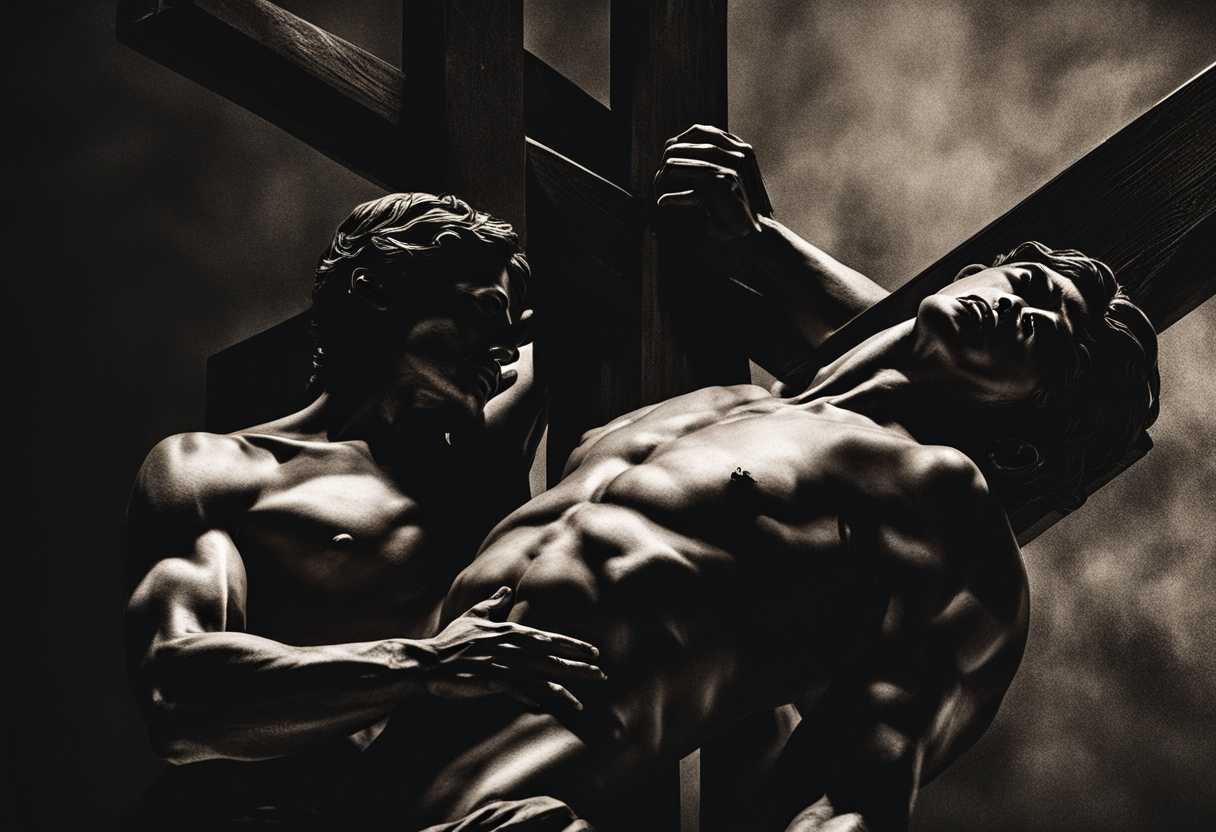
Setting the Scene for Matthew 27:38
In Matthew chapter 27, we find Jesus being crucified at Golgotha, also known as the Place of the Skull. The scene is chaotic and sorrowful, with Roman soldiers carrying out the execution while a crowd gathers to witness the event. Among those present are two criminals who were also being crucified alongside Jesus. These criminals were likely condemned for their crimes and were now facing the same fate as Jesus.
The atmosphere is tense as the soldiers nail Jesus to the cross, and the crowd looks on with a mix of curiosity, indifference, and grief. The criminals, known as the two thieves, are also being crucified, one on each side of Jesus. The scene is a stark reminder of the harsh realities of Roman rule and the consequences of criminal behavior in that time. Despite the darkness and despair of the moment, Jesus remains calm and composed, fulfilling his purpose of sacrificing himself for the sins of humanity.
What is Matthew 27:38 about?
This verse recounts the scene of Jesus being crucified alongside two criminals. It symbolizes the ultimate sacrifice that Jesus made for humanity’s sins. The fact that Jesus, who was sinless, was crucified between two criminals, highlights his role as the Savior, who took on the burden of sin for all people. The positioning of the criminals on his right and left signifies the choices individuals make in accepting or rejecting the gift of salvation that Jesus offers. It prompts us to reflect on how we align ourselves with Jesus, either following his path of righteousness or continuing down a path of sin.
These two criminals represent the dual nature of humanity – the struggle between good and evil, between acceptance and rejection of God’s love and forgiveness. The verse invites us to contemplate our own position in relation to Jesus – do we stand alongside him as a faithful follower, or do we distance ourselves from his grace? It challenges us to consider the choices we make in our lives and the implications they have on our spiritual journey. We too are called to make a decision about where we stand in relation to Jesus, just as the criminals had the opportunity to respond to him in their final moments.
Understanding what Matthew 27:38 really means
In the poignant narrative of Jesus’ crucifixion, Matthew 27:38 stands out as a profound moment where two criminals were crucified alongside the Son of God. This event not only fulfills Old Testament prophecy but also underscores the depth of Jesus’ suffering and humiliation. The juxtaposition of Jesus, the innocent Lamb of God, between two guilty criminals serves as a powerful symbol of His mission to save the lost and the broken.
Isaiah 53:12 prophesied that the Messiah would be “numbered with the transgressors,” a prophecy fulfilled by Jesus’ crucifixion between two criminals. This alignment with prophecy not only validates Jesus’ identity as the promised Messiah but also highlights the divine orchestration of His sacrificial death. The parallel accounts in Luke 23:39-43 and Mark 15:27-28 provide additional context, emphasizing the significance of Jesus’ crucifixion alongside criminals and showcasing His compassion even in the midst of His own suffering.
Today, this verse resonates with individuals facing suffering, injustice, and humiliation, offering a beacon of hope and redemption. Just as one of the criminals repented and found salvation through Jesus’ promise of paradise, this narrative reminds us that no one is beyond the reach of God’s grace. The enduring relevance of this passage lies in its portrayal of Jesus as a compassionate Savior who understands human struggles and offers a path to forgiveness and restoration.
Consider the story of a former criminal who, like the repentant thief, finds redemption and transformation through encountering the message of Jesus’ crucifixion. This anecdote illustrates the universal message of hope and forgiveness embedded in Matthew 27:38, showing that even in the darkest moments, redemption is possible through faith in Christ. The image of Jesus flanked by two criminals, one on His right and one on His left, symbolizes His complete identification with humanity’s sinfulness and His role as the mediator between God and mankind.
As we meditate on this verse, let us find solace in the fact that Jesus, through His suffering on the cross, intimately understands our pain and offers us a way to redemption. The placement of Jesus between two criminals serves as a poignant reminder of His mission to seek and save the lost, inviting all to come to Him for forgiveness and restoration. In a world marked by brokenness and despair, the message of Matthew 27:38 shines brightly as a beacon of hope, assuring us that no matter our past, Jesus offers us a future filled with grace and redemption.
What does society consider shameful or dishonorable today?
Society considers behaviors such as dishonesty, betrayal, and acts of cruelty shameful or dishonorable. Actions that go against societal norms or moral values can lead to feelings of guilt, regret, and a tarnished reputation. Individuals who engage in deceit, infidelity, or mistreatment of others are often looked down upon and can face social consequences such as isolation, loss of trust, and damaged relationships.
Furthermore, lack of integrity, selfishness, and disregard for others’ well-being are also viewed as dishonorable. Those who prioritize their own interests at the expense of others are often shamed or criticized in a world where empathy, compassion, and honesty are valued. Society holds individuals to a standard of ethical conduct and expects them to uphold principles of respect, kindness, and righteousness in their actions and decisions. In contemporary society, people generally consider behaviors that harm others, undermine trust, or violate moral codes as shameful or dishonorable. Living with integrity, treating others with dignity, and upholding ethical values are important aspects of building a reputation and earning the respect of others.
Application
Picture yourself in the fast lane of life, juggling your job, your family, all the daily grind. But what if you paused for a moment? What if you reached out to the marginalized, the ones sidelined by society? You can be the spark of hope, the helping hand that transforms someone’s day, or even their life. Can you step up and shine God’s love right where you are?

Reverend Michael Johnson is an experienced Church Minister with a profound expertise in spirituality and guidance. With a serene presence and a compassionate heart, he has faithfully served his congregation for over 20 years, leading them on a spiritual journey towards inner peace and enlightenment. Reverend Johnson’s extensive knowledge of religious philosophies and profound understanding of human nature have made him a trusted confidant and mentor to many, as he seamlessly weaves his profound wisdom into life teachings. Reverend Johnson’s calming demeanor and empathetic nature continue to uplift and heal souls, nurturing a sense of unity and tranquility within his community.