
Matthew 27:42-43 is about the mockery and disbelief of the religious leaders and passersby towards Jesus, revealing their ignorance of His true identity as the Son of God.
42 “He saved others; he cannot save himself. He is the King of Israel; let him come down now from the cross, and we will believe in him.”
43 He trusts in God; let God deliver him now, if he desires him. For he said, ‘I am the Son of God.’”
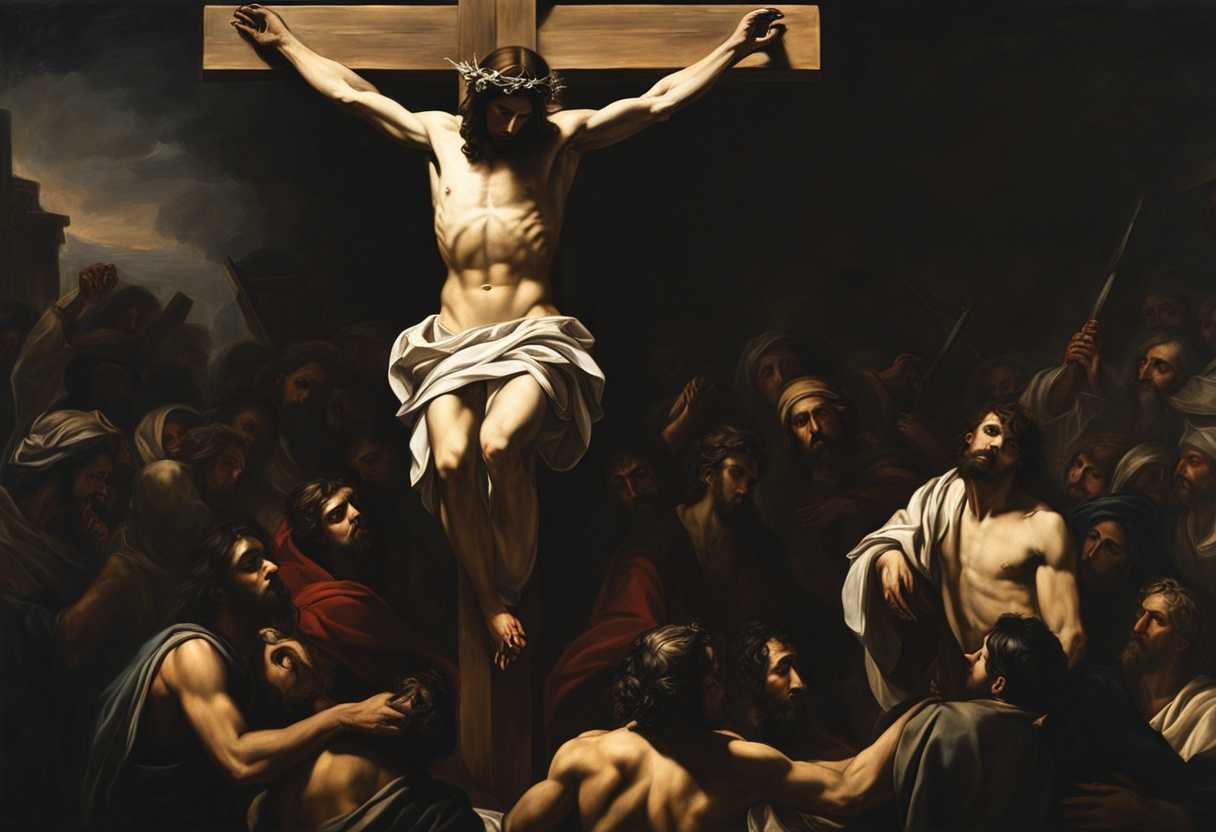
Setting the Scene for Matthew 27:42-43
In Matthew chapter 27, we find Jesus hanging on the cross at Golgotha, also known as the Place of the Skull. The scene is filled with a crowd of onlookers, soldiers, religious leaders, and two criminals who were also crucified alongside Jesus. The sky is darkened, and there is an air of tension and sorrow as Jesus endures the agony of the crucifixion.
The religious leaders, chief priests, and scribes are present, mocking Jesus and challenging Him to save Himself if He truly is the Son of God. The soldiers are carrying out their duties, overseeing the crucifixion and dividing Jesus’ garments among themselves. The two criminals are also there, one hurling insults at Jesus while the other defends Him and acknowledges His innocence.
As Jesus hangs on the cross, bearing the weight of the sins of the world, the scene is a stark contrast of cruelty and compassion, disbelief and faith. It is a pivotal moment in the biblical narrative, where the ultimate sacrifice is being made for the redemption of humanity.
What is Matthew 27:42-43 about?
The people are taunting Jesus as He is being crucified on the cross in this verse. They are mocking Him, saying that if He truly is the Savior, the Messiah, then He should save Himself from this gruesome death. The irony in their words is profound because, in reality, Jesus has the power to save not only Himself but also all of humanity through His sacrifice on the cross. The people fail to understand the deeper significance of Jesus’s actions and the plan of salvation that is unfolding before their eyes.
Reflecting on this verse, we can see the profound arrogance and ignorance of those who are mocking Jesus. They are unable to see beyond the physical suffering and understand the spiritual significance of Jesus’s sacrifice. It challenges us to question our own understanding of faith and to consider if we, like those in the verse, sometimes fail to recognize the divine plan at work in our lives. Jesus’s willingness to endure such suffering for the sake of others is a powerful example of selflessness and unconditional love that we can all strive to emulate in our own lives. How often do we overlook the presence of the divine in our midst, simply because it may not align with our expectations or understanding? Let us reflect on this verse and strive to deepen our faith, trust, and appreciation for the sacrifices made for our salvation.
Understanding what Matthew 27:42-43 really means
In the Gospel of Matthew, amidst the solemn scene of Jesus’ crucifixion, we encounter a moment of mockery and challenge directed at Him by the chief priests, scribes, and elders. As Jesus hangs on the cross, these individuals taunt Him, questioning His divinity and mission. They cynically remark, “He saved others; he cannot save himself.” This seemingly paradoxical statement underscores a fundamental misunderstanding of Jesus’ purpose. While He indeed had the power to perform miracles and save others, His ultimate mission was to offer Himself as a sacrifice for the salvation of humanity.
Furthermore, the mockers go on to deride Jesus by proclaiming, “He is the King of Israel; let him come down now from the cross, and we will believe in him.” This mocking challenge not only scoffs at Jesus’ claim to kingship and divine authority but also reveals a shallow faith that hinges on tangible proof rather than genuine belief. Their conditional statement reflects a common human tendency to seek immediate, tangible demonstrations of God’s power, rather than embracing faith that transcends the physical realm.
Another taunt aimed at Jesus is expressed in the words, “He trusts in God; let God deliver him now, if he desires him.” This phrase insinuates doubt about Jesus’ relationship with God, suggesting that if He truly enjoyed God’s favor, He would be spared from suffering. However, this challenge overlooks the profound nature of Jesus’ sacrificial mission, which necessitated His endurance of suffering and death for the redemption of humanity.
These verses resonate with various Old Testament prophecies, such as Isaiah 53:3-5 and Psalm 22:7-8, which foretell the suffering and mockery that the Messiah would endure. They also find resonance in Paul’s words in Philippians 2:8, highlighting Jesus’ humility and obedience, even unto death on the cross. These passages collectively emphasize the sacrificial nature of Jesus’ mission and the depth of His love for humanity.
In our contemporary context, these verses prompt reflection on themes such as faith in adversity, the significance of sacrifice, and the reality of facing mockery and misunderstanding for one’s beliefs. They challenge believers to maintain faith even in the absence of immediate divine intervention, reminding us of the importance of trusting in God’s plan, even when it surpasses our comprehension. Moreover, they underscore the selfless and humble nature of Jesus’ sacrifice, urging us to embody similar virtues in our own lives.
To illustrate the concept of sacrificial love, consider the analogy of a firefighter who willingly enters a burning building to rescue others, despite risking his own safety. Similarly, Jesus’ act of selflessly giving His life for the salvation of humanity serves as the ultimate example of love and sacrifice. In conclusion, the verses from Matthew 27:42-43 serve as a poignant reminder of Jesus’ sacrificial love, challenging us to embrace faith, humility, and selflessness in our walk with God.
Why do some people doubt God’s power?
Some people doubt God’s power because they may not fully understand or believe in His divine capabilities. Those who witnessed Jesus perform miracles doubted Him in the given verse, questioning why He did not save Himself if He truly was the Son of God. This doubt may stem from a lack of faith or a misunderstanding of how God’s power works.
It is human nature to doubt things that we cannot easily explain or understand. The religious leaders and others present at the crucifixion doubted Jesus’ power because they could not comprehend a way in which He, as the Son of God, could allow Himself to be crucified in the context of the verse. This limited perspective and lack of faith can lead people to question and doubt God’s power and His ways.
However, it is important to remember that God’s power is beyond human comprehension, and just because we may not understand something does not mean that it is not possible for Him. We, as believers, are called to have faith in God’s power and trust in His divine plan, even when we do not fully understand it.
Application
Let’s learn from Jesus’ experience on the cross and choose kindness over cruelty in our daily interactions. Let’s be the beacon of understanding and empathy in a world that often thrives on ridicule. Each day, let’s strive to be like Jesus and spread love instead of mockery. How can we bring this transformative love into our work and family today?

Reverend Michael Johnson is an experienced Church Minister with a profound expertise in spirituality and guidance. With a serene presence and a compassionate heart, he has faithfully served his congregation for over 20 years, leading them on a spiritual journey towards inner peace and enlightenment. Reverend Johnson’s extensive knowledge of religious philosophies and profound understanding of human nature have made him a trusted confidant and mentor to many, as he seamlessly weaves his profound wisdom into life teachings. Reverend Johnson’s calming demeanor and empathetic nature continue to uplift and heal souls, nurturing a sense of unity and tranquility within his community.