
Matthew 27:45-51 is about the crucifixion of Jesus Christ, emphasizing the significance of his sacrifice for the redemption of humanity and the tearing of the temple curtain symbolizing the end of the separation between God and mankind.
46 And about the ninth hour Jesus cried out with a loud voice, saying, “Eli, Eli, lema sabachthani?” that is, “My God, my God, why have you forsaken me?”
46 And about the ninth hour Jesus cried out with a loud voice, saying, “Eli, Eli, lema sabachthani?” that is, “My God, my God, why have you forsaken me?”
47 And some of the bystanders, hearing it, said, “This man is calling Elijah.”
48 And one of them at once ran and took a sponge, filled it with sour wine, and put it on a reed and gave it to him to drink.
49 And the rest said, “Let us see whether Elijah will come to save him.”
50 And Jesus cried out again with a loud voice and yielded up his spirit.
51 And behold, the curtain of the temple was torn in two, from top to bottom. And the earth shook, and the rocks were split.
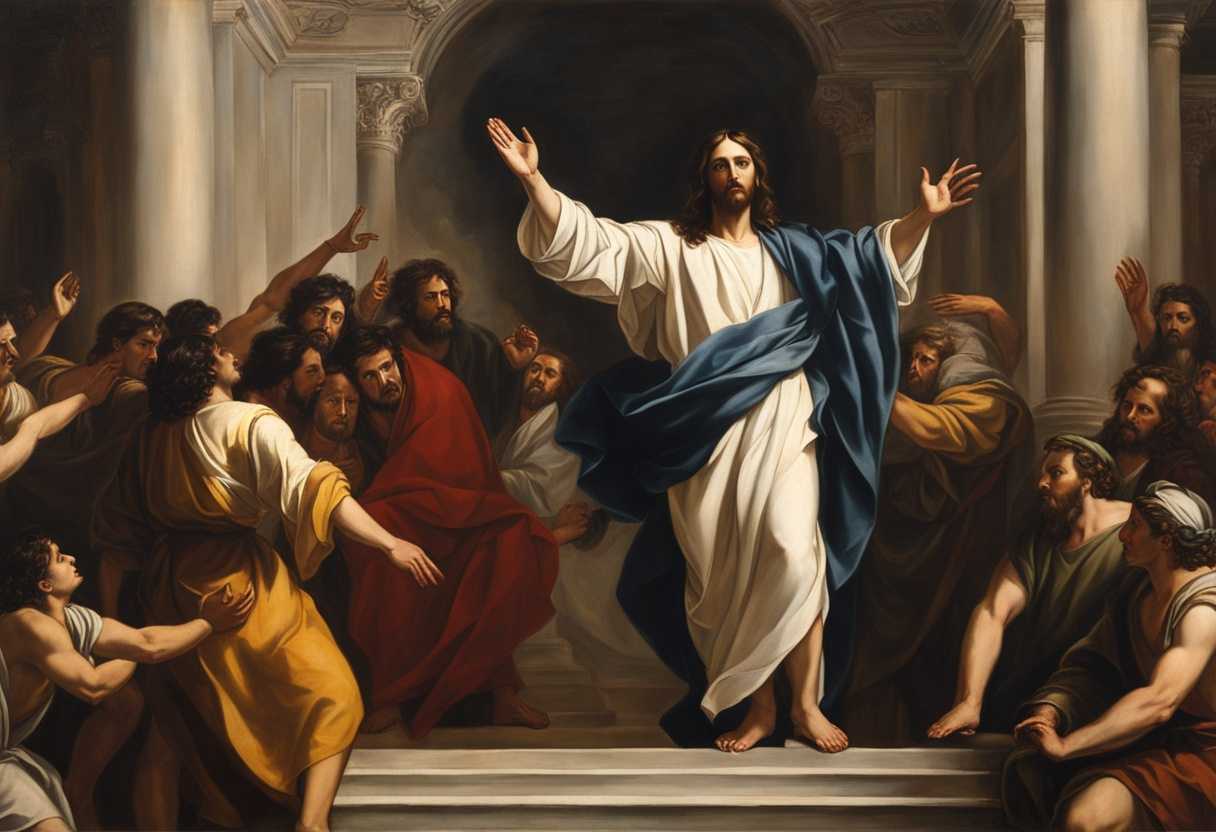
Setting the Scene for Matthew 27:45-51
The scene described in Matthew 27:45-51 takes place at Golgotha, the place where Jesus was crucified. It is midday, and darkness has covered the land. The atmosphere is heavy with a sense of foreboding and sorrow as Jesus hangs on the cross, surrounded by Roman soldiers and a crowd of onlookers. The sky is darkened, adding to the somber mood of the moment.
Among the people present are Mary, the mother of Jesus, and Mary Magdalene, who stand at a distance, watching in anguish as their beloved son and teacher suffers. The disciples, including John, are also there, grappling with feelings of fear and confusion at the events unfolding before them. The religious leaders who orchestrated Jesus’ crucifixion are present as well, their faces filled with a mix of triumph and malice.
As Jesus hangs on the cross, he cries out in a loud voice, “My God, my God, why have you forsaken me?” The earth shakes, and the temple curtain is torn in two, symbolizing the breaking of the barrier between God and humanity. In this moment of darkness and despair, the significance of Jesus’ sacrifice becomes palpable, as he willingly lays down his life for the salvation of all.
What is Matthew 27:45-51 about?
This verse describes the significant event of Jesus’ crucifixion and the powerful supernatural occurrences that accompanied it. The darkness that fell during Jesus’ crucifixion symbolizes the weight of sin and the separation from God that humanity experiences. It signifies the solemnity and gravity of the moment when Jesus took on the sins of the world. The tearing of the temple veil symbolizes the removal of the barrier between God and humanity, signifying that through Jesus’ sacrifice, all people now have direct access to God.
The earthquake and the opening of tombs represent the cosmic shift that occurred with Jesus’ sacrifice. The earthquake signifies the power and authority of God, shaking the foundations of the world and symbolizing the transformation that was taking place. The opening of tombs and the rising of saints represent the victory over death that Jesus’ sacrifice brought, offering hope for eternal life to all believers. This verse serves as a powerful reminder of the magnitude and significance of Jesus’ sacrifice, highlighting the profound impact it has on humanity’s relationship with God. What do these supernatural occurrences signify about the transformative power of Jesus’ sacrifice? How does this verse deepen your understanding of the significance of Jesus’ crucifixion?
Understanding what Matthew 27:45-51 really means
In Matthew 27:45-51, we witness the poignant culmination of Jesus’ crucifixion, where supernatural events unfold as He breathes His last. The darkness that envelops the land from noon until three in the afternoon is not merely a physical phenomenon but a symbolic representation of the weight of sin and the divine judgment that Jesus, the sinless Lamb of God, bore on behalf of humanity. This darkness echoes the prophecy in Amos 8:9, where God foretold the darkening of the sun at noon, underscoring the fulfillment of Old Testament scriptures in Jesus’ sacrificial act.
As Jesus hangs on the cross, His cry, “My God, my God, why have you forsaken me?” reverberates with profound anguish and abandonment. By quoting Psalm 22:1, Jesus not only expresses the depths of His suffering but also embodies the human experience of feeling forsaken and bearing the sins of the world. This cry serves as a poignant reminder of the extent to which Jesus identified with our pain and isolation, offering a glimpse into the unfathomable love and empathy of our Savior.
The tearing of the temple curtain from top to bottom at the moment of Jesus’ death holds immense significance. This act symbolizes the end of the separation between God and humanity, signifying that through Jesus’ ultimate sacrifice, the barrier of sin is removed, granting all people direct access to the Father. Hebrews 10:19-20 elaborates on this, emphasizing that Jesus’ body serves as the new and living way through which believers can approach God without the need for intermediaries.
In contemplating this passage, we are confronted with the profound implications of Jesus’ sacrifice for humanity. It serves as a poignant reminder of the depth of God’s love and the gravity of sin, underscoring the seriousness of our redemption. Despite the darkness and feelings of abandonment that may assail us, we find solace in the fact that Jesus has already borne the ultimate suffering and separation on our behalf, offering a path to reconciliation with God.
Consider a person grappling with profound loneliness and despair, feeling utterly abandoned in their struggles. Reflecting on Jesus’ cry of forsakenness on the cross can bring comfort, as it reveals that even in the depths of suffering, Jesus understands and empathizes with our pain. His sacrifice not only bridges the gap between humanity and God but also offers a beacon of hope in the darkest moments, reminding us of the enduring connection we have to the divine through His redemptive work.
By delving into additional biblical references such as Isaiah 53:3-5, John 19:30, and Romans 5:8, we deepen our understanding of the profound significance of Jesus’ crucifixion and its enduring relevance to our lives today. Through these reflections, we are invited to contemplate the magnitude of Jesus’ sacrifice, the depth of His love, and the transformative power of His redemptive work in our lives.
What does the tearing of the temple curtain signify?
The tearing of the temple curtain in the account of Matthew 27 signifies several important theological truths. The curtain in the Jewish temple separated the Holy Place from the Most Holy Place, also known as the Holy of Holies, where the presence of God dwelled. The tearing of this curtain symbolizes the opening of access to God for all people through the sacrificial death of Jesus Christ. Before this event, only the high priest could enter the Holy of Holies, and only once a year to make atonement for the sins of the people. However, now through Jesus’ sacrifice, all believers have direct access to God’s presence without the need for an intermediary.
Furthermore, the tearing of the temple curtain also serves as a sign of the end of the Old Covenant system of sacrifices and rituals. With Jesus’ death on the cross, the ultimate sacrifice for sin was made, providing forgiveness and redemption for all who would believe. The tearing of the curtain signifies the completion and fulfillment of the Old Testament sacrificial system, as Jesus’ sacrifice opened the way for a new covenant based on grace and faith in Him. This act demonstrates the unity of God’s plan of redemption throughout history and the establishment of a new and living way for believers to approach God in spirit and in truth.
Application
Delve into Matthew 27:45-51 and grasp the depth of Christ’s sacrifice. Ponder the love and grace shown through Jesus’ ultimate sacrifice. Let this fuel your actions, spreading love and grace in your own modern-day settings. How will you embody this incredible love in your daily interactions?

Reverend Michael Johnson is an experienced Church Minister with a profound expertise in spirituality and guidance. With a serene presence and a compassionate heart, he has faithfully served his congregation for over 20 years, leading them on a spiritual journey towards inner peace and enlightenment. Reverend Johnson’s extensive knowledge of religious philosophies and profound understanding of human nature have made him a trusted confidant and mentor to many, as he seamlessly weaves his profound wisdom into life teachings. Reverend Johnson’s calming demeanor and empathetic nature continue to uplift and heal souls, nurturing a sense of unity and tranquility within his community.