
Matthew 27:45 is about the moment when darkness fell over the land as Jesus was crucified, symbolizing the weight of sin and separation from God that Jesus willingly took upon himself for the redemption of humanity.
46 And about the ninth hour Jesus cried out with a loud voice, saying, “Eli, Eli, lema sabachthani?” that is, “My God, my God, why have you forsaken me?”
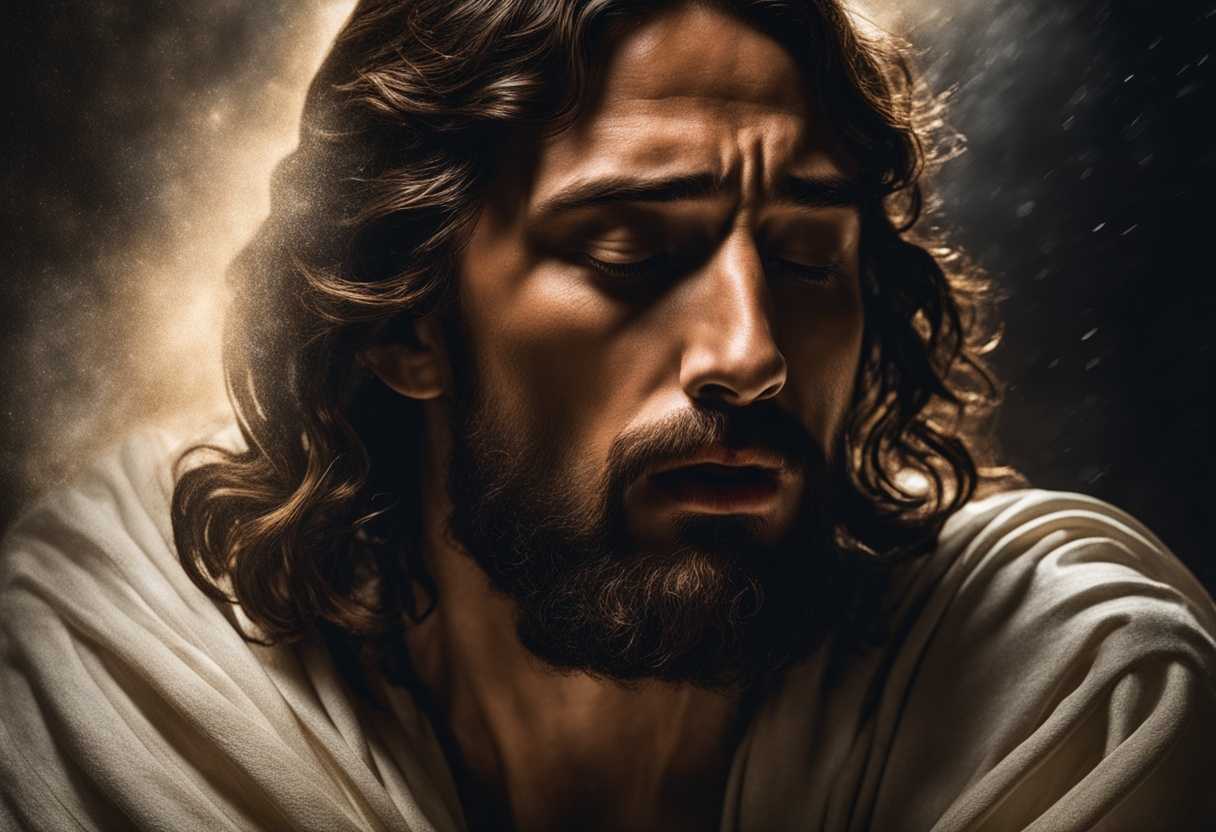
Setting the Scene for Matthew 27:45
As the sun began to set on Golgotha, the hill where Jesus was crucified, a darkness fell over the land. The scene was filled with a sense of foreboding as a small group of people gathered at the foot of the cross. Among them were Mary, the mother of Jesus, and Mary Magdalene, who had been faithful followers of Jesus throughout his ministry. They stood there, their faces etched with sorrow and disbelief at the sight before them.
Also present were a few of Jesus’ disciples, including John, the beloved disciple, who stood close to the two Marys, offering them comfort and support in their time of grief. The Roman soldiers, who had carried out the crucifixion, lingered nearby, their expressions a mix of duty and indifference to the emotional turmoil unfolding around them.
The atmosphere was heavy with the weight of the moment, as the onlookers watched Jesus hang on the cross, his body battered and broken. The darkness seemed to mirror the despair in their hearts as they grappled with the reality of what was happening before their eyes. It was a scene of profound sadness and disbelief, as those who loved Jesus stood vigil at the place of his crucifixion.
What is Matthew 27:45 about?
Yes, when Jesus hung on the cross, the darkness that covered the land symbolized the separation between humanity and God caused by sin. Jesus carried the weight of our sins on his shoulders in that moment, experiencing the ultimate separation from God so we could be reconciled with Him. The darkness serves as a powerful visual representation of the spiritual darkness sin brings into our lives, highlighting the magnitude of the sacrifice Jesus made for our salvation.
Have you ever felt the weight of your own sins, causing a distance between you and God? Just like the darkness during Jesus’ crucifixion, sin can cloud our vision and create a barrier in our relationship with our Creator. But through Jesus’ death and resurrection, we find hope and a way to bridge that gap. The darkness of the crucifixion reminds us of the depth of God’s love and the lengths He is willing to go to bring us back into His arms.
Understanding what Matthew 27:45 really means
In the midst of the crucifixion narrative, Matthew 27:45 unveils a supernatural occurrence that enveloped the land in darkness from noon until three in the afternoon. This period of darkness holds profound symbolism, reflecting the weight of sin and the separation from God that Jesus bore on the cross. The darkness serves as a poignant reminder of the immense sacrifice Jesus made for humanity, highlighting the gravity of sin and the depth of His love.
Drawing parallels from Old Testament prophecies and events, the darkness during Jesus’ crucifixion finds echoes in passages like Amos 8:9, which foretold the darkening of the earth in broad daylight. This connection underscores the fulfillment of divine prophecies and the significance of the moment. Additionally, the darkness in Egypt during the plague in Exodus 10:21-23 serves as a precursor, symbolizing judgment and the power of God, further enriching the layers of meaning in the darkness at the crucifixion.
In a contemporary context, the darkness that shrouded the land during Jesus’ crucifixion resonates with individuals facing their own periods of darkness and despair today. Just as Jesus experienced profound darkness on the cross, He empathizes with our struggles and offers hope in the midst of our darkest moments. This verse becomes a source of comfort and reassurance for those navigating personal crises, reminding them of Jesus’ victory over darkness and His promise of light and hope for all who believe.
The specific timeframe mentioned, “from noon until three in the afternoon,” underscores the supernatural nature of the darkness. This timeframe, typically the brightest part of the day, accentuates the stark contrast and significance of the event. The phrase “darkness came over all the land” conveys the widespread and all-encompassing nature of the darkness, symbolizing the spiritual and emotional weight of the moment. It signifies not just a physical phenomenon but a profound spiritual reality that reverberated throughout the region.
In conclusion, Matthew 27:45 invites us to contemplate the depth of Jesus’ suffering, the cost of redemption, and the hope we have in Him. By delving into the context and symbolism of the darkness during the crucifixion, we can find solace and strength in knowing that Jesus has already traversed the darkest valleys on our behalf. This verse stands as a powerful testament to the sacrificial love of Christ and calls us to reflect on the gravity of sin, the magnitude of His sacrifice, and the unwavering hope we have in His victory over darkness.
Why have you forsaken me?
Jesus felt forsaken on the cross because he was experiencing the weight of humanity’s sins. He took on the sins of the world in that moment, bearing the guilt, shame, and punishment that should have been ours. This separation from God was necessary for Jesus to fulfill his mission of sacrifice and redemption for mankind.
This feeling of abandonment by God was a crucial part of Jesus’ journey on the cross, demonstrating the depths of his love and commitment to save humanity. He cried out to God in his moment of despair, feeling the full weight of the separation caused by sin. This moment of apparent forsakenness also serves as a powerful reminder of the extent to which Jesus was willing to go in order to bring salvation to mankind.
Application
Imagine the immense sacrifice as a bridge built just for you. In the hustle of work and family, let Matthew 27:45 be your reminder. It’s not just history; it’s love and selflessness in action. Live with gratitude and serve others, just as He did. In your everyday grind, will you choose to love others as Christ has loved you?

Reverend Michael Johnson is an experienced Church Minister with a profound expertise in spirituality and guidance. With a serene presence and a compassionate heart, he has faithfully served his congregation for over 20 years, leading them on a spiritual journey towards inner peace and enlightenment. Reverend Johnson’s extensive knowledge of religious philosophies and profound understanding of human nature have made him a trusted confidant and mentor to many, as he seamlessly weaves his profound wisdom into life teachings. Reverend Johnson’s calming demeanor and empathetic nature continue to uplift and heal souls, nurturing a sense of unity and tranquility within his community.