
Matthew 27:57-60 is about Joseph of Arimathea, a disciple of Jesus, who courageously asked for Jesus’ body and buried it in his own tomb, symbolizing an act of compassion and honor towards Jesus even in death.
57 When it was evening, there came a rich man from Arimathea, named Joseph, who also was a disciple of Jesus.
58 He went to Pilate and asked for the body of Jesus. Then Pilate ordered it to be given to him.
59 And Joseph took the body and wrapped it in a clean linen shroud
60 and laid it in his own new tomb, which he had cut in the rock. And he rolled a great stone to the entrance of the tomb and went away.
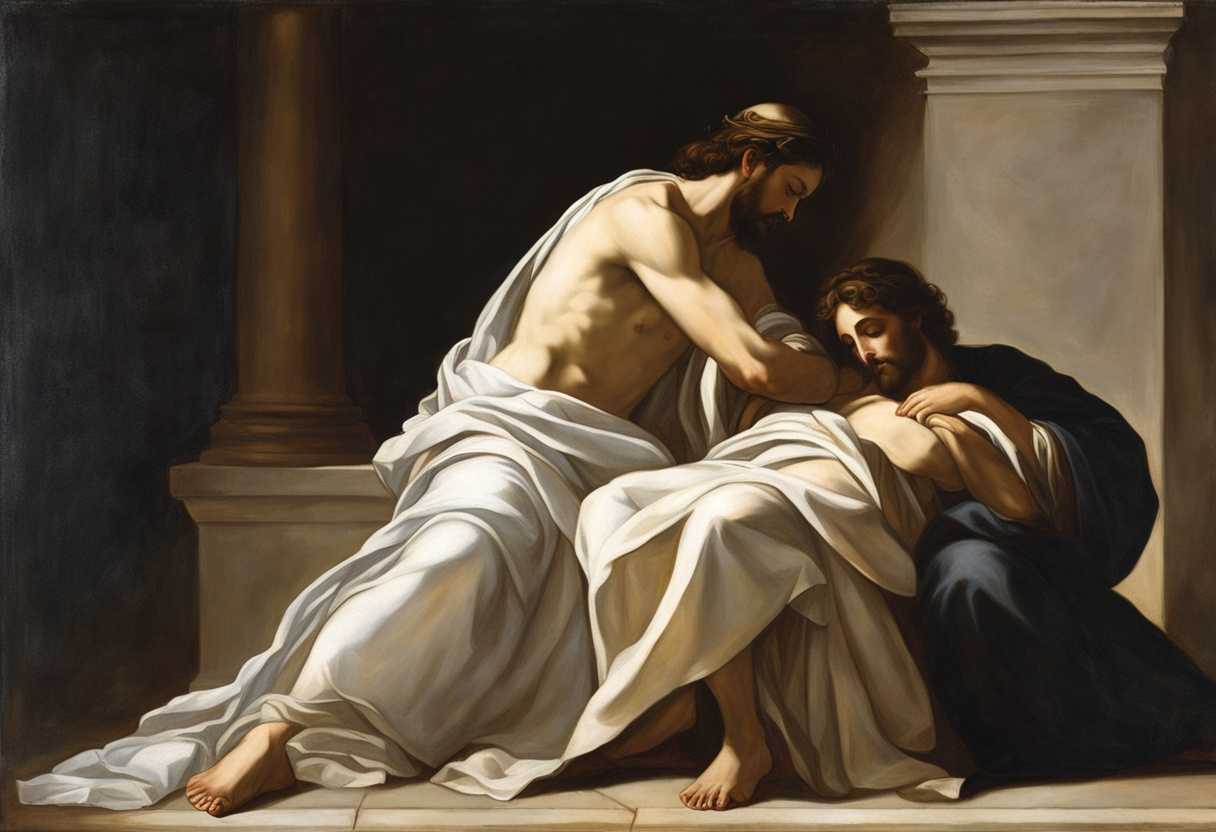
Setting the Scene for Matthew 27:57-60
The scene described in Matthew 27:57-60 takes place at the end of a long and tumultuous day in Jerusalem. The sun is setting, casting a warm glow over the city as a small group of individuals gathers at the foot of Golgotha, the place of the skull. Among them is Joseph of Arimathea, a wealthy and respected member of the Jewish council who had secretly been a follower of Jesus. He had mustered up the courage to approach Pontius Pilate and request the body of Jesus for burial.
Also present is Nicodemus, another member of the council who had previously come to Jesus by night seeking answers. Together, they carefully take down the lifeless body of Jesus from the cross, wrapping it in linen cloths and spices. The women who had been followers of Jesus, including Mary Magdalene and Mary the mother of James and Joseph, stand nearby, their eyes filled with tears as they watch the somber proceedings.
The surroundings are somber and quiet, with the sound of weeping and the occasional gust of wind rustling through the nearby olive trees. The weight of grief hangs heavy in the air as Joseph and Nicodemus place Jesus in a new tomb that Joseph had recently hewn out of the rock. The scene is one of sorrow and reverence, as these individuals come together to honor the life of the man they believed to be the Son of God.
What is Matthew 27:57-60 about?
This verse holds profound significance in the story of Jesus’ crucifixion and burial. Joseph of Arimathea, a member of the Jewish Sanhedrin and a secret follower of Jesus, takes a bold step of courage and compassion by providing his own tomb for the burial of Jesus. This act not only fulfills the prophecy that the Messiah would be buried in a rich man’s tomb but also demonstrates Joseph’s deep reverence and belief in Jesus as the Son of God.
Imagine the scene: a wealthy and respected man risking his reputation and safety to give honor to Jesus in His time of need. Joseph’s actions symbolize the importance of standing up for one’s beliefs even in the face of opposition or persecution. It also highlights the theme of selflessness and generosity, as Joseph offers his own resting place for someone in need. Acts of kindness and bravery can make a profound impact through the power of sacrificial love, reminding us as we reflect on this verse. Joseph of Arimathea’s act of burying Jesus in his own tomb serves as a testament to the enduring message of compassion, faith, and solidarity in times of adversity. It challenges us to consider how we can embody similar qualities in our own lives and stand up for what is right, even when it may be difficult or unpopular.
Understanding what Matthew 27:57-60 really means
The passage in Matthew 27:57-60 unfolds a poignant scene following the crucifixion of Jesus, where Joseph of Arimathea, a wealthy disciple, steps forward to ensure Jesus receives a proper burial. This act of kindness and reverence towards Jesus, even in death, underscores the fulfillment of prophecy and the deep respect shown to the Messiah. Joseph’s status as a rich man from Arimathea is not merely a detail but a significant aspect highlighting his courage in requesting Jesus’ body from Pilate, showcasing his unwavering devotion and respect for the Savior.
The meticulous care taken by Joseph in wrapping Jesus’ body in a clean linen cloth symbolizes the honor and dignity accorded to Jesus in his burial, a stark contrast to the indignity of the crucifixion. Placing Jesus in his own new tomb carries profound symbolism, representing purity and fulfilling the prophecy in Isaiah 53:9, which foretold the Messiah’s burial among the wealthy. The act of rolling a great stone to seal the tomb signifies the finality of Jesus’ death and the security measures taken, setting the stage for the miraculous resurrection that follows.
In parallel passages like John 19:38-42, we gain further insights into Joseph of Arimathea and Nicodemus’ involvement in preparing Jesus’ body for burial. Mark 15:42-47 and Luke 23:50-56 offer complementary accounts, painting a fuller picture of the burial process and the roles of the women who followed Jesus. These interconnected narratives weave a tapestry of reverence, care, and fulfillment of prophecy, emphasizing the significance of Jesus’ burial in the broader context of his redemptive mission.
The timeless lessons from this passage resonate with believers today, underscoring the importance of courage, devotion, and honoring God’s promises. Joseph of Arimathea’s actions serve as a compelling example of faith in action, inspiring us to stand up for what is right and to treat others with respect and dignity, even in challenging circumstances. The burial of Jesus foreshadows the hope and assurance of resurrection, offering comfort and reassurance to those who place their trust in Christ’s victory over death.
Consider a contemporary parallel where someone exemplifies Joseph’s courage and compassion by honoring a departed loved one despite societal pressures. This modern-day act of love and respect mirrors the sacrificial devotion displayed by Joseph, illustrating how faith can embolden us to do what is right, even when faced with adversity. Similarly, envision individuals advocating for marginalized communities, echoing Joseph’s commitment to providing dignity and respect to those in need. Such acts of courage and compassion echo the timeless message of the passage, inspiring others to follow suit and uphold values of honor, respect, and faith.
In conclusion, the narrative of Joseph of Arimathea in Matthew 27:57-60 serves as a poignant reminder of the enduring importance of honoring and respecting others, even in challenging circumstances. Through his example, we are encouraged to embody courage, devotion, and trust in God’s promises, finding inspiration to live out our faith in impactful and meaningful ways. May we draw strength from this passage to emulate Joseph’s unwavering commitment to honoring the Savior and to extend compassion and respect to all those we encounter on our own faith journeys.
How can we show love and honor to Jesus?
One way to show love and honor to Jesus is by stepping out in faith and courage, just like Joseph of Arimathea did in the passage. Joseph boldly went to Pilate to ask for Jesus’ body, despite the potential risks and repercussions. Standing up for our beliefs and acting in accordance with our faith can be a powerful way to honor Jesus.
Another way to show love and honor to Jesus is by giving Him our time, resources, and talents, much like how Joseph provided his own tomb for Jesus’ burial. We can honor Jesus by using what we have been blessed with to serve others in need and to further God’s kingdom on earth. Whether it’s through acts of kindness, generosity, or serving in our communities, every action done in Jesus’ name is a way to show love and honor to Him.
Lastly, we can show love and honor to Jesus by recognizing the significance of His sacrifice and the power of His resurrection. We can spread His message of love, hope, and redemption to those around us by living in light of the truth of the gospel and sharing it with others. Embracing and proclaiming the good news of Jesus Christ is a meaningful way to honor Him and show our love for Him.
Application
Imagine your work demands that you make the ultimate sacrifice for your team, even beyond the call of duty. Jesus did that for you with His life. How are you reflecting His sacrifice in your everyday actions? Is your life a testament to the love and grace He gave on the cross? Look within and align your heart and deeds with His selfless love. Are you ready to rise to this challenge and live a life that truly honors His gift?

Reverend Michael Johnson is an experienced Church Minister with a profound expertise in spirituality and guidance. With a serene presence and a compassionate heart, he has faithfully served his congregation for over 20 years, leading them on a spiritual journey towards inner peace and enlightenment. Reverend Johnson’s extensive knowledge of religious philosophies and profound understanding of human nature have made him a trusted confidant and mentor to many, as he seamlessly weaves his profound wisdom into life teachings. Reverend Johnson’s calming demeanor and empathetic nature continue to uplift and heal souls, nurturing a sense of unity and tranquility within his community.