
Matthew 27:57-66 is about the burial of Jesus after his crucifixion and the setting of guards at his tomb to prevent any tampering or theft, ultimately emphasizing the finality of his death and the fulfillment of prophecy regarding his resurrection.
57 When it was evening, there came a rich man from Arimathea, named Joseph, who also was a disciple of Jesus.
58 He went to Pilate and asked for the body of Jesus. Then Pilate ordered it to be given to him.
59 And Joseph took the body and wrapped it in a clean linen shroud
60 and laid it in his own new tomb, which he had cut in the rock. And he rolled a great stone to the entrance of the tomb and went away.
61 Mary Magdalene and the other Mary were there, sitting opposite the tomb.
62 The next day, that is, after the day of Preparation, the chief priests and the Pharisees gathered before Pilate
63 and said, “Sir, we remember how that impostor said, while he was still alive, ‘After three days I will rise.’
64 Therefore order the tomb to be made secure until the third day, lest his disciples go and steal him away and tell the people, ‘He has risen from the dead,’ and the last fraud will be worse than the first.”
“Take a guard,” Pilate answered. “Go, make the tomb as secure as you can.”
66 So they went and made the tomb secure by sealing the stone and setting a guard.
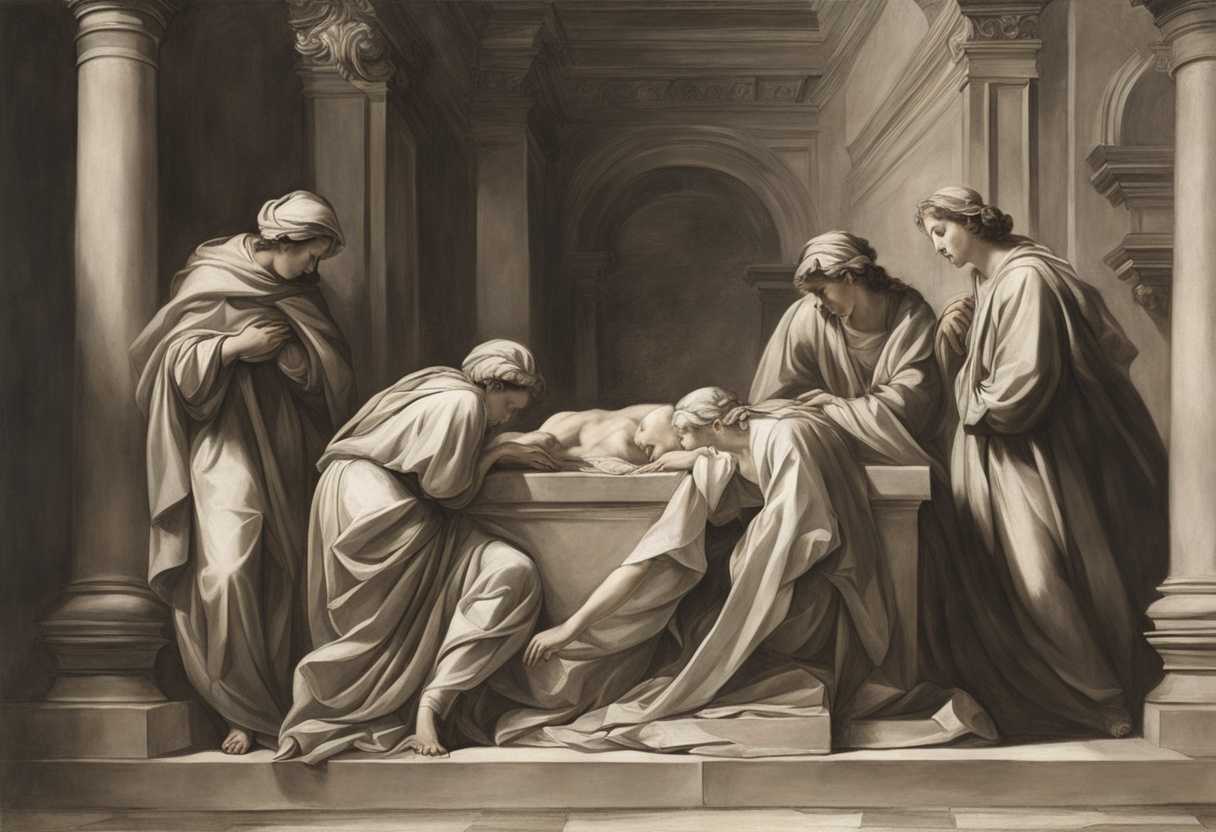
Setting the Scene for Matthew 27:57-66
The scene described in Matthew 27:57-66 takes place at the end of a long and tumultuous day in Jerusalem. The day began with Jesus being brought before Pilate, the Roman governor, and ultimately being sentenced to death by crucifixion. As evening falls, Joseph of Arimathea, a wealthy and respected member of the Jewish council, approaches Pilate to request the body of Jesus for burial.
Accompanied by Nicodemus, another member of the council who had previously come to Jesus by night seeking wisdom, Joseph takes down Jesus’ body from the cross and wraps it in a clean linen cloth. They then place the body in a new tomb that Joseph had recently cut out of the rock for himself. The tomb is located in a garden nearby, providing a peaceful and solemn setting for the burial of Jesus.
As Joseph and Nicodemus carefully lay Jesus to rest in the tomb, the women who had followed Jesus from Galilee stand at a distance, watching and grieving. The guards stationed at the tomb by Pilate are also present, ensuring that the tomb is sealed and secure. The atmosphere is heavy with sorrow and uncertainty, as Jesus’ followers grapple with the reality of his death and the events of the day. The scene captures a moment of profound sadness and reflection, as the world awaits the dawn of a new day and the fulfillment of Jesus’ words regarding his resurrection.
What is Matthew 27:57-66 about?
Soldiers carefully guard the tomb where Jesus is laid to rest, culminating his earthly journey in this verse. This moment signifies the end of Jesus’ physical presence among his disciples and the fulfillment of the prophecies about his death and resurrection. It is a pivotal moment in the Christian faith as it marks the completion of Jesus’ sacrifice for the salvation of humanity.
Have you ever thought about the significance of this act of Jesus being buried in a tomb? It is a powerful symbol of his humility and obedience to God’s will, even unto death. Despite the guards placed at the tomb, nothing could thwart God’s plan for salvation through Jesus. It is a reminder that even in the face of darkness and seemingly insurmountable obstacles, God’s divine purpose will always prevail. Jesus willingly endured death and the grave for our sake as we reflect on this verse, pondering the depth of his love for us. It serves as a reminder of the immense sacrifice made on our behalf and the hope that springs forth from the grave on the third day. We can find victory over sin and death through our faith in Jesus, just as he overcame death.
Understanding what Matthew 27:57-66 really means
In the aftermath of Jesus’ crucifixion, the focus shifts to His burial, a pivotal moment in the narrative. Joseph of Arimathea, a wealthy disciple who had embraced Jesus, steps forward to request His body from Pilate. This act of courage and devotion is striking, as Joseph risks his reputation and safety to honor the one he believed in. The significance of this gesture is profound, showcasing the lengths to which a true follower of Christ is willing to go, even in the face of adversity.
As Joseph takes charge of Jesus’ body, he wraps it in a clean linen cloth, a gesture of utmost respect and care. This tender act stands in stark contrast to the brutality of the crucifixion, underscoring the dignity with which Jesus is treated even in death. Placing the body in his own new tomb carries symbolic weight, symbolizing purity and the beginning of a new covenant, hinting at the transformative power of Christ’s sacrifice.
Meanwhile, the chief priests and Pharisees, wary of Jesus’ prophecies about rising on the third day, approach Pilate with a request to secure the tomb. Their fear and opposition to Jesus persist even after His death, leading to the sealing of the tomb and the posting of a guard. However, their efforts to thwart what was to come prove futile, highlighting the ultimate sovereignty of God’s plan over human schemes.
This passage resonates with contemporary audiences by underscoring the enduring themes of faith, courage, and divine fulfillment. It serves as a reminder that God’s promises are unwavering, even in the face of apparent defeat and death. Just as Joseph of Arimathea exemplified boldness and devotion, believers today are encouraged to stand firm in their faith, even when faced with challenges or risks.
Consider a modern parallel where an individual boldly defends their faith in a secular setting, akin to Joseph’s courageous act. This anecdote illustrates how personal conviction and bravery can inspire others and exemplify the transformative power of faith in action. Ultimately, the passage prompts reflection on how we can honor Jesus in our daily lives, even when it demands personal sacrifice or goes against the prevailing norms.
In conclusion, the burial of Jesus encapsulates a profound truth: God’s plans are unstoppable, and He rewards those who act with faith and courage. It beckons us to contemplate our own responses to challenges and opportunities to demonstrate our commitment to Christ. May we draw inspiration from Joseph of Arimathea’s boldness and unwavering devotion, knowing that in honoring Jesus, we align ourselves with the eternal purposes of God.
How can we trust in God’s promises amid darkness?
Trusting in God’s promises can be challenging in times of darkness and uncertainty. However, this passage reminds us that even in the darkest moments, God is still at work behind the scenes. We can trust that God’s plans are unfolding according to His perfect timing and purpose, even when it seems like all hope is lost, just as Jesus was placed in the tomb. It is in the moments of darkness that our faith is truly tested, but it is also in these moments that we can cling to the hope that God is faithful to fulfill all His promises.
This passage also teaches us the importance of patience and perseverance in waiting for God’s promises to come to fruition. Just like the three days Jesus spent in the tomb seemed like an eternity to the disciples, we must remember that God’s timing is not always our own. It may seem like darkness surrounds us and that God has forgotten His promises, but we can take comfort in knowing that just as Jesus rose from the grave, God is always working behind the scenes to bring about His plans in our lives.
Therefore, even in the midst of darkness and uncertainty, we can hold on to the hope and assurance that God’s promises will be fulfilled. We may not always understand His ways or see the bigger picture, but we can trust in His faithfulness and His goodness to see us through the darkest of times. We can have faith that God will bring beauty and light out of the darkest moments in our lives, just as Jesus conquered death and rose again.
Application
Imagine you’re juggling work projects and family responsibilities, striving to keep everything balanced. Now, think about how Jesus kept His promise, enduring the cross for us. He set the ultimate example of commitment and love. Isn’t it time to honor that sacrifice by living your faith with bold actions? Don’t just believe—live it. Share His love; be the light in your workplace, in your home. Will you take time today to show the world what faith in action looks like?

Reverend Michael Johnson is an experienced Church Minister with a profound expertise in spirituality and guidance. With a serene presence and a compassionate heart, he has faithfully served his congregation for over 20 years, leading them on a spiritual journey towards inner peace and enlightenment. Reverend Johnson’s extensive knowledge of religious philosophies and profound understanding of human nature have made him a trusted confidant and mentor to many, as he seamlessly weaves his profound wisdom into life teachings. Reverend Johnson’s calming demeanor and empathetic nature continue to uplift and heal souls, nurturing a sense of unity and tranquility within his community.