
Matthew 27:59-60 is about the act of Joseph of Arimathea providing his own new tomb for the burial of Jesus, symbolizing a gesture of honor and respect towards Jesus as the Messiah.
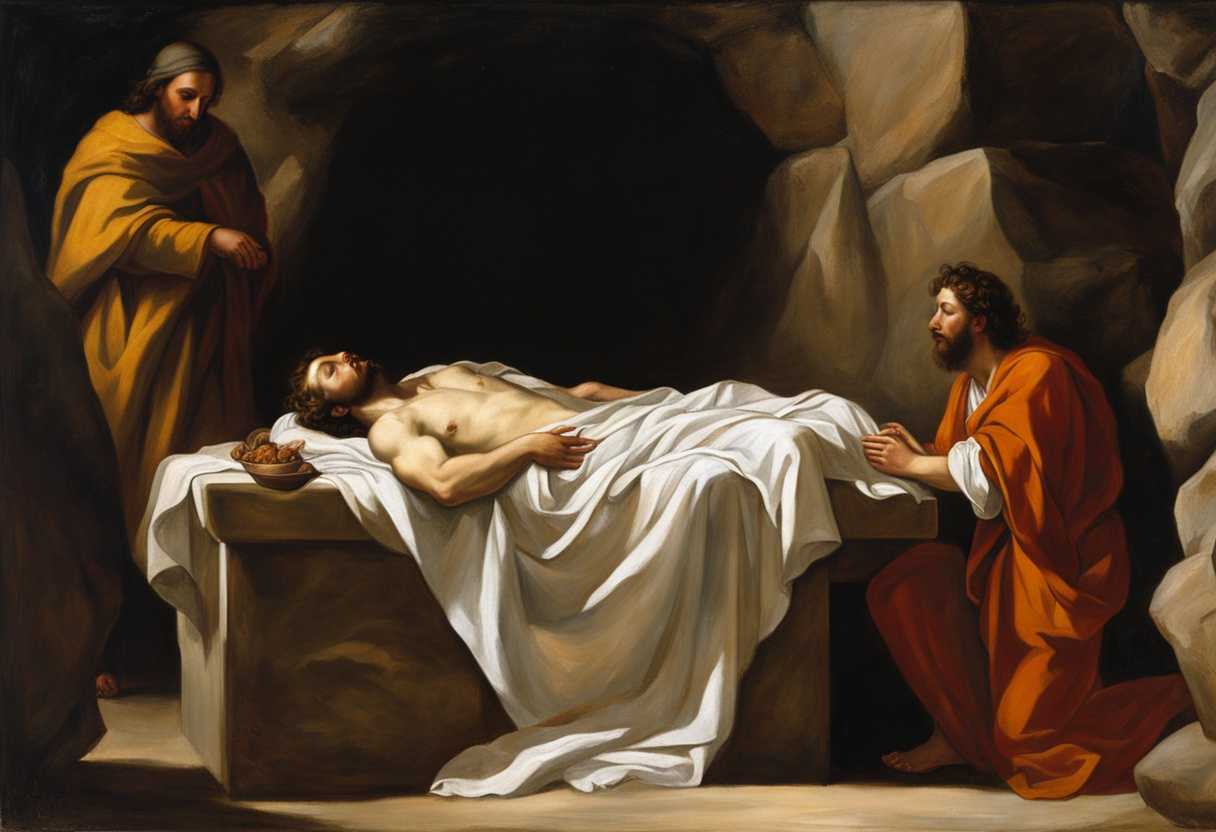
59 And Joseph took the body and wrapped it in a clean linen shroud
60 and laid it in his own new tomb, which he had cut in the rock. And he rolled a great stone to the entrance of the tomb and went away.
Setting the Scene for Matthew 27:59-60
In Matthew chapter 27, we find ourselves at the scene where Joseph of Arimathea, a wealthy and respected member of the Jewish council, approaches Pontius Pilate, the Roman governor. Joseph had become a secret disciple of Jesus and was deeply grieved by His crucifixion. He boldly asks Pilate for permission to take Jesus’ body and give Him a proper burial. Pilate grants his request, and Joseph, along with another disciple named Nicodemus, takes down Jesus’ body from the cross.
The setting is somber and solemn as Joseph and Nicodemus carefully wrap Jesus’ body in linen cloths and place Him in a new tomb that Joseph had recently acquired for himself. The surroundings are likely filled with the sounds of mourning and the scent of spices used for burial. The scene is a poignant moment of love and devotion as these two disciples honor their beloved teacher in His death, despite the risks and challenges they faced as followers of Jesus.
As Joseph and Nicodemus lay Jesus to rest in the tomb, the weight of the moment is palpable. The stone is rolled in front of the entrance, sealing Jesus’ body inside. The scene is a powerful reminder of the sacrifice Jesus made for humanity and the faithfulness of those who remained loyal to Him even in His darkest hour.
What is Matthew 27:59-60 about?
This verse from the Bible holds profound significance in Christian theology. It depicts the moment when Joseph of Arimathea, a rich disciple of Jesus, took the initiative to provide a dignified burial for Jesus after his crucifixion. Joseph showed an act of compassion and reverence towards Jesus by offering his own tomb, despite the risks associated with openly supporting a condemned criminal. This act also fulfills the prophecy that the Messiah would be buried in a rich man’s tomb.
When reflecting on this verse, it prompts us to consider the themes of selflessness, devotion, and the importance of honoring the deceased. It serves as a reminder of the ultimate sacrifice Jesus made for humanity and how even in death, he was shown love and respect by those who believed in him. Joseph of Arimathea’s actions demonstrate the impact of stepping up in times of need and taking a stand for what is right, even in the face of adversity. We are encouraged to emulate Joseph’s example of courage and compassion in our own lives as we ponder on this verse, showing kindness and care towards others, especially in their times of need.
Understanding what Matthew 27:59-60 really means
In Matthew 27:59-60, we witness the poignant moment when Joseph of Arimathea, a devoted follower of Jesus, takes it upon himself to ensure the proper burial of Jesus after His crucifixion. This act of compassion and reverence speaks volumes about Joseph’s character and his unwavering commitment to his faith. As he tenderly wraps Jesus’ body in a clean linen cloth and places it in his own newly hewn tomb, we see a display of deep respect and care for the deceased.
The significance of these verses is further illuminated when we consider the prophecy in Isaiah 53:9, which foretells of the suffering servant being buried with the rich. This connection underscores the divine orchestration of Jesus’ burial, fulfilling ancient prophecies and emphasizing the sacred nature of this moment. Additionally, the account in John 19:38-42 provides additional details about Joseph of Arimathea and Nicodemus, shedding light on the collaborative effort to honor Jesus in death.
Joseph’s actions resonate with us today as they exemplify courage, devotion, and sacrificial love. In a world where standing up for one’s beliefs can be met with opposition, Joseph’s boldness in claiming Jesus’ body serves as a powerful example of faith in action. His willingness to risk his reputation and safety for the sake of honoring Jesus challenges us to consider our own convictions and the extent to which we are willing to go for what we believe in.
Moreover, Joseph’s meticulous care for Jesus’ body prompts us to reflect on the value of showing respect and dignity to the deceased. In a culture that often rushes past the solemnity of death, Joseph’s actions remind us of the importance of honoring those who have passed on, recognizing their inherent worth and the impact they have had on our lives. This act of reverence serves as a poignant reminder of the sanctity of life and the significance of every individual, even in death.
As we contemplate the burial of Jesus, we are also reminded of the hope and promise of the resurrection. The sealing of the tomb with a great stone symbolizes the finality of death, yet it also foreshadows the miraculous event to come. Just as the stone was rolled away to reveal the empty tomb and the victory over death, we are encouraged to hold fast to the belief in the resurrection and the assurance of eternal life in Christ.
In our daily lives, we can draw inspiration from Joseph of Arimathea’s example by embodying courage, respect, and hope in our interactions with others. Whether it be standing up for our beliefs in the face of adversity or showing compassion and honor to those around us, we can emulate Joseph’s unwavering commitment to Jesus and His teachings. May we strive to live out our faith with the same dedication and fervor, trusting in God’s greater plan and the promise of new life in Christ.
What is the importance of honoring the dead?
Honoring the dead is important as a way to show respect and appreciation for the lives they lived. It allows us to acknowledge their significance not only in our lives but also in the broader community. We demonstrate our love and reverence for those who have passed away by providing a proper burial and tending to their graves. This act of honoring the dead also helps us to remember and commemorate their legacy, keeping their memories alive in our hearts and minds.
Paying tribute to the deceased through rituals and ceremonies also serves as a way to find closure and comfort in the face of loss. It can provide a sense of peace and help in the grieving process for those left behind. Honoring the dead is a way to connect with our own mortality and reflect on the fleeting nature of life, prompting us to cherish the time we have and make meaningful contributions while we are still alive. Many cultures deeply ingrain the practice of showing respect for the dead, emphasizing the value of every individual life and the importance of remembrance.
Application
Just as Joseph of Arimathea bravely honored Jesus with his actions, let us also show courage in standing up for what is right and spreading love in our modern world. Let your deeds speak louder than words, and let your kindness be a beacon of hope for those around you. Today, take a bold step to demonstrate your faith and love in a tangible way. Will you be the light that this world so desperately needs?

Reverend Michael Johnson is an experienced Church Minister with a profound expertise in spirituality and guidance. With a serene presence and a compassionate heart, he has faithfully served his congregation for over 20 years, leading them on a spiritual journey towards inner peace and enlightenment. Reverend Johnson’s extensive knowledge of religious philosophies and profound understanding of human nature have made him a trusted confidant and mentor to many, as he seamlessly weaves his profound wisdom into life teachings. Reverend Johnson’s calming demeanor and empathetic nature continue to uplift and heal souls, nurturing a sense of unity and tranquility within his community.