
Matthew 27:6 is about the chief priests using the thirty pieces of silver to buy the potter’s field as a burial place for foreigners, fulfilling the prophecy of Jeremiah and symbolizing the betrayal of Jesus and the guilt of those involved.
6 But the chief priests, taking the pieces of silver, said, “It is not lawful to put them into the treasury, since it is blood money.”
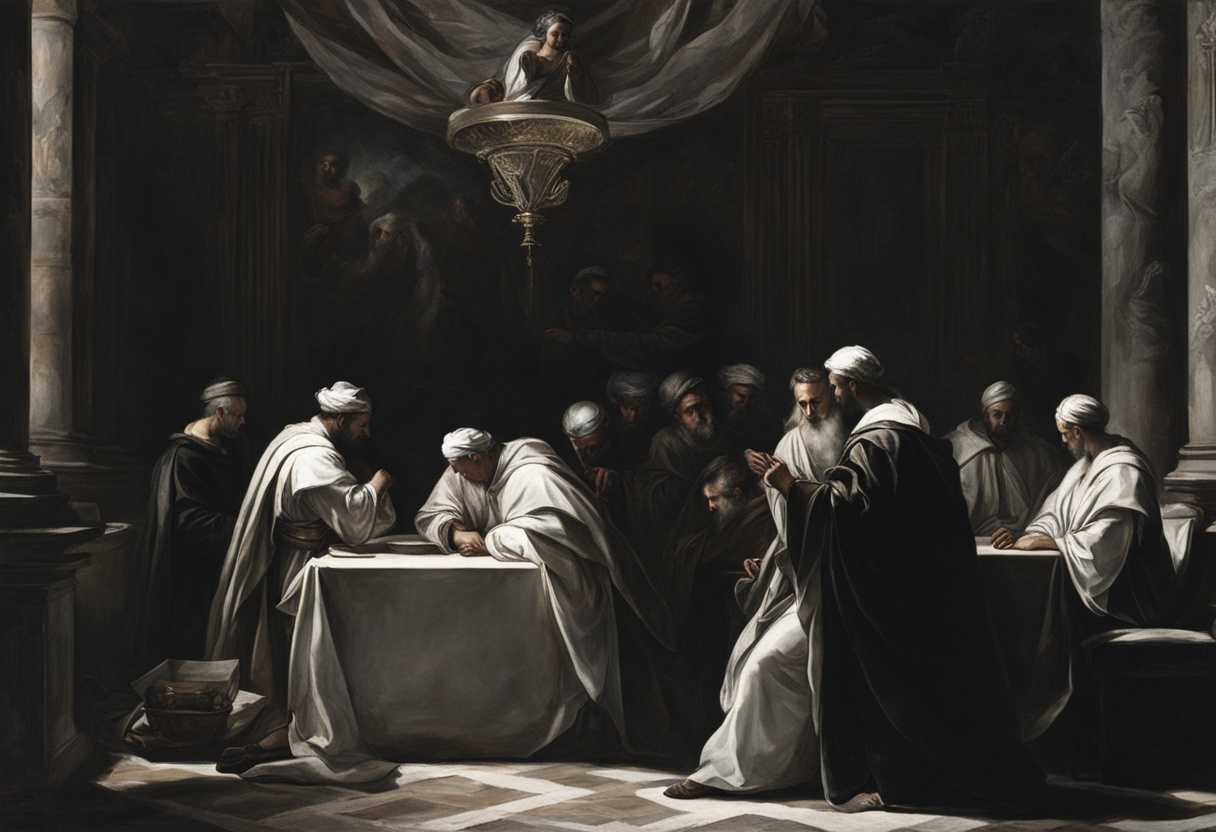
Setting the Scene for Matthew 27:6
In Matthew chapter 27, we find ourselves in the midst of a tumultuous scene at the temple in Jerusalem. The chief priests and elders have gathered to discuss what to do with the thirty pieces of silver that Judas Iscariot returned after betraying Jesus. The temple is bustling with activity as the religious leaders debate the fate of the blood money.
Among those present are the high priest Caiaphas, the scribes, and the Pharisees, all dressed in their elaborate robes and symbols of authority. Tension fills the air as they try to navigate the political and religious implications of Judas’ actions. The flickering torches cast eerie shadows on the stone walls, adding to the gravity of the situation.
Judas himself may also be present, his face a mask of guilt and regret as he witnesses the consequences of his betrayal unfold before him. The scene is charged with emotion and intrigue, setting the stage for the dramatic events that will soon follow in the trial and crucifixion of Jesus.
What is Matthew 27:6 about?
This verse from the Bible depicts a significant moment in the story of Judas Iscariot, who betrayed Jesus Christ. It shows how Judas, overwhelmed with guilt and remorse for his actions, decided to return the payment he received for betraying Jesus. Judas acknowledged the gravity of his betrayal and tried to make amends for his actions by giving back the thirty pieces of silver to the chief priests and elders. This act symbolizes Judas taking responsibility for his betrayal and the consequences it had on Jesus and his followers.
Reflecting on this verse, we are prompted to ponder the complexities of human choices and the impact of our actions on others. Judas’ actions serve as a cautionary tale about the consequences of greed, betrayal, and the moral dilemmas we face in life. It raises questions about repentance, forgiveness, and the power of redemption. Exploring this verse invites us to contemplate the themes of conscience, accountability, and the possibility of reconciliation even in the face of betrayal. We can learn from Judas’ story to strive for greater integrity, empathy, and moral courage in our own lives.
Understanding what Matthew 27:6 really means
In Matthew 27:6, we witness a pivotal moment in the aftermath of Judas Iscariot’s betrayal of Jesus. The return of the thirty pieces of silver by Judas to the chief priests and elders serves as a stark reminder of the weight of guilt and the consequences of one’s actions. The chief priests’ reaction to the returned silver sheds light on their legalistic and hypocritical nature, prioritizing ritual purity over moral integrity.
This verse finds its roots in the Old Testament prophecy of Zechariah 11:12-13, where thirty pieces of silver are mentioned as the price set for the shepherd, ultimately thrown to the potter in the house of the Lord. The fulfillment of this prophecy in the events of Matthew 27 underscores the divine orchestration of even the most tragic moments. Additionally, Deuteronomy 23:18’s prohibition of detestable earnings in the house of the Lord resonates with the chief priests’ rejection of the returned silver as “blood money,” emphasizing the gravity of Judas’s betrayal.
The themes of guilt, repentance, and the consequences of our actions portrayed in this verse remain relevant today. It prompts us to contemplate the ethical dilemmas we face and the importance of making choices aligned with moral principles. Just as Judas’s act of returning the silver symbolizes a futile attempt at redemption, it serves as a cautionary tale for individuals navigating their own moral compass.
The chief priests’ statement, “It is not lawful to put them into the treasury,” exposes their skewed priorities, valuing ceremonial rules over ethical considerations. This fixation on external appearances rather than internal righteousness serves as a caution against falling into the trap of superficial piety. Furthermore, the acknowledgment that the silver is “the price of blood” underscores the profound cost of sin and the sanctity of life, urging us to reflect on the value we place on our actions and their consequences.
By delving into the layers of meaning within Matthew 27:6, we are encouraged to introspect on our own choices and behaviors. This verse challenges us to prioritize integrity over external appearances, to seek redemption in acknowledging our wrongs, and to strive for a life guided by moral principles. In a world fraught with moral complexities, the narrative of Judas’s betrayal serves as a poignant reminder of the enduring relevance of ethical decision-making and the pursuit of righteousness.
What is the value we place on material wealth?
The verse talks about Judas accepting money for betraying Jesus. It highlights how material wealth can lead someone to make immoral decisions and betray their values. The passage emphasizes the dangers of placing too much value on material possessions and wealth in this context.
The verse serves as a cautionary tale about the negative consequences of prioritizing material wealth above all else. It reminds readers that greed and the pursuit of riches can ultimately lead to betrayal, loss of integrity, and spiritual emptiness. Focusing on material wealth may cause one to lose sight of more important aspects of life, such as faith, morals, and relationships. The verse overall underscores the importance of not allowing material possessions to cloud one’s judgement or compromise one’s principles. It calls for a reevaluation of priorities and a reminder to seek fulfillment in spiritual growth and ethical behavior rather than in material wealth.
Application
Reflect on the impact of your words and actions in the world. Be like a beacon of trust and integrity, shining brightly amidst chaos. Let your every promise be as solid as a rock in a stormy sea. Will you pledge to walk the path of honesty and honor, illuminating the way for others to follow?

Reverend Michael Johnson is an experienced Church Minister with a profound expertise in spirituality and guidance. With a serene presence and a compassionate heart, he has faithfully served his congregation for over 20 years, leading them on a spiritual journey towards inner peace and enlightenment. Reverend Johnson’s extensive knowledge of religious philosophies and profound understanding of human nature have made him a trusted confidant and mentor to many, as he seamlessly weaves his profound wisdom into life teachings. Reverend Johnson’s calming demeanor and empathetic nature continue to uplift and heal souls, nurturing a sense of unity and tranquility within his community.