
Matthew 27:65 is about the chief priests and Pharisees requesting for a guard to be placed at Jesus’ tomb out of fear that his disciples might steal his body to fabricate a resurrection, reflecting their disbelief and attempts to undermine Jesus’ teachings.
“Take a guard,” Pilate answered. “Go, make the tomb as secure as you can.”
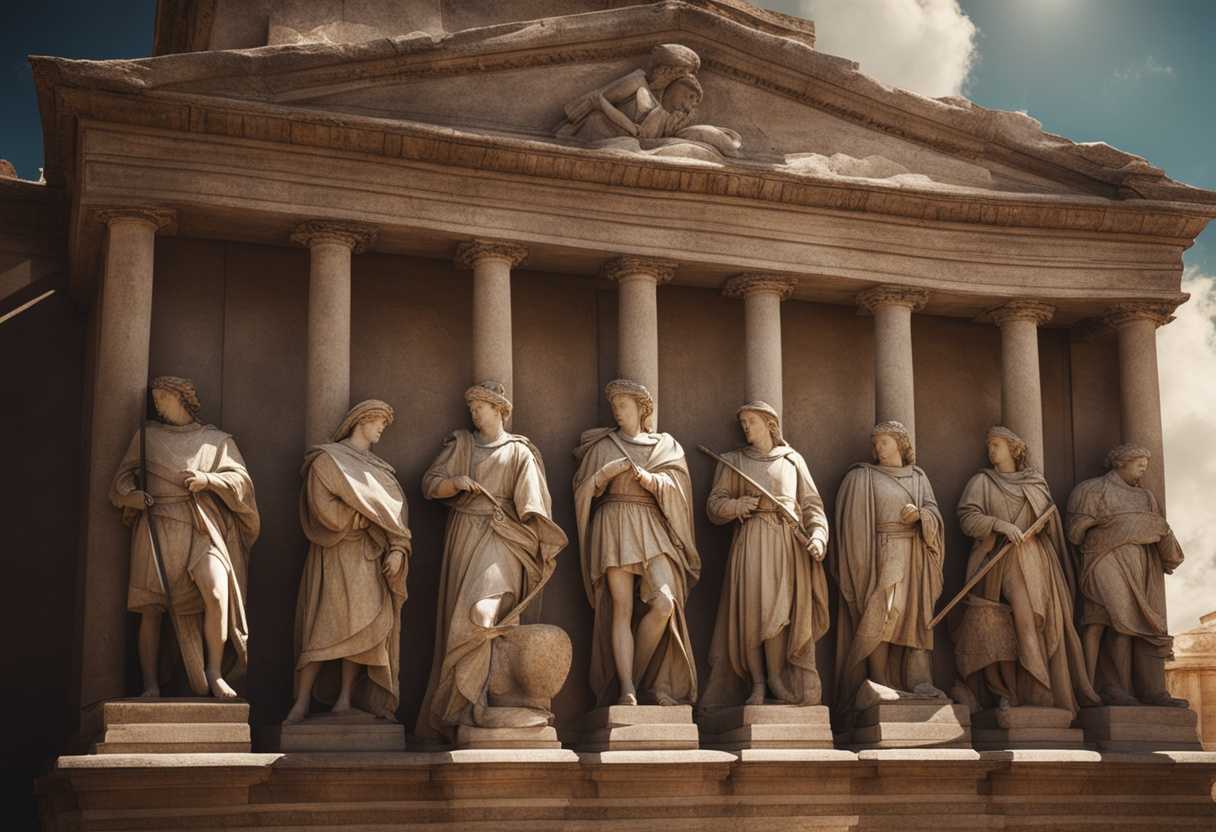
Setting the Scene for Matthew 27:65
In Matthew chapter 27, we find ourselves in the midst of a tense and dramatic scene at the tomb of Jesus. The chief priests and Pharisees, who had played a role in orchestrating the crucifixion of Jesus, are now gathered outside the sealed tomb. Fearful that Jesus’ disciples might come and steal his body to claim he had risen from the dead, they approach Pilate, the Roman governor, to request that the tomb be secured with a guard.
Pilate, reluctantly acceding to their demands, dispatches a group of soldiers to the tomb to ensure that no foul play occurs. The soldiers, armed and resolute, stand watch outside the tomb, their presence a stark contrast to the quiet and somber atmosphere surrounding the burial place of Jesus. The tension is palpable as the chief priests and Pharisees, driven by their fear of Jesus’ teachings and the potential impact of his resurrection, take measures to prevent any disruption to their carefully laid plans.
As the soldiers stand guard and the religious leaders look on, the stage is set for the miraculous events that are about to unfold, culminating in the glorious resurrection of Jesus Christ. The scene is charged with anticipation and apprehension, as the forces of darkness and light converge in a battle that will ultimately lead to the triumph of life over death.
What is Matthew 27:65 about?
Let’s dive into the context of this verse. The guards were stationed at Jesus’ tomb by the religious leaders who were fearful of Jesus’ disciples stealing his body and claiming that he had risen from the dead. This action was a demonstration of the disbelief and skepticism among those who opposed Jesus’ teachings and his message of love and redemption.
The presence of guards at the tomb highlights the fear and insecurity of those who saw Jesus as a threat to their power and authority. It also emphasizes the lengths to which people will go to deny or suppress a truth that challenges their beliefs or goes against their interests. Such measures reveal the desperation and misguided actions taken in the face of the miraculous and extraordinary, rather than embracing the possibility of something greater beyond human comprehension.
So, reflect on the significance of this verse. Consider how the fear of the unknown and the resistance to change represent it. Ask yourself, how often do we guard ourselves against new ideas or transformative experiences out of fear or insecurity? How does this verse challenge us to reconsider our perspectives and open ourselves to the possibility of the miraculous and the divine?
Understanding what Matthew 27:65 really means
In the midst of the poignant narrative of Jesus’ crucifixion and burial, Matthew 27:65 stands out as a pivotal moment where human efforts clash with divine intervention. The chief priests and Pharisees, in a bid to quell any potential uprising, approach Pilate with a request to secure Jesus’ tomb. This request, though seemingly logical from a human perspective, unwittingly sets the stage for a profound display of God’s sovereignty.
Pilate’s directive to “make the tomb as secure as you know how” reveals the extent of human determination to control outcomes. The meticulous efforts to seal the tomb and place guards around it reflect a deep-seated fear and disbelief in the possibility of Jesus’ resurrection. However, this very act of human defiance against God’s plan serves to highlight the inherent limitations of human power in the face of divine will.
The subsequent events, as recounted in Matthew 28:2-4, unfold with divine intervention shattering the illusion of human control. Despite the guards and the sealed tomb, an angel of the Lord rolls back the stone, leaving the guards paralyzed with fear. This miraculous occurrence underscores the overarching theme of God’s supremacy over human endeavors, showcasing that no amount of human effort can thwart His divine purposes.
The relevance of this passage extends beyond its historical context, resonating with contemporary audiences grappling with the tension between human agency and divine sovereignty. It serves as a poignant reminder that, despite our best-laid plans and efforts to manipulate outcomes, God’s will ultimately prevails. In a world marked by uncertainty and the desire for control, this verse invites us to relinquish our grip on circumstances and place our trust in the unfailing wisdom and power of God.
The anecdote of the farmer facing unexpected abundance after a devastating loss poignantly illustrates the paradox of human striving and divine providence. Just as the farmer’s efforts were eclipsed by a greater plan yielding a bountiful harvest, so too are our attempts to control outcomes often overshadowed by God’s sovereign will, leading to outcomes far beyond our limited vision.
In contemplating Matthew 27:65, we are confronted with the stark reality of human frailty and the inexhaustible might of God. It prompts us to reevaluate our reliance on our own strength and wisdom, urging us to place our faith in the One whose plans transcend our understanding. Ultimately, this verse serves as a beacon of hope, reminding us that in the face of insurmountable odds, God’s power and purpose will always prevail.
What events in our lives do we guard?
We guard the events that challenge our beliefs and shake our understanding of the world. These are moments that can cause confusion and fear, prompting us to seek control and security. We may take measures in these instances to protect ourselves, our beliefs, or the status quo that we have grown accustomed to. Guarding these events can be a way to maintain a sense of stability and order in the face of uncertainty.
Certain events in our lives hold significance and power, influencing our thoughts and actions. These pivotal moments can shape our beliefs, values, and perceptions of reality. We protect their impact on our lives by guarding these events, ensuring that they continue to hold sway over our thoughts and actions. Through this protective stance, we assert our control over the narrative of our lives, choosing which events to prioritize and uphold in our personal histories.
Guarding events in our lives can also signify a desire to maintain a certain image or reputation. We control how others perceive us and the stories we allow to define us by controlling access to these events. Guarding events can be a means of self-preservation, protecting our identity and integrity in the eyes of others.
Application
Friend, just like how Pilate tried to seal the tomb to contain Jesus, the world may try to confine you in its limitations. But remember, just as God’s power surpassed any attempts to restrain Him, your potential knows no bounds when anchored in faith. Let’s lean into His unfailing guidance, especially when circumstances seem to obstruct our path. Will you seize the limitless opportunities awaiting with unwavering faith in God’s divine plan for your life?

Reverend Michael Johnson is an experienced Church Minister with a profound expertise in spirituality and guidance. With a serene presence and a compassionate heart, he has faithfully served his congregation for over 20 years, leading them on a spiritual journey towards inner peace and enlightenment. Reverend Johnson’s extensive knowledge of religious philosophies and profound understanding of human nature have made him a trusted confidant and mentor to many, as he seamlessly weaves his profound wisdom into life teachings. Reverend Johnson’s calming demeanor and empathetic nature continue to uplift and heal souls, nurturing a sense of unity and tranquility within his community.