
Matthew 2:10-11 is about the wise men rejoicing with exceeding great joy and presenting gifts of gold, frankincense, and myrrh to baby Jesus, symbolizing the recognition of Jesus as a king, a priest, and a sacrificial lamb.
10 When they saw the star, they rejoiced exceedingly with great joy.
11 And going into the house, they saw the child with Mary his mother, and they fell down and worshiped him. Then, opening their treasures, they offered him gifts, gold and frankincense and myrrh.
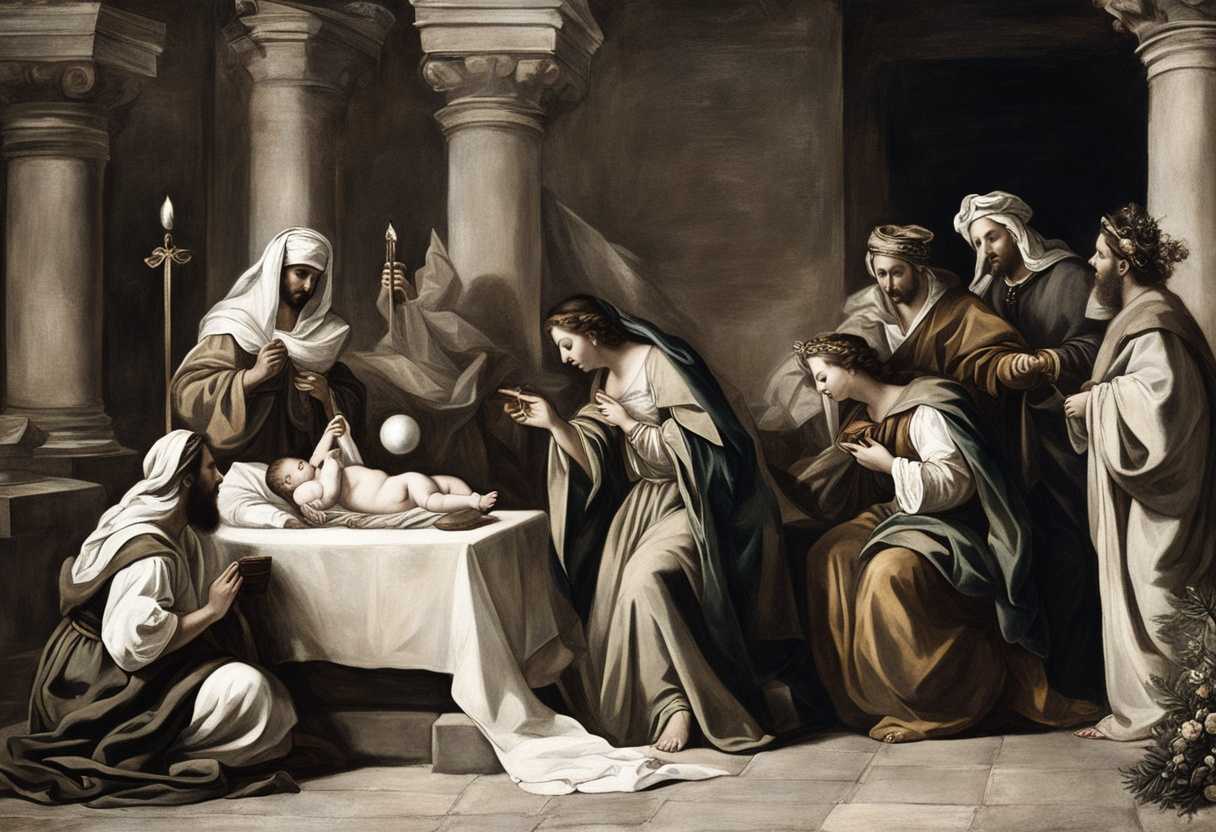
Setting the Scene for Matthew 2:10-11
In Matthew chapter 2, we find the scene where the wise men from the East arrive in Jerusalem, seeking the newborn King of the Jews. The wise men, also known as the Magi, were likely scholars or astrologers who had seen a sign in the heavens that led them on a journey to find the prophesied Messiah. Their arrival in Jerusalem caused quite a stir, as they inquired about the whereabouts of the newborn King.
The wise men were guided by a star, which led them to Bethlehem, where they found the child Jesus with his mother, Mary. The humble surroundings of a stable or manger contrasted with the grandeur of the wise men’s gifts of gold, frankincense, and myrrh. The meeting between the wise men and the Holy Family was a significant moment, as it symbolized the recognition of Jesus as the long-awaited Savior not only by the Jewish people but also by the Gentiles.
The scene is filled with a sense of awe and reverence as the wise men present their gifts to the infant Jesus, acknowledging his divine nature and kingship. This encounter between the wise men and the Holy Family highlights the universal significance of Jesus’ birth and the fulfillment of prophecies foretold in the Old Testament.
What is Matthew 2:10-11 about?
This verse is a poignant reflection of the recognition and reverence shown by the wise men toward Jesus, whom they believed to be the King of the Jews. The act of rejoicing and worshipping Jesus signifies the deep faith and respect they had for Him, acknowledging His divine nature and importance. The gifts of gold, frankincense, and myrrh were symbolic offerings with profound meanings: gold symbolizes kingship and wealth, frankincense symbolizes divinity and prayer, and myrrh symbolizes suffering and death. The wise men’s presentation of these valuable gifts not only highlighted the significance of Jesus but also foreshadowed His role as a King, a Savior, and a Sacrifice.
Have you ever pondered on the depth of faith and understanding displayed by the wise men in this verse? Their journey to seek and worship Jesus despite the challenges and distances they had to traverse speaks volumes about their unwavering belief in His significance. The act of offering such symbolic gifts highlights the importance they placed on Jesus and the recognition of His extraordinary nature. We reflect on this verse, reminding us of the power of faith, the significance of honoring Jesus, and the profound symbolism embedded in the gifts presented by the wise men.
Understanding what Matthew 2:10-11 really means
The verses in Matthew 2:10-11 recount the awe-inspiring visit of the Magi to the young Jesus, guided by a celestial star, culminating in their profound act of worship and presentation of gifts. This narrative holds immense significance as it underscores the acknowledgment of Jesus’ divine kingship and the fulfillment of ancient prophecies. When the Magi beheld the guiding star, their hearts overflowed with joy, symbolizing divine guidance and revelation. Their elation mirrored the culmination of their arduous journey and the divine encounter awaiting them.
Upon reaching the humble abode where Jesus resided with Mary, the Magi reverently bowed down and worshiped the child. This act of homage signified their recognition of Jesus’ divine nature and kingship, a poignant display of reverence and submission. Subsequently, they opened their treasures and presented Jesus with gifts of gold, frankincense, and myrrh, each laden with symbolic significance. Gold symbolized kingship, frankincense deity, and myrrh the foretelling of suffering and death—a profound foreshadowing of Jesus’ earthly journey.
These verses find resonance in related biblical passages, such as Isaiah 60:3, which prophesies the nations’ pilgrimage to the light of Israel, a prophecy fulfilled in the Magi’s visit. Similarly, Psalm 72:10-11 anticipates the homage of foreign kings to the Messiah, while Revelation 21:24 echoes the theme of nations acknowledging and honoring Christ. These interconnected prophecies underscore the universal recognition of Jesus’ divine kingship and the homage He rightfully deserves.
The timeless relevance of this narrative extends to contemporary believers, emphasizing themes of divine guidance, worship, and sacrificial giving. Just as the star guided the Magi, God continues to provide guidance in our lives through scripture, prayer, and the Holy Spirit. The Magi’s act of worship serves as a poignant reminder of the importance of recognizing and honoring Jesus in our lives, prompting us to offer Him our heartfelt adoration. Furthermore, the gifts of the Magi inspire us to present our best—our time, talents, and treasures—as offerings to God, reflecting a spirit of generosity and devotion.
Consider a modern-day parallel to the Magi’s journey—a compelling narrative of someone heeding a spiritual calling to a significant place, guided by unwavering conviction despite obstacles. Upon arrival, they are enveloped in profound joy and fulfillment, akin to the Magi’s divine encounter. This anecdote illustrates how following divine guidance can lead to transformative spiritual experiences and profound joy, mirroring the Magi’s journey of faith and discovery.
In conclusion, the visit of the Magi encapsulates a timeless message of universal recognition of Jesus’ kingship, the joy of divine encounters, and the significance of offering our best to God. It beckons us to seek divine guidance, worship wholeheartedly, and give generously, echoing the enduring themes of reverence, devotion, and sacrificial love found in this sacred narrative.
How can we respond to Jesus with joy?
We can respond to Jesus with joy by opening our hearts to Him like the Magi did. We can seek Him with intentionality and excitement, just as the Magi journeyed far to worship Him. Let us bring our best gifts to offer Him, not just material possessions, but our adoration, surrender, and devotion. Our response should be one of humility and reverence, acknowledging His kingship and worthiness of praise. We should respond with gladness and delight as we encounter Jesus in our lives, just as the Magi did when they found Him. Express our joy wholeheartedly in our worship and thanksgiving, not holding back. Our encounters with Jesus fill our hearts with awe and wonder, leading us to bow down before Him in adoration and surrender. His presence can bring us true and lasting joy, fulfilling the deepest longings of our souls.
Application
The Magi found profound joy and honored the newborn King with their most precious gifts. Imagine finding that same joy in the midst of your busy workday or while spending time with loved ones. Will you dedicate your best efforts and most valuable moments to truly honor what matters most? Can you let this act of reverence guide you to prioritize and glorify Him in everything you do? Are you ready to turn your everyday life into a testament of wholehearted worship?

Reverend Michael Johnson is an experienced Church Minister with a profound expertise in spirituality and guidance. With a serene presence and a compassionate heart, he has faithfully served his congregation for over 20 years, leading them on a spiritual journey towards inner peace and enlightenment. Reverend Johnson’s extensive knowledge of religious philosophies and profound understanding of human nature have made him a trusted confidant and mentor to many, as he seamlessly weaves his profound wisdom into life teachings. Reverend Johnson’s calming demeanor and empathetic nature continue to uplift and heal souls, nurturing a sense of unity and tranquility within his community.